Choko Lakay Expands Market Reach Through Strategic Export Support 

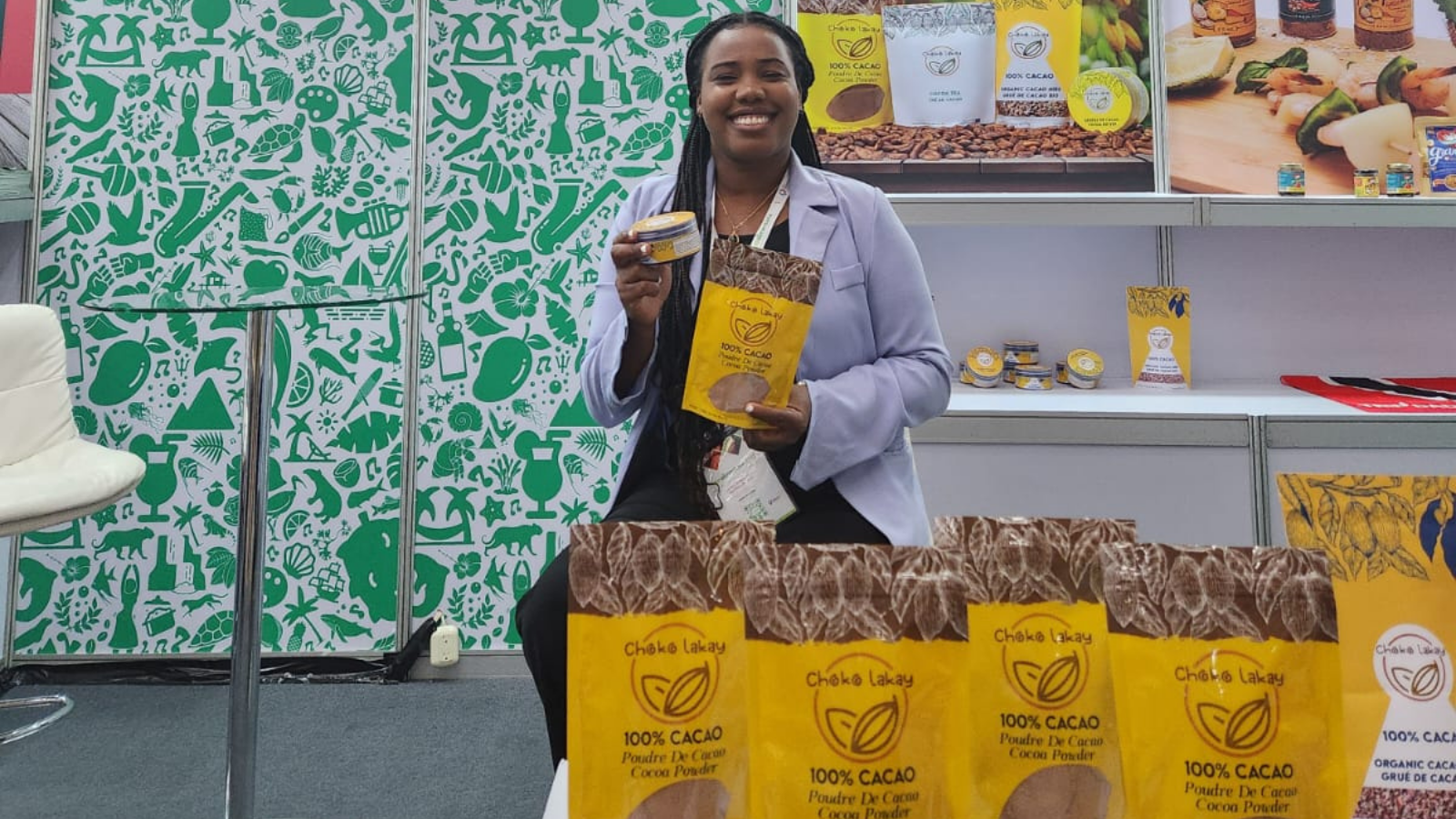
Haitian cocoa processor Choko Lakay is steadily building an international presence, demonstrating how targeted export development support can help Caribbean firms strengthen competitiveness, improve market readiness, and access new buyers. Founded in 2016, the company has grown from a small operation with three employees into a business employing 12 people, while working closely with cocoa farming communities and advancing a value-added approach to Haiti’s cocoa sector. Its business model is rooted in maximising value across the cocoa chain, with a strong focus on sustainability, product innovation, and community impact.  

Caribbean Export has supported Choko Lakay through a range of interventions spanning investment promotion, capacity building activities, standards and certification support, and trade promotion activities. The company participated in the Caribbean AgTech Summit (2021)SIAL Paris 2022 under the 11th EDF Regional Private Sector Development Programme, Voluntary Sustainability Standards training (2023)Virtual E-commerce Accelerator Programme II online training (2023)DHL GoTrade’s The Art of Logistics (2024), the Facilitating Trade and Investment between the Caribbean and Africa webinar (2024)Standards and Certification Webinar: EU Market Entry – Understanding the Sustainability Standards and Certifications (2025), and Agroalimentaria 2025. Together, these initiatives helped position the firm to better understand export requirements, strengthen its business systems, and engage international markets. 

A major turning point came with Choko Lakay’s participation in SIAL Paris 2022, where the company was among 14 firms selected to showcase under Caribbean Export support. According to co-owner Brisly Germéus, the trade fair gave the company critical exposure to the realities of the global marketplace, including buyer expectations around requirements, standards, packaging, and labelling. It also created valuable opportunities to connect with investors, importers, distributors, ingredient suppliers, and other commercial partners. The company notes that this experience directly influenced improvements to its packaging and presentation, helping align its products more closely with international standards and increasing buyer interest. 
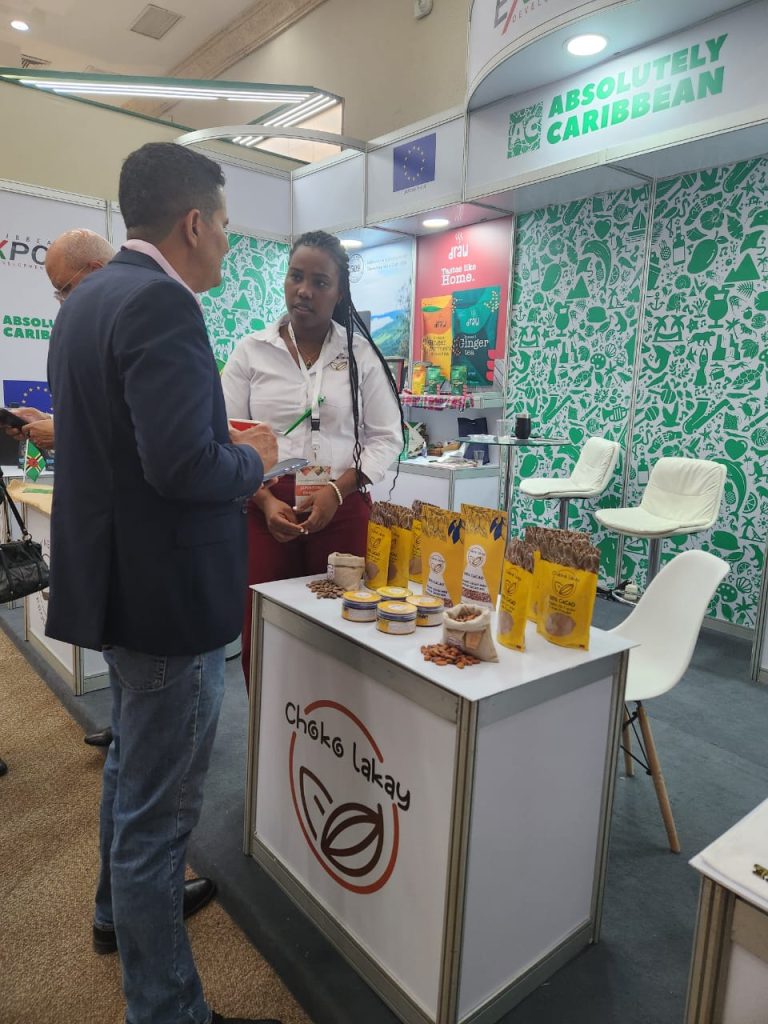
“SIAL enabled us to discover the global market—its requirements, standards, packaging and labelling. We also met investors, importers, distributors, ingredient suppliers and other partners. As a result, we saw growing demand first in Europe and then in North America.” 

The impact of that international exposure has continued to unfold. Following its participation in Caribbean Export-supported trade and capacity-building activities, Choko Lakay reported stronger interest in its 100% natural cocoa products from overseas buyers. More recently, participation in Agroalimentaria 2025 generated commercial interest from Martinique, Canada, the United States of America, and The Bahamas. The company has since secured orders from buyers in the USA and Canada, while retail buyers in Martinique are exploring distribution arrangements. Choko Lakay now sells both directly and through e-commerce, widening its reach and improving access to new customer segments. 

The company has also benefited from the broader ecosystem-building effects of trade promotion. Relationships formed through these platforms have led to new collaborations, including engagement with Café 509, where shared networks, workspaces, and distributors are helping to unlock further opportunities. These connections underscore the value of Caribbean Export’s programming not only in linking firms to buyers, but also in fostering commercial partnerships that can support scaling and market entry. 

Beyond export growth, Choko Lakay’s business has a strong development impact. The company is committed to strengthening the cocoa/chocolate value chain and currently works with approximately 500 cocoa producers, the majority of whom are women. The company also highlights its wider sustainability ambitions, including a zero-waste production model, efforts to improve traceability, and ongoing work toward Fairtrade certification with FLOCERT and organic certification with ECOCERT. These efforts reflect the type of resilience, innovation, and inclusive growth that Caribbean Export seeks to foster through its SME support programmes.  

While demand is rising, Choko Lakay has identified production capacity as its main constraint. The company reports receiving requests from markets such as the United Kingdom and France, but notes that limited equipment and financing are restricting its ability to scale output and fulfil larger export orders. For this reason, continued support through MSME assistance programmes remains critical to helping the business convert market interest into sustained export growth. 

Choko Lakay’s journey illustrates the importance of sustained, multi-layered support in helping Caribbean MSMEs move from potential to performance. Through Caribbean Export’s interventions in trade promotion, standards, logistics, digital visibility, and investment readiness, the company has strengthened its export capability, improved its market positioning, and opened new commercial pathways. As it continues to scale, Choko Lakay stands as an example of how Caribbean firms can leverage strategic support to build internationally competitive brands while generating tangible benefits for local producers and communities.

Read more here: Annual Results Report 2025 | Caribbean Export

CIF Connection Sparks New Tech and Cybersecurity Partnership in Guyana 

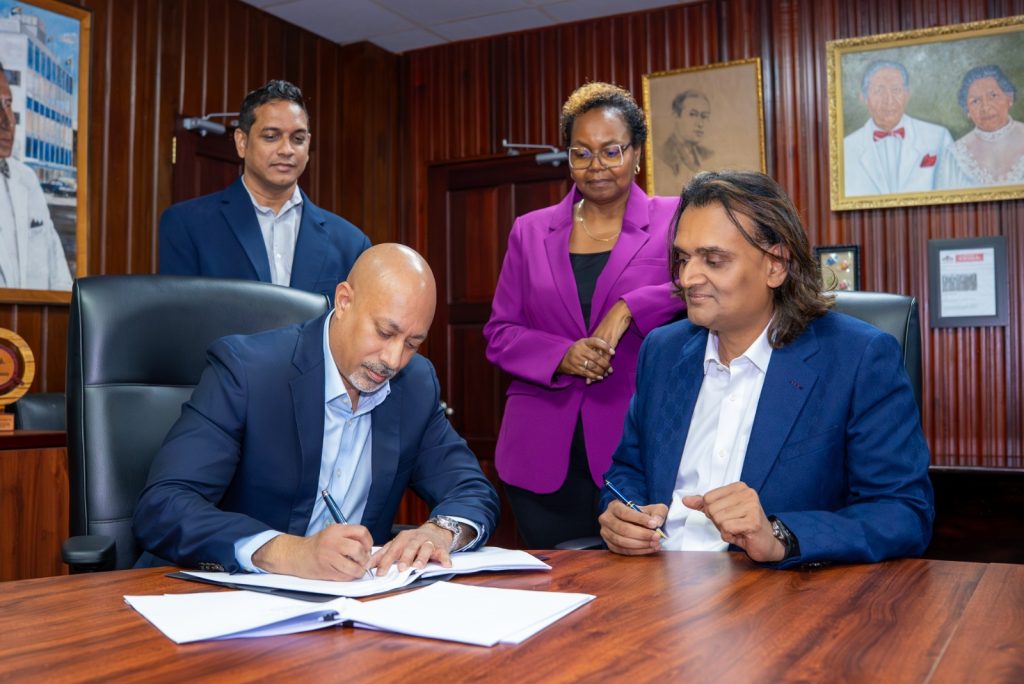
When Guyana’s Beharry Group and Jamaica’s Amber Group agreed to launch a new joint venture in technology and cybersecurity, the story started not in a boardroom, but in a crowded conference hall at the Caribbean Investment Forum (CIF) 2025 in Montego Bay. 

“I’ve been to every CIF since it started,” says Anand Harilall, Chief Strategy Officer of Beharry Group. “Based on the actual outcomes, I’ll say Jamaica was the best one – we got a partnership out of that.”  

Beharry Group is one of Guyana’s oldest and most diversified conglomerates, with more than 87 years in business and operations across six industry verticals including financial services, manufacturing, quick-service restaurants, mobility, energy services and now technology. As Group Strategy Officer, Harilall is responsible for charting the group’s path to 2030 and driving its ambition to become “a leading conglomerate in the region and beyond.”  

That growth vision made CIF a strategic priority. Harilall describes the Forum as a place where “all the key stakeholders are in one space” – development banks, investors, corporates and governments – creating rich opportunities to network, explore partnerships and showcase what Beharry is doing in high-growth markets like Guyana.  

The pivotal moment came during a CIF session on digital transformation led by Amber Group founder Dushyant Savadia. Digital transformation is a core pillar of Beharry’s 2030 strategy, so Harilall rearranged another meeting to hear the presentation. “A lot of what he said and what his business was doing was very much aligned with our business and the different industries that we’re in,” he recalls. After the session, “there were a slew of people waiting to engage him,” but Harilall “jumped the queue,” delivered a “minute and a half pitch,” and walked away with Savadia’s mobile number and an agreement to keep talking.  

What followed was classic CIF follow-through: virtual meetings, market visits and deep discussions about strategy, values and fit. “What’s critical with partnerships is alignment, shared values,” Harilall notes. Those conversations culminated in a joint venture focused on deploying Amber’s technology solutions both within the Beharry Group and across the Guyanese and wider Caribbean market.  

The collaboration is designed to accelerate Beharry’s own digital transformation—rolling out tools such as fleet and asset tracking, operational efficiency platforms and other enterprise solutions across its 14 operating companies—while positioning the new venture as a technology and cybersecurity solutions provider for government and private sector clients. With Caribbean and Latin American markets “highly susceptible to cyber-attacks,” Harilall sees a clear opportunity to strengthen resilience in areas such as e-government, health, education and financial services, building on Amber’s experience working with the Government of Jamaica.  

For Harilall, the partnership is a textbook example of what CIF is meant to achieve. The deal did not close in the conference room, but CIF created the environment, access and momentum that made it possible. “Sometimes the outcomes might be immediate; sometimes they happen over time through connections,” he says. “But if you weren’t there, you might not have been able to connect.”  

As Caribbean Export marks its 30th anniversary, the Beharry–Amber story stands out as a tangible result of the Caribbean Investment Forum’s convening power—turning a conference encounter into a regional partnership that will help build the Caribbean’s digital and cybersecurity backbone. 

Read more here: Annual Results Report 2025 | Caribbean Export
Notice- Telephone Lines

We are currently experiencing technical issues with our main telephone lines in Barbados.

In the meantime, please contact us at +1 (246) 826-7745 for assistance.

We sincerely apologize for any inconvenience this may cause and thank you for your understanding as we work to resolve the issue.

GreenToCompete Hub Bootcamp – Connecting Small Businesses to Green Financiers and Solutions in the Caribbean

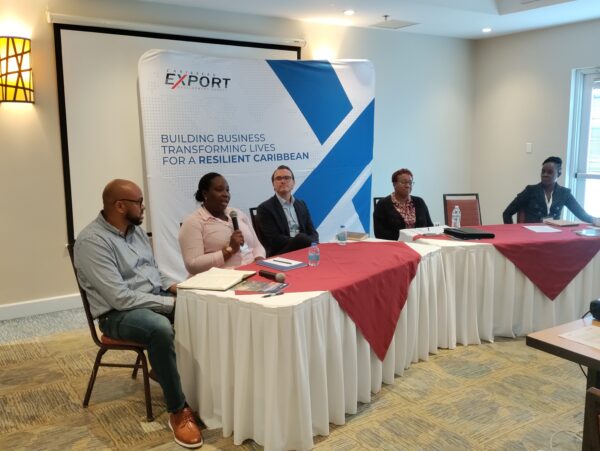
ITC and the Caribbean Export Development Agency (CEDA) organized a bootcamp on ‘Access to Green Finance’ on 22-24 November 2022 in Bridgetown, Barbados. The bootcamp included workshops and business matchmaking sessions targeting micro, small, and medium-sized enterprises (MSMEs) from Guyana, Barbados, and Saint Lucia. The workshop aimed to enhance MSMEs’ competitiveness by increasing their knowledge and readiness to access green finance, and resource efficiency and circularity practices with a focus on solar energy adoption.

Access to finance workshop

The first two days of the workshop were led by Access to Finance consultant Mr. Christopher McGann and it included a blend of interactive sessions.

On the first day, participants explored the challenges and opportunities of green/sustainable finance and the relevant UN SDG Goals and Environmental, Social, and Governance (ESG) criteria. They also learned about Credit Risk Abatement Facility (CRAF) facilitated by CARICOM Development Fund (CDF)’s Financial Controller, Mr. Wayne Vitalis. CRAF is a partial credit guarantee facility that provides an incentive for additional lending to MSMEs by financial institutions for renewable energy/energy efficiency initiatives in CARICOM. Lastly, they were introduced to ‘Project Viability and Financing Types’ by Ms. Debbie-Anne Jemmott, Investment Analyst of the Enterprise Growth Fund Ltd.

On the second day, key results of the regional landscape study on access to finance commissioned by the GreenToCompete Hub in the Caribbean was presented, followed by an interactive panel discussion on the risks and opportunities in green financing for MSMEs in the Caribbean with the following expert speakers:

  • Barbados Fund Access – Ms. Nadia Wilkie, Project Development Officer
  • CIBC First Caribbean International Bank – Mr. Ray Ward, Associate – Investment Banking
  • Enterprise Growth Fund – Ms. Debbie-Ann Jemmott, Investment Analyst
  • CARICOM Development Fund – Dr. Laverne MacFarlane, Senior Economist

Through this discussion, participants companies were able to gain deeper insight into the available services provided by these institutions and requirements to access funds to implement green projects.

Speed dating and matchmaking

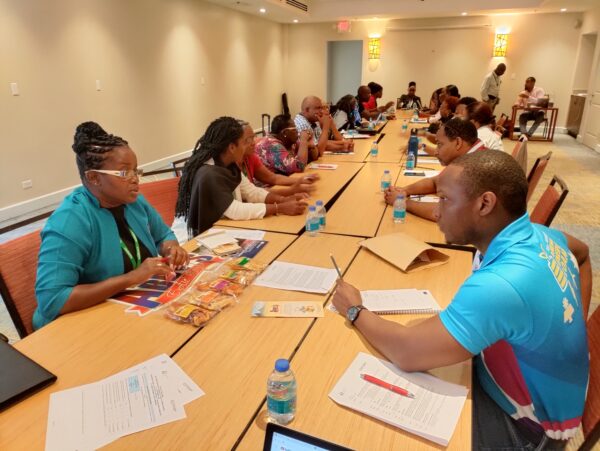
To know more about green financing options, speed dating and matchmaking sessions were organized with financial institutions providing green services and products, such as Barbados Fund Access, Enterprise Growth Fund Limited, CIBC First Caribbean International Bank, Signia Globe Financial Inc, Republic Bank Barbados Limited, CARICOM Development Fund, and the Bloom Cleantech Cluster of Export Barbados. Participant companies and financiers discussed opportunities to get access to finance to implement resource-efficient and circular projects and get sustainability certifications since many of the businesses present have been coached by the Hub on these topics.

Visit to solar PV farm

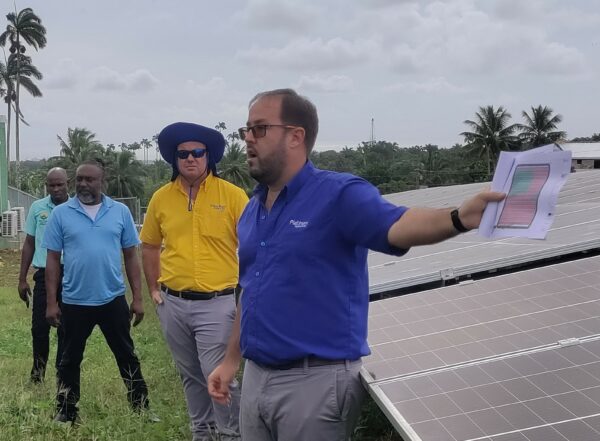
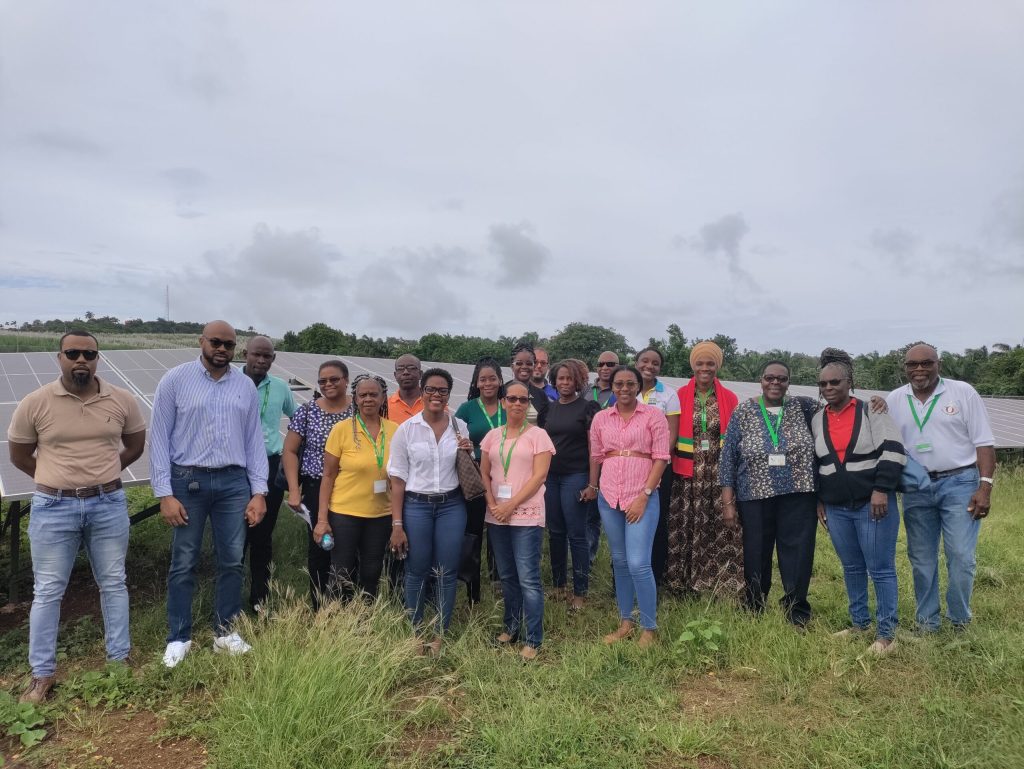
On the last day of the workshop, company representatives visited a solar farm facility to witness firsthand the application of solar PV installed in a sheep farm and learned about its financial viability and sustainability. The visit provided an insight into the range of possibilities of solar farming. The installer also highlighted the type of crops that can be grown on-site and the alternative livelihood (e.g sheep farming) that can possibly be developed in parallel.

Originally published by ITC. 

GreenToCompete Hub Bootcamp – Connecting small businesses to green financiers and solutions in the Caribbean – GreenToCompete

SANDILOU: Resort Wear Made in Haiti

Unique hand-painted pieces, drawings reproduced on clothing or beach accessories, stencils, silkscreens print or dyes, SANDILOU has developed a very original, “Made in Haiti”, resort wear garment collection that is just waiting to be exported! And this is what Caribbean Export wants to help make happen…

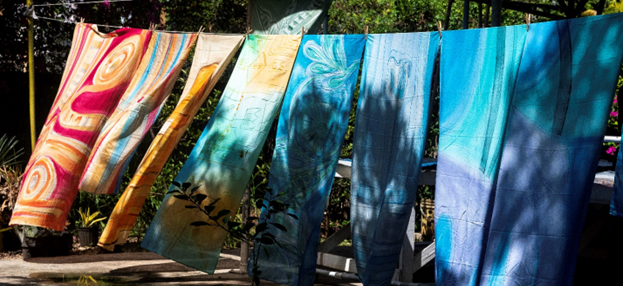
Under the arbor of SANDILOU’s workshop in Delmas 64, in the Port-au-Prince greater metropolitan area, the shimmering colors of the scarves and dyed fabrics flutter in the breeze. They will then be washed and dried in the sun, before being embellished and sewn.  

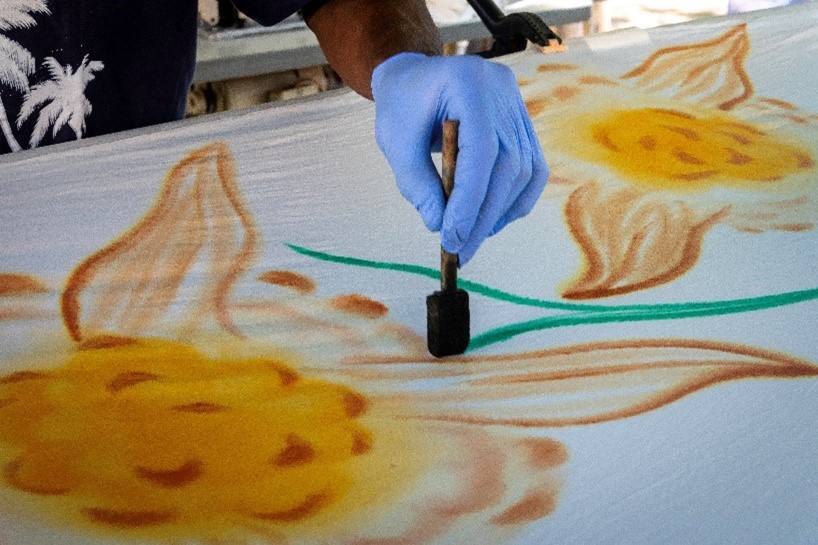
In this large garden, which is home to a hundred-year-old tree, the team members are concentrated on their tasks: some paint the backgrounds with dyes, others add outlines with brushes on dyed fabric canvases stretched on frames. Here they paint freehand and without pre-established drawing, on natural fabrics such as cotton, linen or rayon, using special fabric paints.  

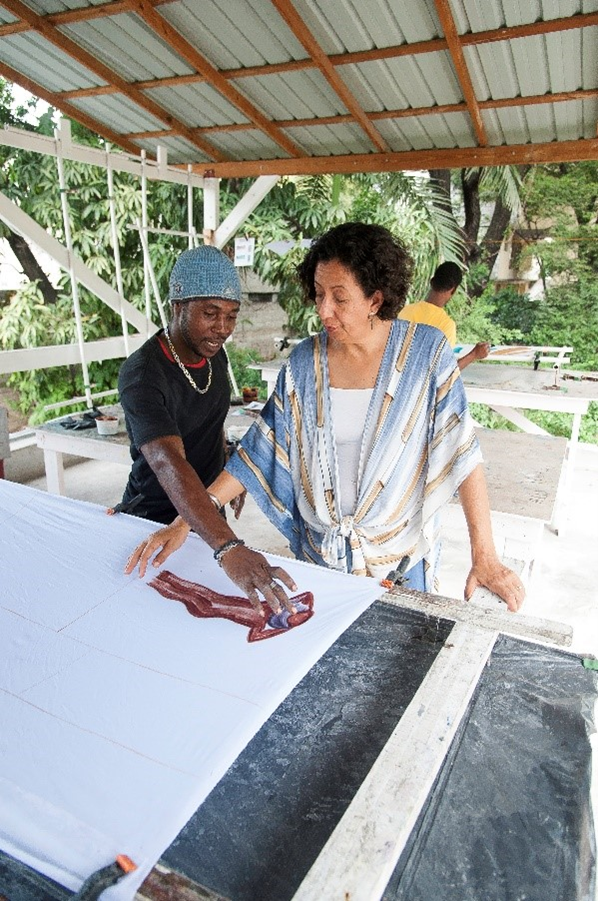
Sandra Russo shares her inspiration for a collection with her team of artists (which is very family oriented: several family generations paint or sew). It is up to the team to interpret the idea on canvas….  “I decide which tone and colors to be used and everyone has free reign to deliver a different piece… that’s the beauty of unique handmade pieces,” she says cheerfully. And that is the essence of this small Haitian brand that wants to grow! 

In 2012, Sandra Russo registered SANDILOU as a “textile handicrafts” company. A very specific classification, obtained thanks to her determination and which allows her to operate within the taxes and transport rates bracket set forth for the handicraft industry and not the textile industry.  

She has been immersed in the painting and art world since childhood. “I was surrounded by women painters, starting with my mother, I grew up surrounded by artists. This led me to pursue painting, and then to SANDILOU. For the record, this name is the combination of my nickname and that of my sister… given by a family member who could never tell us apart, so he combined us into a single nickname…”, she concludes with a laugh. The small brand reflects the owner’s upbringing: it offers its pictorial art on several textile materials, a whole range of beach clothing and accessories, leisure-type garments, and also home goods such as tablecloths and a collection of cushions, each more colorful than the other. Many different techniques are used: tie-dye, stencils, silkscreen printing, airbrushing, printing… All of this contributes to making SANDILOU’s collections very original and unique works of art hand-painted on scarves (their best sellers) or reproduced on beach towels and cushions. 

When original accessories and garments are produced on an island, the challenge is to export them. For SANDILOU, as for many Haitian designers, the local market is always a useful laboratory for testing products, but only export can guarantee real growth. It is through this lens, and in particular to encourage a connection with the Dominican Republic (DR) market that Caribbean Export, through a program funded by the trade and private sector support component of the bi-national HT-RD program within the framework of the 11th European Development Fund (EDF) of the European Union, has tried, for several years, to guide and assist the value chain of handicrafts companies, including SANDILOU.  COVID 19 slowed down these plans, but the meetings finally came to fruition through the virtual presentation of several Haitian companies to potential buyers from the neighboring country. The meeting with the Jenny Polanco company allowed SANDILOU to present its samples to a brand that is already well established in the DR. Sandra Russo also worked on the Symbiose project, another program initiated by Caribbean Export, which brought together the two countries on a jewelry design training course, to dress the models who will present these works during an exhibition that should take place in 2022.  


While waiting for opportunities to materialize on this side of the island, SANDILOU is working on its website and marketing tools, thanks to a direct grant obtained from the Caribbean Export’s Private Sector Development Support Program. “We have produced a short video and website ourselves and will improve or develop more relevant and up-to-date marketing and communication tools to tackle the market. With kaftans, scarves, beach dresses and colorful towels, our collection is really a typical resort-wear and leisure style product, and the Caribbean is one of the regions most receptive to this type of product. However, this market has changed drastically due to COVID-19: some resorts and stores have disappeared, and others are emerging,” explains Sandra Russo, convinced that the real challenge today is to conquer these new players. 

The Caribbean is an essential market, the Dominican Republic remains to be explored, especially in its resorts and hotels component, and in the United States, museum shops and marketplaces already offer interesting opportunities. SANDILOU has just created a collection that will be presented this summer at the Smithsonian Institution’s “Artisan Marketplace”. Sandra recalls with nostalgia the fairs which used to be held throughout the Caribbean islands until the arrival of COVID-19: “This is the real meeting place for buyers and artisans. Some things are done online, but us islanders we need the human touch, we need to feel the materials, to meet in the flesh…to know who we are dealing with” So the main challenge for the Haitian small business in 2022 will be to find ways to present its collections and penetrate markets. With a collection of approximately 2,000 to 3,000 original designs in its inventory, SANDILOU will not be short of inspiration and is ready to take up the challenge!