GRIT Project Completes Regional Rollout Across All Six Caribbean Nations

The Caribbean Export Development Agency has completed the full regional activation of the Caribbean Women Entrepreneurs Generating Resilient and Inclusive Trade (GRIT) Project, following the successful activation of the programme across its final three countries — Jamaica, Grenada, and Saint Vincent and the Grenadines — in a  succession of activations throughout April 2026.

Funded by the Government of Canada through Global Affairs Canada, GRIT is a four-year, US$3 million initiative running from 2025 to 2028. With the completion of these final three country activations, the programme is now fully operational across all six participating nations: Belize, Dominica, Grenada, Jamaica, Saint Lucia, and Saint Vincent and the Grenadines.

The programme directly supports 800 women entrepreneurs across the region, with a further reach of 10,000 through training and capacity building opportunities, market intelligence, and network access. It targets women-led enterprises in fresh produce, agro-processing, artisan goods, renewable energy, eco-tourism, and digital services — with particular focus on women-owned businesses that are youth-led, rural-based, indigenous-owned, or led by women with disabilities.

A Region-Wide Milestone

The implementation of the GRIT programme was initiated in 2025 in Saint Lucia, before activating in Dominica and Belize. The final wave of activations — Jamaica (April 13–17), Grenada (April 21–24), and Saint Vincent and the Grenadines (April 27 – May 1) — brought initial sensitisation and consultative phases training to completion in a concentrated country-focused push that underscored both the momentum and ambition of the programme.

Dr. Damie Sinanan, Executive Director of the Caribbean Export Development Agency, described the full regional rollout as a defining moment for inclusive trade in the Caribbean: «GRIT is not simply a training programme. It is a structural investment in the women who are already driving Caribbean economies forward, and in building the ecosystem they need to scale into regional and global markets. Completing all six country activations is a milestone we are proud of — and it marks the beginning of the real work ahead.»

Jamaica: Culture, Community and Enterprise

The GRIT Jamaica activation (April 13–17, 2026) was distinguished by its deliberate reach into rural and indigenous communities. The national launch took place at Treasure Beach, St. Elizabeth, a location chosen intentionally to signal GRIT’s commitment to entrepreneurs beyond urban centres. The event opened with a blessing from Kasike Kalaan Kaiman and Kasikeiani Ronalda of the Kasike Yamaye Guani Council, Taino People, a moment that set a powerful cultural tone.

 The launch featured a fireside chat — Rooted in Culture, Leading the Future — with Queen Mother Tamica Taylor, Minister of Security, Accompong Town Maroons; Lacey-Ann Bartley, CEO of Bartley’s All in Wood; and Antoinette Davis, CEO of Ettenio. His Excellency Mark Berman, High Commissioner of Canada to Jamaica and The Bahamas, was among the dignitaries in attendance. Addressing the gathering, the High Commissioner spoke directly to the programme’s rationale: «Canada firmly believes in inclusive trade, where the benefits and opportunities of trade are shared equitably among all members of society.» He went on to outline what that means in practice — that «trade, when designed to be inclusive, can be a powerful catalyst for development,» but only when entrepreneurs have real access to skills, finance, information, markets, and networks. GRIT, he noted, is designed to build exactly those pathways.

The week extended well beyond the launch itself, with enterprise visits to Bartley’s All in Wood, a fair-trade woodcraft enterprise built on a legacy of craftsmanship, and the Source Farm Foundation, a regenerative organic farm and ecovillage in St. Thomas. The team also travelled to Accompong Town, engaging directly with Maroon community leaders and women entrepreneurs.

Grenada: From Local Roots to Global Markets

The GRIT Grenada activation (April 21–24, 2026) was held in partnership with the Grenada Investment Development Corporation (GIDC) and brought together women entrepreneurs from across the island — including, participants from Carriacou and Petite Martinique.

The national launch at the Radisson Grenada Beach Resort was addressed by Hon. Senator Gloria Ann Thomas, Minister of Social and Community Development, Housing and Gender Affairs, reflecting strong government engagement at the ministerial level. The fireside chat — Rooted in Grenada, Growing to the World — featured Dr. Judlyn Telesford-Checkley, CEO of Grenada Grows Limited, whose circular economy venture converts organic waste into products that support food security and climate resilience, and Ms. Afia Joseph, an Agribusiness and Value Chain Specialist with the Food and Agriculture Organisation.

The week included a two-day Exporting to Canada workshop, a stakeholder consultation with women-led enterprises, and an enterprise visit to Auga Model Farm in St. Andrews, run by Anichell Thomas — farmer, student, mother and community advocate — whose farm serves as a living demonstration space for sustainable agriculture and community food security.

Saint Vincent and the Grenadines: From Dialogue to Results

The GRIT activation in Saint Vincent and the Grenadines (April 27 – May 1, 2026) was launched at the Beachcombers Hotel in partnership with Invest SVG. The launch was addressed by Hon. Lavern Gibson-Velox, Minister of Gender Affairs, who welcomed GRIT as a critical investment in national development, noting that women’s economic empowerment is essential for reducing poverty and increasing community resilience.  Anna Young, CEO of Invest SVG, called for a shift from dialogue to measurable results — affirming Invest SVG’s commitment to connecting local enterprises with global opportunities.

Representing the High Commission of Canada, Second Secretary for Development Ms. Thu Trang Nguyen reaffirmed Canada’s commitment to ensuring women across Saint Vincent and the Grenadines have access to the tools, skills, and financing they need to grow. The programme aligned directly with SVG’s development priorities in agribusiness, tourism, food security, and digital services.

The launch transitioned immediately into a week of specialised activities, including export readiness workshops, digital marketing sessions, and business development training for local women entrepreneurs.

Canada’s Commitment to Women’s Economic Empowerment

Canada’s investment in GRIT reflects a deep and sustained commitment to women’s economic empowerment as a pillar of Canada’s international development policy. Through its Feminist International Assistance Policy, Canada has made gender equality and the empowerment of women and girls a central organising principle of its development investments globally — and GRIT is a direct expression of that commitment in the Caribbean. By funding a programme that targets the structural barriers preventing women from fully participating in trade, Global Affairs Canada is investing not only in individual entrepreneurs but in the broader architecture of inclusive economic growth across the region. That investment carries with it a clear expectation: that women across the Caribbean are not just included in trade but are fully equipped to lead within it.

What Comes Next

With all six country activations now complete, GRIT enters its full implementation phase. Caribbean Export and its national implementing partners will work directly with the 800 women entrepreneurs enrolled in the programme to deliver capacity building, export readiness support, market access opportunities, and ecosystem strengthening across the participating countries through to 2028.

420 MSMEs Across 14 Territories Complete Project THRIVE – Charting a New Course for Caribbean Business Growth

Republic Financial Holdings Limited and the Caribbean Export Development Agency collaborate on a
landmark initiative to strengthen MSME export readiness and financial resilience across the region.

Republic Financial Holdings Limited in partnership with the Caribbean Export Development Agency (Caribbean Export), have successfully completed Phase 1 of Project THRIVE – an impactful capacity-building initiative designed to unlock the export and finance potential of Micro, Small and Medium Enterprises (MSMEs) across the Caribbean.

A total of 420 MSMEs participated in the programme, representing Anguilla, Barbados, the British Virgin Islands, the Cayman Islands, Dominica, Ghana, Grenada, Guyana, Saint Kitts & Nevis, Saint Lucia, Saint Maarten, St. Vincent and the Grenadines, Suriname and Trinidad and Tobago.

Business Capacity Building 1.0, the first phase of Project THRIVE, equipped participants with practical skills, tools, and knowledge to enhance their operational resilience, improve access to finance, and enhance export readiness in an increasingly competitive global environment.

Women‑owned and women‑led enterprises accounted for 66% of the participants, highlighting both the programme’s strong appeal among female entrepreneurs, and their commitment to growth and developmental. The cohort also reflected a diverse cross-section of industries, including professional services, agriculture, agro‑processing, manufacturing, retail, and technology.

The Programme delivered by Cloud Vision Academy, featured five core modules:

  • Business Strategy and Planning
  • Grant Proposal Writing
  • E‑commerce Essentials
  • Export Marketing
  • Cost and Financial Accounting

Each module was facilitated by subject‑matter experts and delivered through three interactive virtual sessions, enabling participants to apply learnings directly to their businesses.

Participant feedback underscored the programme’s impact, with strong engagement levels and positive responses to the quality of facilitation and the relevance of the content. Following this successful Phase 1 completion, 50 of the top 108 participants will advance to Phase 2: The Access to Finance Accelerator – a six‑month, in‑depth development programme offering personalised mentoring, one‑on‑one coaching,
and deeper business‑development interventions designed to accelerate growth and export potential. Eligible participants will be contacted by the Project THRIVE team in the coming week with further details on the next phase.

Commenting on the programme, Richard S. Sammy, Group Vice President, Republic Financial Holdings Limited, stated: “Project THRIVE embodies our commitment to elevating our MSMEs. We are deeply
encouraged by the outstanding participation and congratulate all participants on their success. When MSMEs thrive, entire economies thrive, and together with our valued partner Caribbean Export, we look forward to advancing Phase 2 and delivering tangible impact across the region.”

Damie Sinanan, Executive Director, Caribbean Export Development Agency, added: “Project THRIVE is precisely the kind of transformative, private-sector-led partnership that Caribbean Export was created to champion. The breadth of participation across territories – and the remarkable representation of women entrepreneurs – affirms that Caribbean businesses are ready to compete on a regional and global stage. We are proud to stand alongside Republic Bank in equipping the next generation of Caribbean exporters.”

Caribbean Export and RevUP Caribbean Sign MOU to Strengthen Regional Entrepreneurship and Innovation Ecosystem

The Caribbean Export Development Agency (Caribbean Export) and RevUP Caribbean Limited (RevUP) have formalised a strategic partnership through the signing of a Memorandum of Understanding (MOU), aimed at advancing entrepreneurship, innovation, and private sector development across the Caribbean.

The MOU was signed during the Caribbean Women Generating Resilient and Inclusive Trade (GRIT) Project activation week in Jamaica, marking a significant step towards strengthening support systems for micro, small, and medium-sized enterprises (MSMEs), particularly those led by women and youth.

Caribbean Export, the regional trade and investment promotion agency of CARIFORUM, and RevUP, a leading virtual business incubator, share a common vision of fostering a more resilient, competitive, and inclusive Caribbean private sector.

Through this partnership, both organisations will collaborate to expand access to finance, build entrepreneurial capacity, and strengthen market linkages for businesses across the region. Key areas of cooperation include startup support programmes, capacity building and technical assistance, investor engagement, innovation challenges, and export readiness initiatives.

“This partnership with RevUP Caribbean represents a strategic alignment of efforts to support the growth of innovation-driven enterprises in the region,” said Dr. Damie Sinanan, Executive Director of Caribbean Export. “By combining our networks, expertise, and platforms, we can create stronger pathways for Caribbean entrepreneurs to access financing, scale their businesses, and compete globally.”

RevUP Caribbean, known for its immersive incubator programmes and focus on early-stage ventures, will work alongside Caribbean Export to identify and support high-potential startups, facilitate connections with investors, and deliver targeted training and mentorship opportunities.

“We are excited to partner with Caribbean Export to deepen our impact across the region,” said Sandra A. C. Glasgow, Managing Director of RevUP Caribbean. “This collaboration will help accelerate the growth of startups and MSMEs by connecting them to the resources, networks, and capital they need to thrive.”

The MOU also provides a framework for joint initiatives such as pitch competitions, accelerator programmes, investor forums, and cross-border partnerships, all aimed at catalysing sustainable and inclusive economic growth.

This collaboration reflects a shared commitment to building a dynamic startup ecosystem in the Caribbean – one that empowers entrepreneurs, drives innovation, and unlocks new opportunities for regional and international market access.

The agreement will remain in effect for an initial period of two years, with opportunities for expansion through jointly developed programmes and initiatives.

Ready When Opportunity Knocks: The Beharry-Amber Lesson for Caribbean Business

Written by: Steven Williams (Originally published in Barbados Today)

On the evening of Thursday, 16 April, the ballroom at Wyndham Grand Barbados Sam Lord’s Castle filled with the usual faces from across the regional economy: exporters, diplomats, development officials, and beneficiaries. They had gathered to mark thirty years of the Caribbean Export Development Agency and the release of its 2025 Annual Results Report.

It was, by every measure, a good-news evening. The agency reported another year of strong financial recovery, expanded partnerships, and a clear line of sight from the closing 2021-2024 strategic cycle into the 2025-2028 plan that succeeds it.

The keynote fell to Minister Sandra Husbands, who did what ministers on such occasions do well: she celebrated the agency’s track record in real, unfussy terms, acknowledged the European Union’s thirty-year partnership, and positioned Caribbean Export’s work inside the broader regional trade agenda. But she also did something sharper. She pressed the agency to look harder at the skills gap inside Barbados and the region, to move beyond funding and facilitation, and to take on the diagnostic work of identifying where the private sector is actually under-equipped for the economy it says it wants.

It was the right note to strike, and it is the note this column wants to pick up.

Because the more revealing question, for any business owner who was in that room and for the thousands who were not, is not whether Caribbean Export is doing its job. The report makes a confident case that it is. The real question is whether Caribbean enterprises, particularly Barbadian ones, are digitally transformed enough to catch the opportunities now being placed within reach.

The honest answer, in April 2026, is not yet.

The Beharry-Amber moment

The clearest illustration in the report comes from the Caribbean Investment Forum held in Montego Bay in 2025. There, Dushyant Savadia, founder and CEO of Jamaica’s Amber Group, delivered a session on digital transformation and artificial intelligence. In the audience was Anand Harilall, Chief Strategy Officer of Guyana’s Beharry Group, an 87-year-old family-owned conglomerate with interests across multiple strategic sectors.

Having attended every CIF since its inception, Harilall recognised the alignment immediately. Within a month, Savadia was in Guyana. Within weeks, Beharry-Amber Technologies was agreed, a joint venture to deliver advanced technology and cybersecurity solutions across Guyana, Suriname, and the wider Caribbean. Its mandate is twofold: accelerate Beharry’s internal digital transformation and take those services to market across Guyana’s public and private sectors. A flagship AI-powered call centre is already on the drawing board. That is the speed at which regional deals now move when both parties arrive digitally ready.

What «ready» actually means

Nothing about Beharry’s moment was accidental. You do not deliver a minute-and-a-half pitch on technology ambitions unless the strategy is already written. Beharry’s 2030 horizon treats digital transformation as a core pillar of growth, not a line item in the IT budget. Amber, for its part, arrived with a productised AI stack, live reference deployments, and a partner-first operating model that made cross-border collaboration feel like plumbing rather than diplomacy. Two digitally mature organisations met in a room, recognised each other, and moved.

Which raises the uncomfortable diagnostic question Minister Husbands was circling on Thursday evening: what does «digitally mature» actually look like in a Caribbean business in 2026? It looks, in my reading, like six layers sitting on top of one another.

The Identity layer is the foundation a proper domain, a website that is more than a Facebook page, branded email (not a Gmail address on a business card), verified Google Business and LinkedIn profiles, and consistent presence on the channels customers actually use. Without this, a business is invisible to search engines, procurement systems, funding agencies, and regional partners who screen before they shake hands.

The Operations layer is a cloud-first stack. Accounting in QuickBooks or Xero, documents in Microsoft 365 or Google Workspace, HR on SaaS, communications in Teams or Slack held together by an integration fabric of APIs, webhooks and workflows so data moves between systems instead of being re-keyed by a clerk.

The Customer layer is where Caribbean enterprises most often fall short. The digitally transformed business lets its customers find it, transact with it, and support themselves without picking up a phone. Digital payments, online booking or ordering, CRM-tracked relationships, WhatsApp and email and chat on parity. In our region, payment rails and shipping logistics remain real constraints but they are constraints to be designed around, not reasons to opt out.

The Data layer is where Caribbean Export’s own framing AI readiness, innovation, competitiveness starts to bite. The transformed business treats data as an asset, not exhaust: structured transaction and customer data, dashboards that inform decisions, and increasingly AI layered on top, whether for productivity, prediction or retrieval of institutional knowledge. If an enterprise cannot answer «how did we do last month?» in under five minutes, it is not yet operating digitally.

The Trust layer is the one most Caribbean commentary under-covers, and it is the one Harilall himself flagged in the report the region is highly exposed to cyber threats, and private-sector resilience now depends on serious cyber posture: MFA, endpoint protection, tested backups, incident response, alongside a lawful data-protection footing under the Data Protection Act 2019-29 and contractual hygiene with every processor. Without this layer, everything above it is liability waiting to crystallise.

The People layer closes the loop, and it is the layer, Minister Husbands reached for on Thursday evening. Digital skills, remote-capable workflows, and a leadership culture that treats technology as a first-class strategic concern rather than something the «IT guy» handles. The modern digital business does not have a digital transformation project. It has digital fluency as a condition of employment.

Caribbean Export has spent thirty years and this past year with particular intent building the runway. The 2025 report is a catalogue of that work: investment fora that convene capital and ambition in the same room, digital accelerators that link regional firms to European and Latin American partners, co-financing facilities for smart and green investments, capacity-building programmes for MSMEs and women-led enterprises, and a new institutional spine in the Caribbean Digital Transformation Institute. That runway is long, paved, and lit.

But a runway does not fly aircraft. The Beharry-Amber joint venture flew because both organisations had already built the plane. Minister Husbands’ intervention the call for a sharper skills-gap diagnostic was really a call for more Caribbean enterprises to finish building their aircraft while the runway is clear.

In 2026, the competitive Caribbean business is no longer the one with the biggest office, the longest payroll, or the oldest Rolodex. It is the one that can show up in the room physically, digitally, or inside a procurement portal already carrying the six layers. Regional growth capital, cross-border joint ventures, and diaspora markets will keep finding the enterprises that have done that work. The rest will fight over a shrinking domestic pie and wonder where the opportunities went.

Caribbean Export has done its thirty years. The next move belongs to the enterprise.

Caribbean Export Development Agency Releases Annual Results Report 2025 and Celebrates 30 Years of Empowering Regional Businesses

  • Regional agency highly praised by ministers and stakeholders on landmark 30th Anniversary.
  • Caribbean Export celebrated longevity with partners and released 2025 Annual Report.
  • Results Report shows 4,400 business professionals benefitted from 72 programmes last year.

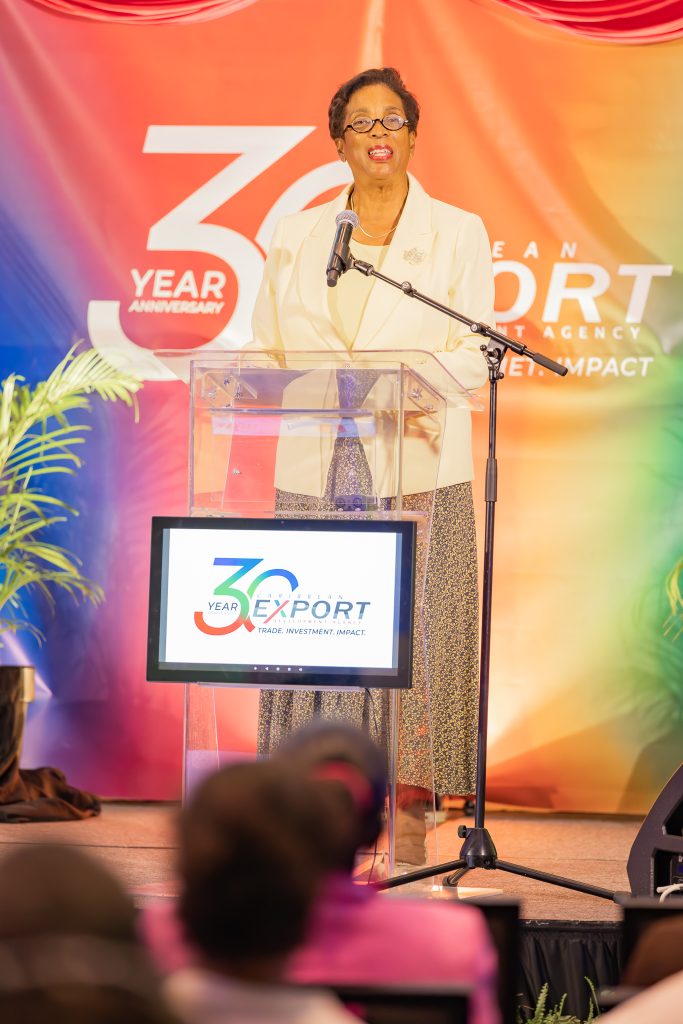
The enduring, powerful, and direct impact of the Caribbean Export Development Agency (Caribbean Export) on thousands of regional business owners was celebrated at an impressive gala event held at the Wyndham Grand Barbados on 16 April 2026.

Local and regional government ministers, international stakeholders, diplomats, and beneficiaries attended the informative and inspirational occasion which jointly recognised the agency’s 30th milestone and featured the fourth iteration of its Annual Results Report.

Guests were entertained by Barbadian saxophonist Zukeli Inniss and sensational teen singer Skky Dowridge ahead of opening remarks by the Chairperson of Caribbean Export’s Board of Directors, Dr Lynette Holder.

In her address, Dr Holder lavished praise on the agency’s ability to continually adapt and adjust which had seen it move from being in the red to the black and take on new development partners alongside the European Union such as the Inter-American Bank, Republic Bank, and the Canadian government.

“Three decades is a significant milestone by any measurement,” Dr Holder said. “For Caribbean Export it represents 30 years of evolving with the needs of our region, supporting enterprises, strengthening export readiness, promoting investment, and helping Caribbean businesses position themselves in an increasingly competitive global economy.”

Focusing on the achievements noted in the 2025 report, Dr Holder stated: “This report for the last fiscal period reflects not just activity but purpose. It speaks to an organisation that continues to sharpen its relevance, strengthen its delivery, and remain focused on impact. It reflects the discipline of an institution that understands the importance of stewardship of resources, partnership, and trust.”

Caribbean Export’s Executive Director, Dr Damie Sinanan, recalled the 20,000 beneficiaries the agency has assisted since it opened it’s office in 1996 through projects cumulatively valued $126m (US), and with $60m (US) in grants awarded. He added: “These are not just statistics they represent a commitment that Caribbean Export has given to the region for 30 years. One that was built on relationships directly with business owners, communities and community leaders and to the belief that the private sector is central to our region’s prosperity, resilience, and future.”

Dr Sinanan also emphasised the agency’s new dedication to dealmaking and investment facilitation which is embodied in its annual flagship ‘Caribbean Investment Forum (CIF)’ event which was held over three days in Jamaica last year. CIF 2025 attracted 400 participants from 39 countries and presented 12 investment-ready projects. In 2026, CIF will take place in Barbados.

Looking ahead, Dr Sinanan invited all the organisations present to continue to join with the agency for the benefit of the region and thanked Caribbean Export’s development partners for their unwavering support.

EU representative, Dr Florian Luetticken, suggested “the best is yet to come” as he underscored the trust that the agency enjoys after partnering with the European Union for so many years. He renewed the EU’s commitment to shared trade, prosperity, and economic growth with the Caribbean.

Counsellor (Development) and Head of Cooperation in the Eastern Caribbean from the High Commission of Canada, Abebech Assefa, explained why Canada is happy to partner with Caribbean Export. “We see strong potential in continuing to work together, supporting entrepreneurs, encouraging innovation, and ensuring that economic growth is shared,” she said.

Barbados’ Minister of Training and Tertiary Education, Sandra Husbands, added her congratulations on the agency’s 30-year milestone as well as the launch of the 2025 Annual Results Report. But she urged Caribbean Export to work more closely with government ministries, especially in terms of equipping young people looking to start their own businesses and leverage new technology. “Our region’s progress depends not only on financing and market access,” Ms Husbands stated, “but it is on developing skills, knowledge, and entrepreneurial confidence that will enable our people to innovate, produce and lead. Institutions like Caribbean Export help to bridge that gap.”


A thought-provoking spoken word segment from award winning poet, Akeem Chandler-Presod aka ‘Stoned with Cupid’ preceded an address from the St Vincent and the Grenadines Minister of Education, Vocational Training, Innovation, Digital Transformation and Information, Philip Jackson, delivered via Zoom. He encouraged entrepreneurs, Caribbean Export and its development partners to continue taking “bold steps” together to realise the Caribbean’s full potential through offering “the best of our regional assets”.

Caribbean Export Launches Caribbean Digital Transformation Institute to Accelerate MSME Competitiveness

The Caribbean Export Development Agency has officially launched the Caribbean Digital Transformation Institute (CDTI), a new regional platform designed to help micro, small and medium-sized enterprises (MSMEs) assess their digital readiness, strengthen their capabilities, and compete more effectively in an increasingly digital global economy.

Supported by the Inter-American Development Bank (IDB) and the Compete Caribbean Partnership Facility, the CDTI, the CDTI has been developed to respond to the growing need for practical, accessible, and data-driven support for Caribbean businesses navigating digital transformation. The platform provides MSMEs with a structured pathway to evaluate their digital maturity, identify gaps, and access targeted learning resources to improve their use of digital technologies across business operations.

At the heart of the platform is the Digital Check-up, an online diagnostic tool that helps firms assess their digital capacity across key business dimensions, including digital technologies, communications and sales channels, organisation and people, data and analytics, strategy and digital transformation, and processes. Based on the results, businesses receive tailored recommendations that can guide their next steps and support more deliberate investment in digitalisation.

The launch also highlighted the CDTI’s e-learning platform, which offers a suite of self-paced courses and learning resources aimed at helping MSMEs strengthen core digital skills, improve online visibility and customer engagement, advance e-commerce readiness, make better use of data, and improve business efficiency through stronger digital processes.

Speaking at the launch, Dr. Lynette Holder, Chairperson of the Caribbean Export Development Agency, underscored the importance of digital transformation for the region’s private sector stressing that “Digital transformation is no longer optional, it’s essential” and that “For the Caribbean this reality carries both urgency and opportunity”.

Dr. Damie Sinanan, Executive Director of Caribbean Export, echoed these sentiments, noting that the “CDTI is a strategic intervention designed to give micro, small and medium-sized enterprises the digital tools, e-commerce capabilities, and operational efficiency they need to thrive.” He also encouraged national business support organisations to play an active role in ensuring that these tools reach entrepreneurs and that they “actively engage with the resources provided.” He added, “We need the collective action of the private sector to truly transform the Caribbean into a globally competitive economic hub.”

Also addressing the event, Sylvia Dohnert, Lead Private Sector Development Specialist at the IDB, reaffirmed the IDB’s commitment to supporting innovation, productivity, and private sector development across the Caribbean – “This Caribbean Digital Transformation Institute was a response to the promise that digital technology offers to Caribbean business, but also the difficulties that businesses in the Caribbean face in digital transformation”.

Kayla Grant, Executive Director of Compete Caribbean, described the initiative as “a powerful regional public good” that “will strengthen the ecosystem supporting MSMEs and help position Caribbean firms to compete, innovate, and grow in the digital global economy.”

Delivering remarks on the significance of digital transformation for the region, Hon. Philip Jackson, Minister of Education, Vocational Training, Innovation, Digital Transformation and Information, St. Vincent and the Grenadines, highlighted the importance of building the digital capacity of Caribbean enterprises to ensure they can thrive in a rapidly evolving economy. He noted that “digital infrastructure and digital public infrastructure are critical to fostering this culture not only among citizens, but also among businesses.” He added that, “as we continue to share data and lessons learned, we are better able to make more informed and strategic decisions that support sustainability.”

The launch of the CDTI marks an important step in Caribbean Export’s continued efforts to build a more resilient, innovative, and competitive private sector. By combining digital diagnostics, practical learning, and regional data insights, the Institute is expected to play an important role in shaping how MSMEs across the Caribbean adapt to technological change and seize new market opportunities.

As Caribbean businesses face increasing pressure to modernise, adopt new tools, and respond to changing customer expectations, initiatives such as the CDTI will be critical in ensuring that MSMEs are not left behind, but are instead equipped to lead in the digital economy.

Watch the full launch here

Caribbean Export Set to Unlock Transformative Climate Finance for the Caribbean Through Green Climate Fund Accreditation

Landmark accreditation positions the Agency as one of only four regional Direct Access Entities in the Caribbean and opens the door to millions in climate finance for transformative private sector investment across the region

Caribbean Export Development Agency (Caribbean Export) welcomes its accreditation by the Green Climate Fund (GCF), marking a defining moment for the institution, a major achievement for the Caribbean, and a bold new chapter for private sector-led climate action in the region.  In securing this milestone, Caribbean Export becomes one of only four regional Direct Access Entities in the Caribbean accredited by the GCF, a major step that significantly elevates the region’s ability to access, shape, and deploy international climate finance through institutions rooted in Caribbean priorities and realities. 

For Caribbean Export, this is far more than a credential. It is a game-changing platform for action. In its 30th year of operations, the Agency enters this role not as a passive conduit for funding, but as an active regional force with the mandate, private sector expertise, and trusted partnerships to convert climate ambition into investable programmes and projects that can transform businesses and economies across the Caribbean. 

As a regional institution focused on private sector development for the past 30 years, Caribbean Export’s accreditation represents a major breakthrough for the Agency and wider region.  It strengthens its ability to help develop and implement climate-related projects and programmes that respond to the needs of Caribbean countries and businesses. It also positions the Agency to play a stronger role in creating pipelines of investment-ready initiatives that help Caribbean businesses build resilience, modernize operations, adopt cleaner technologies, and compete in a rapidly changing global economy. 

The Green Climate Fund works through Accredited Entities to develop funding proposals and manage projects and programmes that help countries turn climate priorities into action, with financing instruments that can include concessional loans, equity, guarantees, lines of credit, and grant-based capacity building. As a Direct Access Entity, Caribbean Export is now strategically positioned to help open the door to these resources and to crowd in the scale of capital the region has long needed. The opportunity is transformative: to unlock millions of dollars for Caribbean businesses, mobilise new partnerships, and support a new generation of commercially viable climate investments that the region has not previously been positioned to pursue at this level through a regional private sector-focused institution. 

For the Caribbean, where firms and communities face increasing climate-related shocks including stronger hurricanes, drought, coastal erosion, and rising operating costs, accreditation creates a new pathway to structure and scale projects that directly support business resilience and regional transformation. This can include initiatives in renewable energy and energy efficiency, climate-smart agriculture, resilient infrastructure, sustainable tourism, green manufacturing, water security, innovation, and financial instruments that help de-risk private investment. 

Dr. Damie Sinanan, Executive Director of Caribbean Export, said: 

This is a transformative moment for Caribbean Export and for the region we serve. Accreditation to the Green Climate Fund significantly strengthens our ability to support the development of climate finance opportunities for the Caribbean’s private sector, the engine of jobs, innovation and economic growth. It gives us the opportunity to help businesses access the resources they need to adapt, invest, innovate and lead the region’s transition to a more resilient and sustainable future.” 

He added: 

For too long, many Caribbean businesses, particularly MSMEs, have faced major barriers in accessing the scale and type of support required to respond meaningfully to the climate crisis. This milestone opens the door to a new generation of projects and partnerships that can help enterprises invest in clean energy, climate resilience, sustainable production, and stronger value chains. The potential impact for the region is profound.” 

Caribbean Export is the regional trade and investment promotion agency focused on building a resilient Caribbean by delivering high-impact support to the private sector. Its mandate and track record position the Agency to play a catalytic role in identifying and advancing bankable climate-related investments that respond to regional needs while supporting sustainable economic development. 

Achala Abeysinghe, Director of the Green Climate Fund’s Department of Investment Services said: 

We are pleased to welcome the Caribbean Export Development Agency as an Accredited Entity of the Green Climate Fund. This new partnership, with a regional direct access entity, will expand access to climate finance and support private sector development across the small island developing states of the Caribbean.” 

“Partnering with the Caribbean Export Development Agency reinforces GCF’s commitment to collaborate with more regional institutions to increase direct access to climate finance in support of resilient economies. As we move forward, GCF’s revised Accreditation Framework will enable the Fund’s partnership model to become even more transparent, responsive, and efficient, enhancing fairness and country ownership.” 

This development is especially significant because the Green Climate Fund has increasingly emphasized improving access to climate finance and scaling private sector participation, recognizing that private investment is essential to achieving climate-resilient and low-emission development. For the Caribbean, that matters enormously. The region now has an expanded opportunity to move beyond small, fragmented interventions and toward larger, more strategic and more bankable programmes that can channel climate finance to the businesses, sectors, and value chains that need it most.  GCF notes that the private sector has an unparalleled role to play in clean energy, sustainable transport, green infrastructure, and climate-resilient agriculture. 

The next phase is already in sight. Caribbean Export has concepts being prepared and is getting ready to submit them into the GCF process, with a clear focus on building a strong pipeline of high-impact initiatives that can strengthen resilience, improve investment readiness, and expand access to finance for businesses across the region.  

Caribbean Export looks forward to working closely with Caribbean governments, financial institutions, development partners, entrepreneurs, and private sector stakeholders to develop impactful climate projects and programmes that can strengthen resilience, improve investment readiness, and unlock sustainable growth throughout the region. 

This is not simply an institutional milestone. It is a regional opportunity of enormous significance, one that gives the Caribbean a stronger hand in shaping its own climate future and gives businesses a more direct pathway to the resources required to invest, adapt, and grow. 

Caribbean Export se une a la red Enterprise Europe, ampliando las vías y las oportunidades para las empresas caribeñas y europeas

La Agencia Caribeña de Desarrollo de las Exportaciones (Caribbean Export) se ha unido formalmente a la red Enterprise Europe Network (EEN) como socio de la red internacional, reforzando los lazos empresariales y de innovación entre el Caribe y Europa y abriendo nuevos canales para que las empresas europeas y caribeñas accedan a asociaciones, inteligencia de mercado y oportunidades de inversión.

Caribbean Export marcó este hito con su participación en la Conferencia Anual 2025 de la Enterprise Europe Network, celebrada del 26 al 28 de noviembre de 2025 en el Aalborg Kongres & Kultur Center de Aalborg (Dinamarca), donde la Agencia se comprometió con socios y partes interesadas de la EEN de todo el mundo para establecer vínculos estratégicos que se traduzcan en oportunidades concretas para las empresas de ambas regiones geográficas.

La EEN está ampliamente reconocida como la mayor red mundial de apoyo a las pequeñas y medianas empresas (PYME) con ambiciones internacionales, que conecta a organizaciones de apoyo empresarial y expertos para ayudar a las empresas a innovar, escalar y crecer más allá de las fronteras.

Un puente más fuerte entre las empresas caribeñas y Europa

Como agencia regional de promoción del comercio y la inversión para los 15 Estados miembros del CARIFORUM, la participación de Caribbean Export en la EEN está concebida para ampliar el apoyo práctico a las PYME y a las nuevas empresas caribeñas que deseen internacionalizarse, especialmente en Europa, al tiempo que ayuda a las empresas europeas a identificar socios creíbles y oportunidades de inversión en el Caribe.

Esta relación bidireccional significa que las empresas europeas también se beneficiarán de un acceso más estructurado al mercado caribeño. A través de Caribbean Export y la EEN, las empresas europeas podrán conectar con socios y proveedores caribeños examinados, explorar oportunidades de deslocalización cercana e identificar proyectos en tramitación en sectores de gran potencial, como las energías renovables, el turismo sostenible, la agroindustria y la economía digital. Se les apoyará con búsquedas de socios a medida, sesiones informativas sectoriales y compromisos B2B facilitados que reduzcan el riesgo y acorten el tiempo necesario para establecer relaciones comerciales fiables y a largo plazo en la región.

El Dr. Damie Sinanan, Director Ejecutivo de Caribbean Export, que asistió a la conferencia junto con Wayne Elliott, Director de Programas Técnicos, señaló que unirse a la Red consiste en convertir las relaciones en resultados:

«Esta asociación acerca a las empresas caribeñas a los compradores, inversores y socios de innovación europeos. A través de la red Enterprise Europe Network, aceleraremos el establecimiento de contactos empresariales, reforzaremos la preparación para la exportación e impulsaremos nuevas colaboraciones que ayuden a las empresas caribeñas a competir y ganar en los mercados mundiales.»

Qué significa para el sector privado del Caribe la adhesión a la EEN

La pertenencia a la EEN da a Caribbean Export y a sus grupos de interés acceso a una plataforma estructurada que apoya a las empresas en cada paso de su viaje de internacionalización. Para las empresas caribeñas, esto se traduce en:

  • Matchmaking empresarial y búsqueda de socios para poner en contacto a empresas caribeñas con compradores, distribuidores, proveedores de tecnología y colaboradores europeos.
  • Inteligencia de mercado y asesoramiento para ayudar a las empresas a navegar por las normas, reglamentos y requisitos de entrada en el mercado, especialmente en el Mercado Único de la UE.
  • Apoyo para aprovechar el Acuerdo de Asociación Económica (AAE) entre la UE y el CARIFORUM, reforzando la comprensión por parte de las empresas de las consideraciones prácticas sobre la facilitación del comercio y la estrategia de exportación.
  • Apoyo a la innovación, la sostenibilidad y la digitalización, ayudando a las PYME a adoptar modelos empresariales más sólidos, métodos de producción más ecológicos y herramientas digitales que mejoren la competitividad.
  • Vínculos de promoción de la inversión, posicionando al Caribe como destino atractivo para la inversión europea, especialmente en áreas prioritarias como la agricultura sostenible, las energías renovables y la economía digital.

Cómo prestará Caribbean Export los servicios de la EEN en la región

Para garantizar un alcance equitativo en toda la región, Caribbean Export pondrá en marcha un modelo de prestación «hub-and-spoke», coordinando a nivel regional al tiempo que trabaja con organizaciones nacionales de apoyo a las empresas, cámaras de comercio y socios sectoriales para acercar los servicios a las empresas de todos los países del CARIFORUM.

Caribbean Export también ayudará a las empresas locales a desarrollar y promover perfiles de asociación a través de los canales de la EEN, y cocreará misiones, eventos y compromisos B2B alineados con las prioridades de la región, como la agroalimentación, las energías renovables y la transformación digital.

Por parte europea, la Agencia colaborará con las organizaciones socias de la EEN para diseñar actividades conjuntas, compartir inteligencia de mercado y apoyar a las empresas que deseen establecer o profundizar su presencia en el Caribe.

Un catalizador para el comercio, la inversión y la resiliencia

En un entorno global en el que las PYME se enfrentan a costes crecientes, nuevos requisitos normativos y rápidos cambios tecnológicos, la competitividad del Caribe depende de su capacidad para conectarse, innovar y escalar. Se espera que la adhesión a la Enterprise Europe Network:

  • Aumentar las oportunidades de exportación mediante un mejor descubrimiento de compradores, un mejor cumplimiento y unas estrategias de entrada en el mercado más sólidas.
  • Atraer inversiones de calidad mostrando oportunidades financiables en el Caribe y facilitando la participación de los inversores.
  • Crear asociaciones de innovación que apoyen nuevos productos, métodos de producción mejorados y la adopción de tecnologías adaptadas a las pequeñas economías insulares y en desarrollo.
  • Mejorar la resistencia y la competitividad de las PYME, especialmente de las empresas dirigidas por mujeres y jóvenes y de las empresas de territorios más pequeños.

Para los socios europeos, la relación también ofrece una vía para diversificar el aprovisionamiento, expandirse a mercados emergentes dinámicos y colaborar en soluciones que promuevan prioridades compartidas como la resiliencia climática, la transformación digital y el crecimiento sostenible.

En última instancia, la asociación va más allá de las cifras. Se trata de integrar a las empresas caribeñas en las cadenas de valor mundiales de forma que se creen puestos de trabajo, se desarrollen capacidades y se apoye una economía regional más resistente y sostenible.

Caribbean Export y Boost Acceleration Camp firman un memorando de entendimiento estratégico para fortalecer el espíritu empresarial y la innovación en la República Dominicana y el Caribe

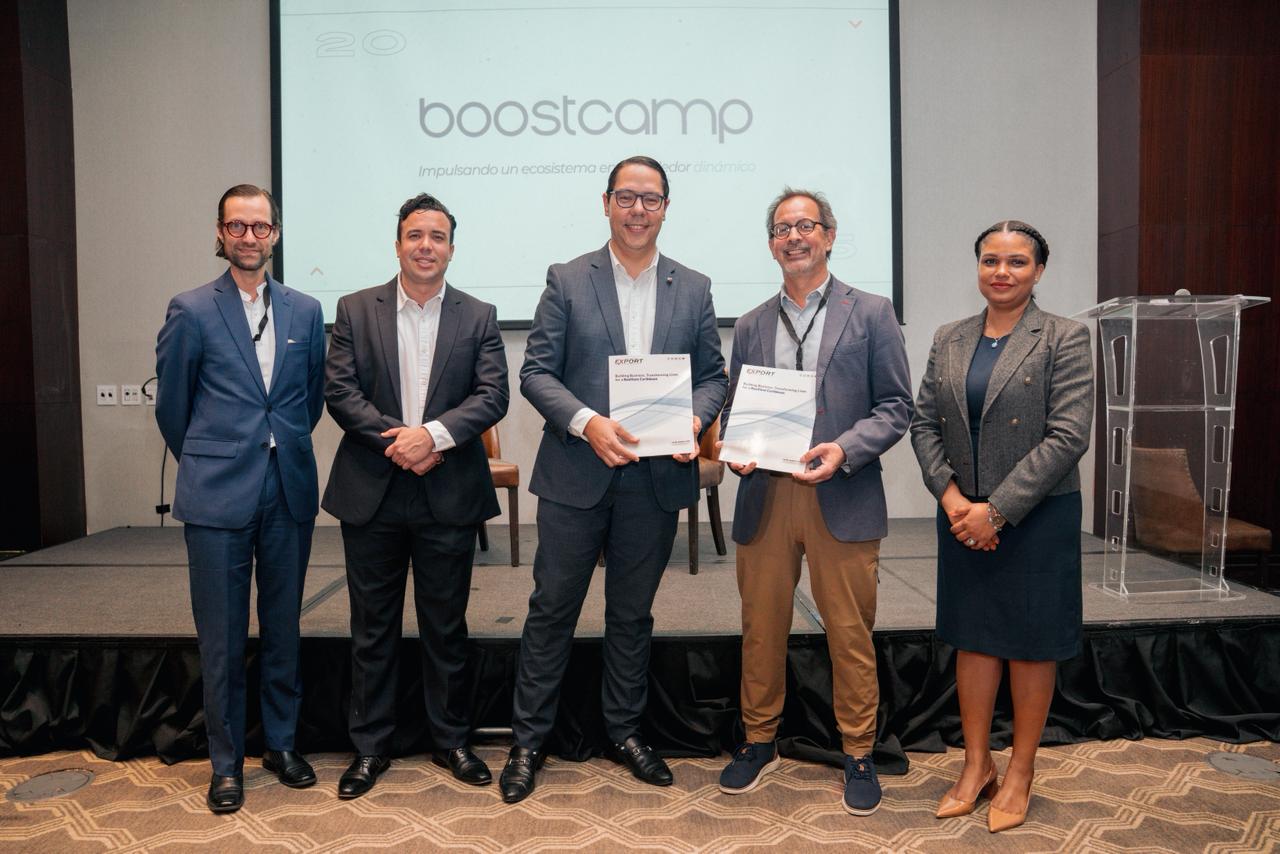
La Agencia Caribeña de Desarrollo de las Exportaciones (Caribbean Export), en representación del Acelerador Digital UE-ALC, y el Campamento de Aceleración Boost han firmado hoy oficialmente un Memorando de Entendimiento (MOU), que marca un paso significativo hacia el avance del espíritu empresarial, la innovación y el desarrollo del sector privado en la República Dominicana y el resto del Caribe. La firma tuvo lugar en Santo Domingo como parte del Boostcamp 2025 anual, un evento que reúne a fundadores, empresas e inversores de la República Dominicana, América Latina y el resto del Caribe para forjar alianzas y desarrollar oportunidades de colaboración. Este año, Boostcamp 2025 se organizó como parte de la programación más amplia que tuvo lugar en la República Dominicana con motivo de la Semana Global del Emprendimiento 2025.

En el marco de esta nueva asociación, Caribbean Export y los demás socios del Acelerador Digital UE-ALC trabajarán con Boost AC para que las empresas emergentes y las empresas de la República Dominicana puedan participar en el Acelerador Digital UE-ALC. Además, estas organizaciones trabajarán para ampliar el acceso a la financiación, la tutoría, las oportunidades de mercado y el apoyo técnico para las microempresas y las pequeñas y medianas empresas (MIPYME), incluidas las nuevas empresas de alto crecimiento, las empresas dirigidas por jóvenes y mujeres, y las empresas impulsadas por la innovación que pretendan crecer a escala regional e internacional.

El Memorándum de Entendimiento establece un marco de cooperación en varias áreas clave, entre las que se incluyen:

  • Colaboración en el marco de la Aceleradora Digital UE-ALC, una iniciativa financiada por la Unión Europea que promueve asociaciones birregionales entre startups y empresas de Europa, América Latina y el Caribe.
  • Aceleración empresarial y de startups, mediante eventos conjuntos como concursos de pitch, retos de innovación, hackathones y programas de desarrollo empresarial.
  • Desarrollo de la cartera de proyectos y refuerzo del ecosistema, apoyando la identificación y preparación de PYME prometedoras y nuevas empresas.
  • Desarrollo de capacidades, con formación centrada en la preparación para la exportación, la transformación digital, la innovación ecológica, la ampliación y la preparación de inversores.
  • Acceso a la financiación y vínculos con inversores, aprovechando las redes de inversores ángeles, socios corporativos, instituciones de desarrollo y fondos de financiación inicial de ambas organizaciones.
  • Apoyo a la colaboración entre empresas y startups, catalizando la innovación al conectar a las empresas con los retos empresariales y las soluciones impulsadas por la tecnología.

En su intervención en la ceremonia de firma, Leo Naut, Director Ejecutivo Adjunto de Caribbean Export y representante del Acelerador Digital UE-ALC, señaló:

«Esta asociación refuerza nuestro compromiso permanente de construir un sector privado caribeño resistente y competitivo a escala mundial. Trabajando juntos con Boost AC, especialmente en iniciativas como el Acelerador Digital UE-ALC, podemos reforzar la cartera de empresas impulsadas por la innovación, apoyar a más empresas emergentes dominicanas y caribeñas para que escalen más allá de las fronteras y crear mayores oportunidades de acceso a la financiación, la tecnología y los nuevos mercados.»

El Campamento de Aceleración de Boost destacó el valor estratégico de la alianza, especialmente para las empresas en fase inicial que pretenden acelerar su crecimiento y expandirse regionalmente.

«Esta colaboración con Caribbean Export nos permite amplificar el apoyo que ofrecemos a fundadores e innovadores, al tiempo que posicionamos a la República Dominicana como puerta de entrada para la expansión de startups en todo el Caribe», destacó Santiago Camarena, Presidente del Consejo de Administración de Boost AC.

Ambas instituciones afirmaron que la asociación refleja una visión más amplia para mejorar la competitividad, fomentar la transformación digital y ecológica y promover el crecimiento económico integrador en toda la región.

El MOU entra en vigor el día de su firma y guiará las iniciativas conjuntas durante los próximos dos años.

Conectando Mercados, Potenciando Futuros: Exportación Caribeña en ACSIS 2025

La Agencia Caribeña de Desarrollo de las Exportaciones (Caribbean Export) se unió a socios regionales e internacionales en la Cumbre sobre Sostenibilidad e Inversión en África y el Caribe (ACSIS 2025)celebrada los días 21 y 22 de noviembre de 2025 en Queen’s Gate House, Londres, Reino Unido. La cumbre de dos días, con el lema «Empowering Futures: Uniendo África y el Caribe a través de la Innovación Sostenible y el Crecimiento Inclusivo», reunió a responsables políticos, líderes empresariales, inversores e innovadores de ambas regiones para avanzar en la colaboración en materia de comercio, tecnología e inversión.

En representación de Caribbean Export, el Dr. Damie Sinanan, Director Ejecutivo, pronunció un discurso de apertura titulado «Transformación impulsada por la tecnología: Tendiendo puentes entre África y el Caribe a través de la innovación y la inversión», en la jornada inaugural de la Cumbre. En su discurso, el Dr. Sinanan subrayó los retos y oportunidades económicos compartidos a los que se enfrentan las regiones en desarrollo y destacó la transformación digital como herramienta fundamental para impulsar la resiliencia, la competitividad y el crecimiento sostenible en África y el Caribe.

«África y el Caribe tienen todos los ingredientes para redefinir la narrativa global de las regiones en desarrollo, no como participantes pasivos, sino como cocreadores dinámicos de una nueva frontera digital», declaró el Dr. Sinanan. «Nuestra historia compartida nos conecta, pero es nuestra innovación compartida la que debe darnos impulso».

Durante su discurso, el Dr. Sinanan presentó el Plan Estratégico 2025-2028 de Caribbean Export, que se centra en mejorar la competitividad de las MIPYME, ampliar el acceso a los mercados y promover la integración y la inversión regionales.

Hizo hincapié en los seis programas activos de desarrollo económico de la agencia, valorados en 20 millones de USD, que ya han apoyado a casi 1.000 profesionales de la empresa sólo en 2024.

El Dr. Sinanan también presentó el Foro de Inversiones del Caribe (FIC ) como un vehículo clave para reforzar los lazos comerciales y de inversión entre África y el Caribe. Destacó la evolución del FIC hasta convertirse en la principal plataforma de inversión del Caribe -con más de 2.000 delegados de 50 países y 350 millones de USD en proyectos expuestos- e invitó a los socios a participar en la edición de 2026, que se celebrará en Barbados.

Entre las áreas transformadoras de cooperación identificadas se encontraban la FinTech, el emprendimiento digital, la innovación logística, la energía verde y la agricultura inteligente. El Dr. Sinanan citó casos de éxito como la expansión de ZeePay de Ghana a Barbados y las operaciones de WiPay del Caribe en Ghana como ejemplos de colaboración digital mutuamente beneficiosa.

ACSIS 2025, patrocinada por Afreximbank y celebrada en colaboración con la Unión Africana, la Organización de Estados del Caribe Oriental (OECO) y Caribbean Export, sirvió de plataforma dinámica para poner en contacto a inversores con proyectos de gran potencial en ambas regiones.

La Cumbre reforzó el creciente impulso de las asociaciones África-Caribe que promueven el desarrollo económico inclusivo a través de la innovación sostenible.

Caribbean Export presenta el Acelerador Digital UE-ALC en Boostcamp 2025 – Día de los Fundadores

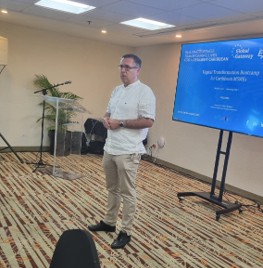
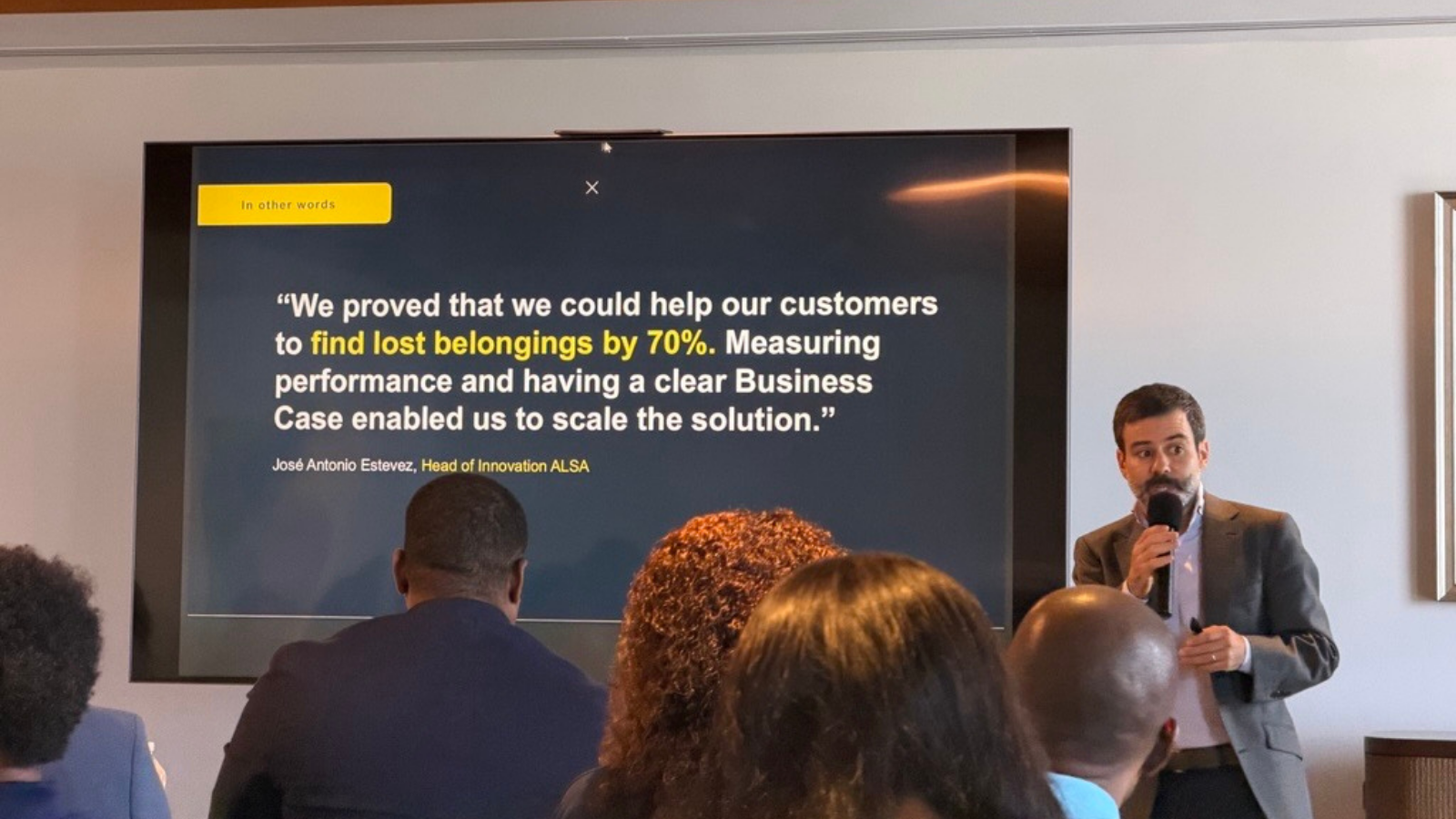
La Agencia de Desarrollo de las Exportaciones del Caribe, en representación del Acelerador Digital UE-ALC, participó en Día de los Fundadores de Boostcamp 2025una iniciativa organizada por Campamento de Aceleración Boostuna de las aceleradoras de startups más destacadas de la República Dominicana. En su primer día, el evento puso el foco en la comunidad de startups y reunió a más de 100 fundadores, emprendedores y líderes de la innovación de la República Dominicana, Centroamérica y el Caribe. Bajo el lema «Growth Edition» (Edición de crecimiento), Boostcamp 2025 se centró en ofrecer un día completo de actividades de formación, creación de redes y preparación para la inversión a la bulliciosa comunidad de empresas emergentes de la República Dominicana y de toda la región de América Latina y el Caribe.

El encargado de iniciar la intervención de Caribbean Export fue Damie Sinanan, Director Ejecutivo, quien subrayó la importancia de la iniciativa empresarial, la transformación digital y la ampliación del acceso a la financiación, temas clave alineados con su mensaje más amplio del Boostcamp. » Los emprendedores del Caribe están dando forma a la próxima etapa de crecimiento económico de la región», afirmó el Dr. Sinanan. «Reforzando las capacidades digitales, mejorando el acceso a la financiación y forjando nuevas asociaciones interregionales, estamos ayudando a nuestras startups a escalar, innovar y competir en la escena mundial.»

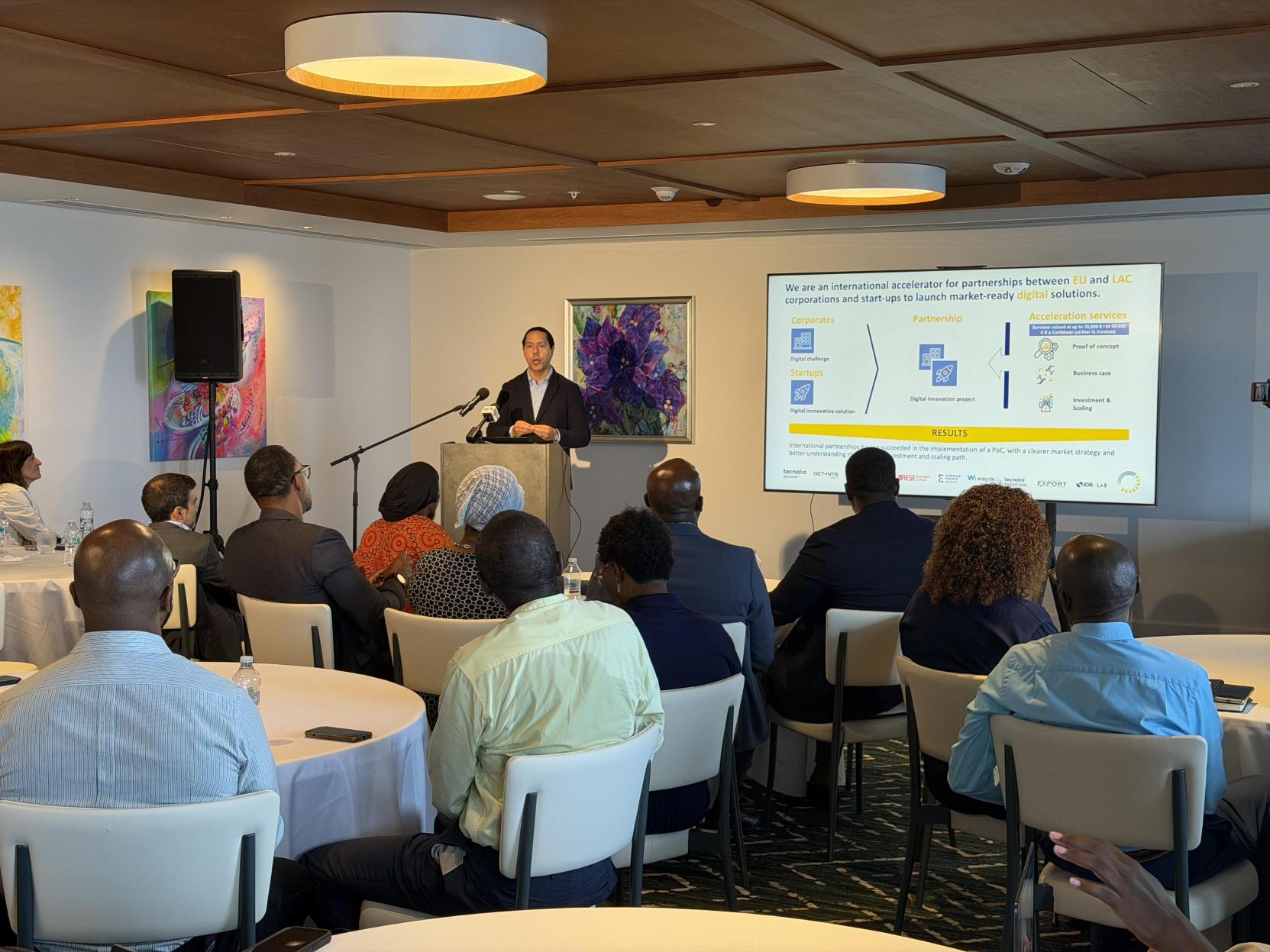
La piedra angular de esta activación fue la presentación del Acelerador Digital UE-ALC, un programa financiado por la Unión Europea en el marco de la Agenda de Inversión Global Gateway e implementado por un consorcio internacional liderado por Tecnalia y apoyado regionalmente por Caribbean Export. Leo Naut, Director Ejecutivo Adjunto, explicó cómo el Acelerador Digital UE-ALC crea vías para que las startups colaboren directamente con empresas de Europa y América Latina, codesarrollen soluciones digitales y accedan a nuevos mercados internacionales a través de procesos estructurados de innovación abierta.

Este Día de los Fundadores forma parte de un programa más amplio de dos días Boostcamp 2025, que también incluye el Día de los Inversores y las Empresas el 27 de noviembre. Caribbean Export representará al Acelerador Digital UE-ALC en este Día de Inversores y Empresas moderando un panel con las principales empresas dominicanas sobre emprendimiento empresarial, innovación abierta y oportunidades de colaboración entre empresas emergentes y empresas.

Caribbean Export organiza una Clínica de Startups en directo durante el Día de los Fundadores

Como parte de su participación, Caribbean Export también organizó una Clínica de Startups en directo, en la que el equipo del programa Acelerador Digital UE-ALC mantuvo reuniones individuales con startups locales, dirigidas por Michelle Aybar, Responsable Técnica de los Programas UE-ALC, y Leo Naut, Director Ejecutivo Adjunto, que también ejerce de Director de Programas para el Acelerador en Caribbean Export. Estas sesiones permitieron a las startups proporcionar una visión más profunda de sus capacidades al equipo de la Aceleradora Digital con el objetivo de conectar con los retos actuales de innovación corporativa que se viven dentro del programa. Con este compromiso más profundo, el equipo del Acelerador Digital de Caribbean Export pretende ayudar y proporcionar el apoyo adecuado a las empresas emergentes para que identifiquen las oportunidades de negocio reales con las empresas de la red UE-ALC.

Caribbean Export presenta el Programa de Aceleración Social UE-ALC en el Simposio de Emprendimiento Social 2025


La Agencia Caribeña de Desarrollo de las Exportaciones participó en el Simposio sobre Emprendimiento Social 2025, con una delegación compuesta por el Dr. Damie Sinanan, Director Ejecutivo; Wayne Elliott, Director de Programas Técnicos; Michelle Aybar, Responsable Técnica de Programas UE-ALC; y Leo Naut, Director Ejecutivo Adjunto, que representó a la Agencia durante la inauguración de este importante evento regional.

El Simposio está organizado por El Hueco Caribe, en colaboración con el Ministerio de Industria, Comercio y Mipymes (MICM ) y la Universidad Iberoamericana (UNIBE). El evento forma parte de la Semana Global del Emprendimiento y reúne a emprendedores sociales, representantes de los sectores público y privado, académicos y agencias de cooperación internacional para fortalecer el ecosistema de innovación social en República Dominicana y el Caribe.

Celebrado bajo el lema «Enlazando el Ecosistema de Impacto», el Simposio proporciona una plataforma regional para avanzar en la innovación inclusiva, promover la colaboración y destacar las iniciativas que fomentan la transformación social y económica.

Presentación del Acelerador Social UE-ALC

Como parte del lanzamiento del Registro Nacional de Emprendedores Sociales (RNES), el Sr. Leo Naut realizó una presentación institucional sobre el mandato de Caribbean Export, esbozando el trabajo en curso de la Agencia para apoyar la innovación, la competitividad y el desarrollo del sector privado en el Caribe.

Durante su intervención, el Sr. Naut presentó el Acelerador Social UE-ALCun programa emblemático ejecutado por Caribbean Export y financiado por la Unión Europea en el marco de la Agenda Global de Inversión Gateway.

La Aceleradora Social UE-ALC pretende fomentar la innovación social en Europa, América Latina y el Caribe fortaleciendo las capacidades del ecosistema, promoviendo proyectos de impacto y apoyando una transición ecológica y digital justa, inclusiva y responsable.

El programa está dirigido por CAINCO (Bolivia) y lo ejecuta un consorcio de socios internacionales, entre ellos

Juntos, estos socios colaboran para construir y reforzar los ecosistemas de innovación social mediante la prestación de asistencia técnica y la creación de capacidades que apoyen el desarrollo de laboratorios sociales regionales. Estos laboratorios crearán espacios para la cocreación y la creación de prototipos de soluciones. Como complemento a estos esfuerzos, se elaborarán hojas de ruta prácticas diseñadas para abordar las necesidades y los retos de los innovadores sociales de toda la región, en su trabajo por resolver los problemas sociales y medioambientales que afectan a nuestros ciudadanos.

La iniciativa hace especial hincapié en capacitar a las mujeres, los jóvenes y los grupos vulnerables, y en proporcionar apoyo financiero y técnico a las organizaciones que trabajan en innovaciones transformadoras centradas en la comunidad.

«La innovación se vuelve poderosa cuando es inclusiva. Lo que estamos construyendo con el Acelerador Social UE-ALC, con la Unión Europea y nuestros socios ejecutores, es una plataforma en la que las mujeres, los jóvenes y las comunidades vulnerables pueden dar forma a las soluciones, acceder a las oportunidades y crear el Caribe del futuro. « declaró Leo Naut, Director Ejecutivo Adjunto de Caribbean Export.

Compromiso de Caribbean Export

La participación de Caribbean Export subraya su compromiso continuo con la construcción de un sector privado caribeño más innovador, inclusivo y sostenible. A través de la dirección estratégica establecida en su plan 2025 a 2028, la Agencia se centra en posicionar al Caribe como líder en crecimiento inteligente, profundizando en asociaciones que movilicen recursos y desarrollando proyectos listos para la inversión que creen oportunidades reales para nuestras empresas. Con el apoyo de iniciativas de colaboración y programas financiados por la UE, Caribbean Export sigue dedicada a reforzar la competitividad y la resiliencia regionales, garantizando al mismo tiempo que los esfuerzos de desarrollo se traduzcan en un impacto social significativo para la población y las comunidades del Caribe.