Republic Financial Holdings Limited and the Caribbean Export Development Agency collaborate on a landmark initiative to strengthen MSME export readiness and financial resilience across the region.
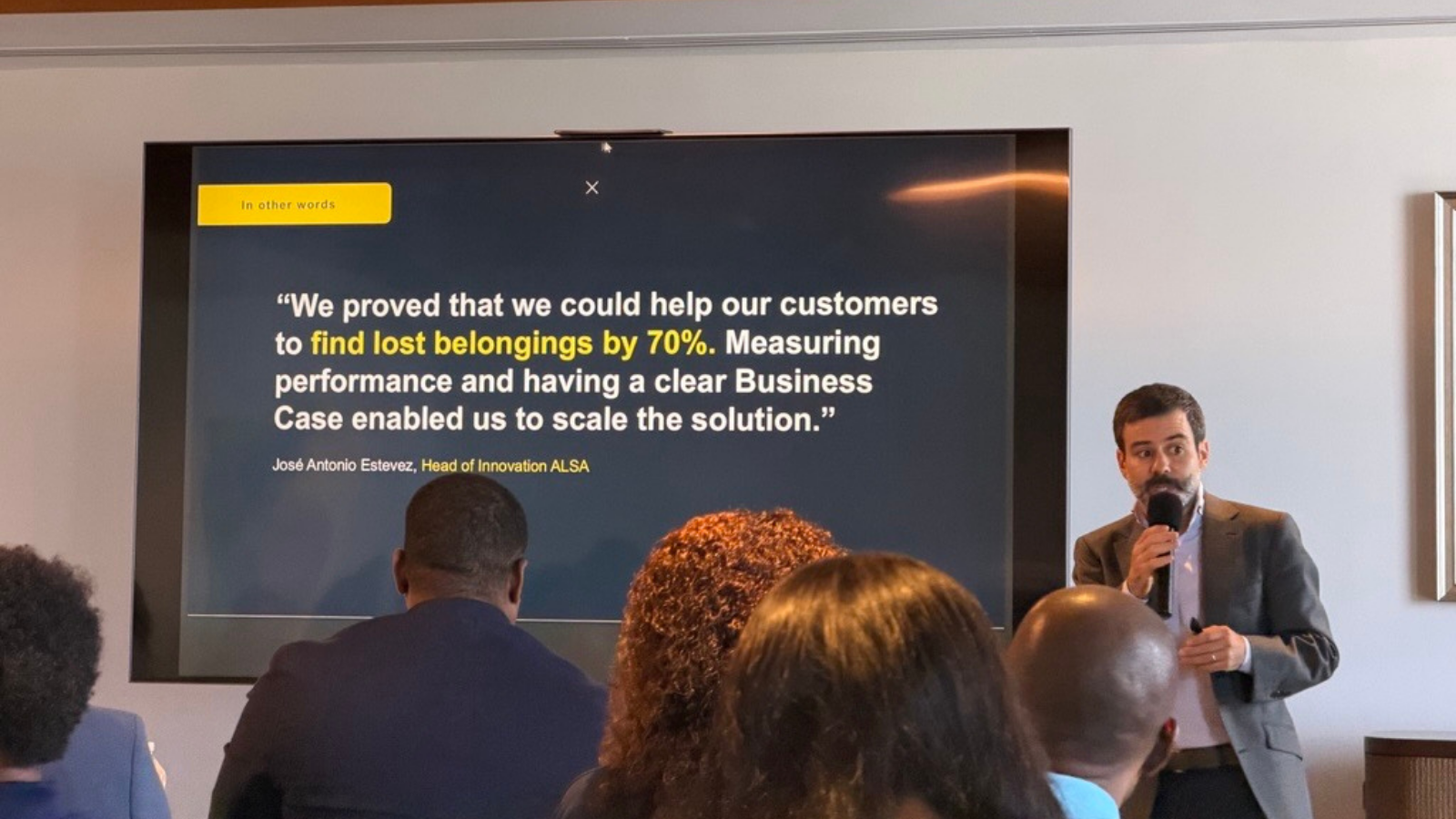
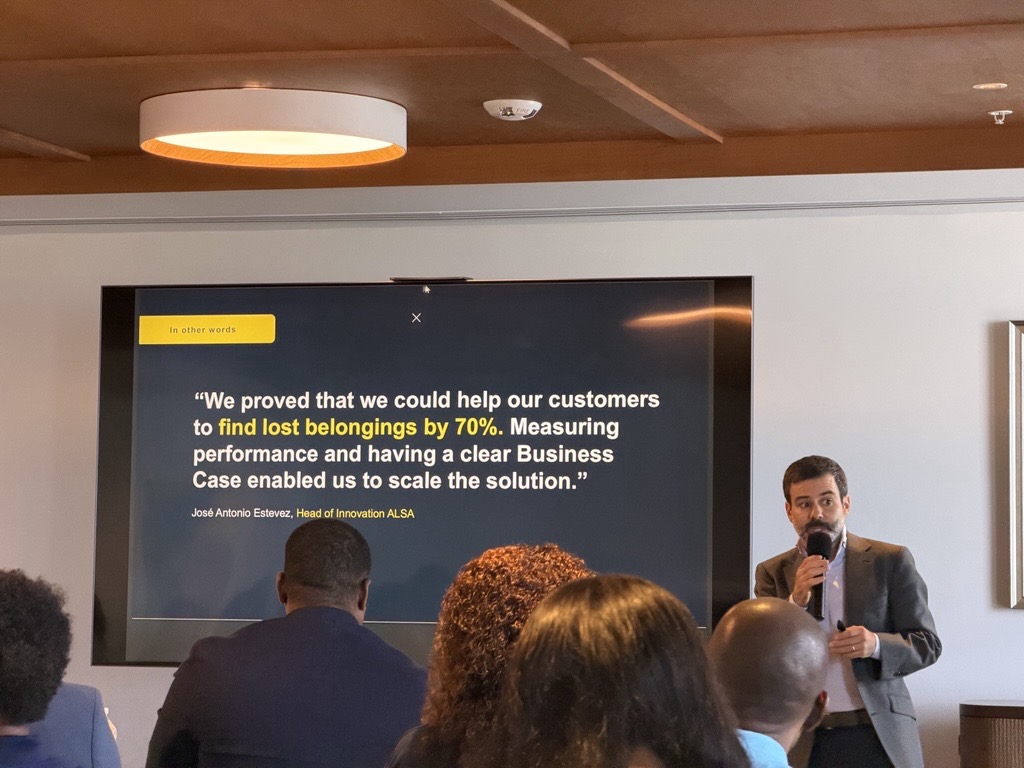
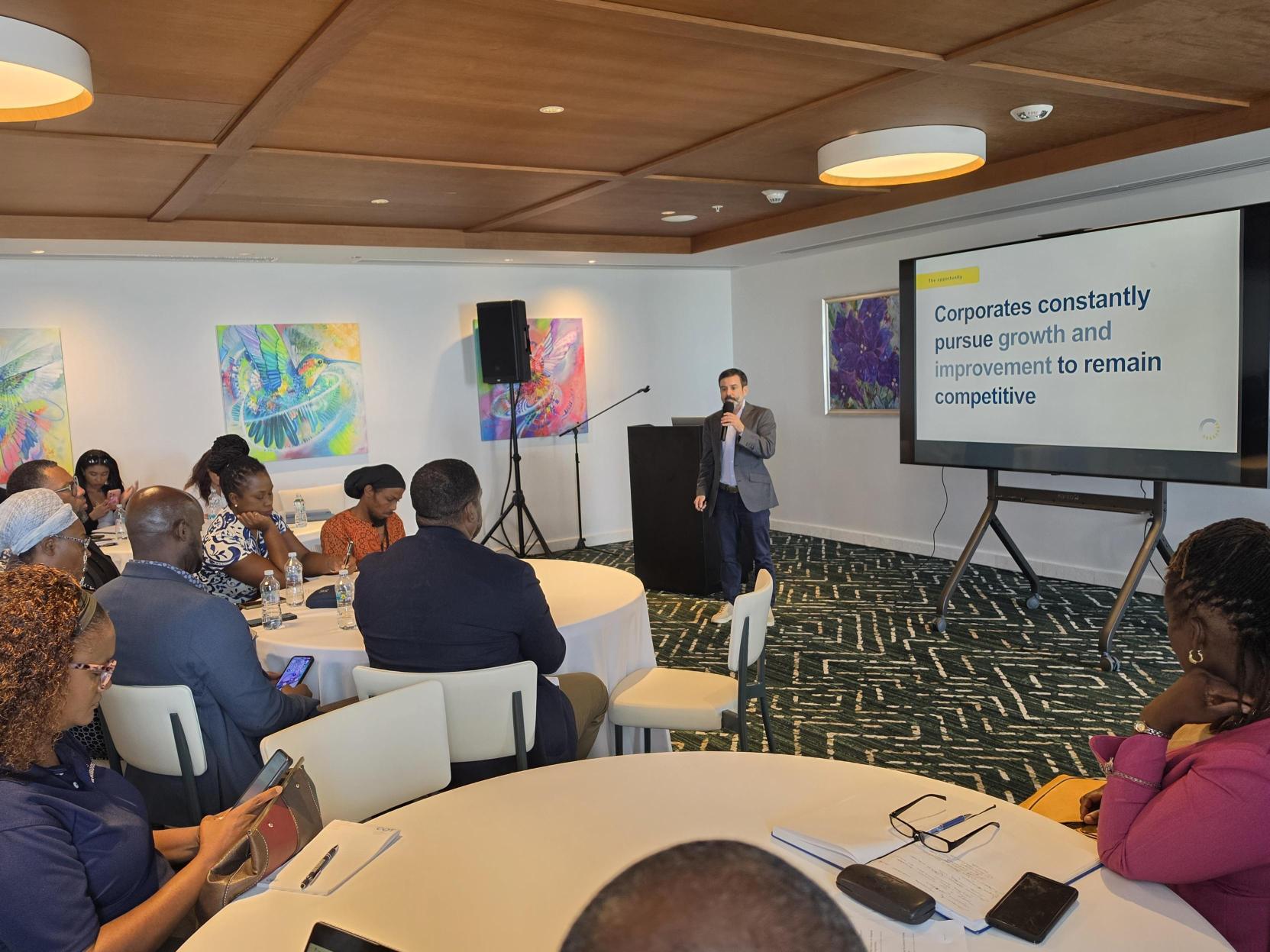
Republic Financial Holdings Limited in partnership with the Caribbean Export Development Agency (Caribbean Export), have successfully completed Phase 1 of Project THRIVE – an impactful capacity-building initiative designed to unlock the export and finance potential of Micro, Small and Medium Enterprises (MSMEs) across the Caribbean.
A total of 420 MSMEs participated in the programme, representing Anguilla, Barbados, the British Virgin Islands, the Cayman Islands, Dominica, Ghana, Grenada, Guyana, Saint Kitts & Nevis, Saint Lucia, Saint Maarten, St. Vincent and the Grenadines, Suriname and Trinidad and Tobago.
Business Capacity Building 1.0, the first phase of Project THRIVE, equipped participants with practical skills, tools, and knowledge to enhance their operational resilience, improve access to finance, and enhance export readiness in an increasingly competitive global environment.
Women‑owned and women‑led enterprises accounted for 66% of the participants, highlighting both the programme’s strong appeal among female entrepreneurs, and their commitment to growth and developmental. The cohort also reflected a diverse cross-section of industries, including professional services, agriculture, agro‑processing, manufacturing, retail, and technology.
The Programme delivered by Cloud Vision Academy, featured five core modules:
Business Strategy and Planning
Grant Proposal Writing
E‑commerce Essentials
Export Marketing
Cost and Financial Accounting
Each module was facilitated by subject‑matter experts and delivered through three interactive virtual sessions, enabling participants to apply learnings directly to their businesses.
Participant feedback underscored the programme’s impact, with strong engagement levels and positive responses to the quality of facilitation and the relevance of the content. Following this successful Phase 1 completion, 50 of the top 108 participants will advance to Phase 2: The Access to Finance Accelerator – a six‑month, in‑depth development programme offering personalised mentoring, one‑on‑one coaching, and deeper business‑development interventions designed to accelerate growth and export potential. Eligible participants will be contacted by the Project THRIVE team in the coming week with further details on the next phase.
Commenting on the programme, Richard S. Sammy, Group Vice President, Republic Financial Holdings Limited, stated: “Project THRIVE embodies our commitment to elevating our MSMEs. We are deeply encouraged by the outstanding participation and congratulate all participants on their success. When MSMEs thrive, entire economies thrive, and together with our valued partner Caribbean Export, we look forward to advancing Phase 2 and delivering tangible impact across the region.”
Damie Sinanan, Executive Director, Caribbean Export Development Agency, added: “Project THRIVE is precisely the kind of transformative, private-sector-led partnership that Caribbean Export was created to champion. The breadth of participation across territories – and the remarkable representation of women entrepreneurs – affirms that Caribbean businesses are ready to compete on a regional and global stage. We are proud to stand alongside Republic Bank in equipping the next generation of Caribbean exporters.”
The Caribbean Export Development Agency (Caribbean Export) and RevUP Caribbean Limited (RevUP) have formalised a strategic partnership through the signing of a Memorandum of Understanding (MOU), aimed at advancing entrepreneurship, innovation, and private sector development across the Caribbean.
The MOU was signed during the Caribbean Women Generating Resilient and Inclusive Trade (GRIT) Project activation week in Jamaica, marking a significant step towards strengthening support systems for micro, small, and medium-sized enterprises (MSMEs), particularly those led by women and youth.
Caribbean Export, the regional trade and investment promotion agency of CARIFORUM, and RevUP, a leading virtual business incubator, share a common vision of fostering a more resilient, competitive, and inclusive Caribbean private sector.
Through this partnership, both organisations will collaborate to expand access to finance, build entrepreneurial capacity, and strengthen market linkages for businesses across the region. Key areas of cooperation include startup support programmes, capacity building and technical assistance, investor engagement, innovation challenges, and export readiness initiatives.
“This partnership with RevUP Caribbean represents a strategic alignment of efforts to support the growth of innovation-driven enterprises in the region,” said Dr. Damie Sinanan, Executive Director of Caribbean Export. “By combining our networks, expertise, and platforms, we can create stronger pathways for Caribbean entrepreneurs to access financing, scale their businesses, and compete globally.”
RevUP Caribbean, known for its immersive incubator programmes and focus on early-stage ventures, will work alongside Caribbean Export to identify and support high-potential startups, facilitate connections with investors, and deliver targeted training and mentorship opportunities.
“We are excited to partner with Caribbean Export to deepen our impact across the region,” said Sandra A. C. Glasgow, Managing Director of RevUP Caribbean. “This collaboration will help accelerate the growth of startups and MSMEs by connecting them to the resources, networks, and capital they need to thrive.”
The MOU also provides a framework for joint initiatives such as pitch competitions, accelerator programmes, investor forums, and cross-border partnerships, all aimed at catalysing sustainable and inclusive economic growth.
This collaboration reflects a shared commitment to building a dynamic startup ecosystem in the Caribbean – one that empowers entrepreneurs, drives innovation, and unlocks new opportunities for regional and international market access.
The agreement will remain in effect for an initial period of two years, with opportunities for expansion through jointly developed programmes and initiatives.
On the evening of Thursday, 16 April, the ballroom at Wyndham Grand Barbados Sam Lord’s Castle filled with the usual faces from across the regional economy: exporters, diplomats, development officials, and beneficiaries. They had gathered to mark thirty years of the Caribbean Export Development Agency and the release of its 2025 Annual Results Report.
It was, by every measure, a good-news evening. The agency reported another year of strong financial recovery, expanded partnerships, and a clear line of sight from the closing 2021-2024 strategic cycle into the 2025-2028 plan that succeeds it.
The keynote fell to Minister Sandra Husbands, who did what ministers on such occasions do well: she celebrated the agency’s track record in real, unfussy terms, acknowledged the European Union’s thirty-year partnership, and positioned Caribbean Export’s work inside the broader regional trade agenda. But she also did something sharper. She pressed the agency to look harder at the skills gap inside Barbados and the region, to move beyond funding and facilitation, and to take on the diagnostic work of identifying where the private sector is actually under-equipped for the economy it says it wants.
It was the right note to strike, and it is the note this column wants to pick up.
Because the more revealing question, for any business owner who was in that room and for the thousands who were not, is not whether Caribbean Export is doing its job. The report makes a confident case that it is. The real question is whether Caribbean enterprises, particularly Barbadian ones, are digitally transformed enough to catch the opportunities now being placed within reach.
The honest answer, in April 2026, is not yet.
The Beharry-Amber moment
The clearest illustration in the report comes from the Caribbean Investment Forum held in Montego Bay in 2025. There, Dushyant Savadia, founder and CEO of Jamaica’s Amber Group, delivered a session on digital transformation and artificial intelligence. In the audience was Anand Harilall, Chief Strategy Officer of Guyana’s Beharry Group, an 87-year-old family-owned conglomerate with interests across multiple strategic sectors.
Having attended every CIF since its inception, Harilall recognised the alignment immediately. Within a month, Savadia was in Guyana. Within weeks, Beharry-Amber Technologies was agreed, a joint venture to deliver advanced technology and cybersecurity solutions across Guyana, Suriname, and the wider Caribbean. Its mandate is twofold: accelerate Beharry’s internal digital transformation and take those services to market across Guyana’s public and private sectors. A flagship AI-powered call centre is already on the drawing board. That is the speed at which regional deals now move when both parties arrive digitally ready.
What “ready” actually means
Nothing about Beharry’s moment was accidental. You do not deliver a minute-and-a-half pitch on technology ambitions unless the strategy is already written. Beharry’s 2030 horizon treats digital transformation as a core pillar of growth, not a line item in the IT budget. Amber, for its part, arrived with a productised AI stack, live reference deployments, and a partner-first operating model that made cross-border collaboration feel like plumbing rather than diplomacy. Two digitally mature organisations met in a room, recognised each other, and moved.
Which raises the uncomfortable diagnostic question Minister Husbands was circling on Thursday evening: what does “digitally mature” actually look like in a Caribbean business in 2026? It looks, in my reading, like six layers sitting on top of one another.
The Identity layer is the foundation a proper domain, a website that is more than a Facebook page, branded email (not a Gmail address on a business card), verified Google Business and LinkedIn profiles, and consistent presence on the channels customers actually use. Without this, a business is invisible to search engines, procurement systems, funding agencies, and regional partners who screen before they shake hands.
The Operations layer is a cloud-first stack. Accounting in QuickBooks or Xero, documents in Microsoft 365 or Google Workspace, HR on SaaS, communications in Teams or Slack held together by an integration fabric of APIs, webhooks and workflows so data moves between systems instead of being re-keyed by a clerk.
The Customer layer is where Caribbean enterprises most often fall short. The digitally transformed business lets its customers find it, transact with it, and support themselves without picking up a phone. Digital payments, online booking or ordering, CRM-tracked relationships, WhatsApp and email and chat on parity. In our region, payment rails and shipping logistics remain real constraints but they are constraints to be designed around, not reasons to opt out.
The Data layer is where Caribbean Export’s own framing AI readiness, innovation, competitiveness starts to bite. The transformed business treats data as an asset, not exhaust: structured transaction and customer data, dashboards that inform decisions, and increasingly AI layered on top, whether for productivity, prediction or retrieval of institutional knowledge. If an enterprise cannot answer “how did we do last month?” in under five minutes, it is not yet operating digitally.
The Trust layer is the one most Caribbean commentary under-covers, and it is the one Harilall himself flagged in the report the region is highly exposed to cyber threats, and private-sector resilience now depends on serious cyber posture: MFA, endpoint protection, tested backups, incident response, alongside a lawful data-protection footing under the Data Protection Act 2019-29 and contractual hygiene with every processor. Without this layer, everything above it is liability waiting to crystallise.
The People layer closes the loop, and it is the layer, Minister Husbands reached for on Thursday evening. Digital skills, remote-capable workflows, and a leadership culture that treats technology as a first-class strategic concern rather than something the “IT guy” handles. The modern digital business does not have a digital transformation project. It has digital fluency as a condition of employment.
Caribbean Export has spent thirty years and this past year with particular intent building the runway. The 2025 report is a catalogue of that work: investment fora that convene capital and ambition in the same room, digital accelerators that link regional firms to European and Latin American partners, co-financing facilities for smart and green investments, capacity-building programmes for MSMEs and women-led enterprises, and a new institutional spine in the Caribbean Digital Transformation Institute. That runway is long, paved, and lit.
But a runway does not fly aircraft. The Beharry-Amber joint venture flew because both organisations had already built the plane. Minister Husbands’ intervention the call for a sharper skills-gap diagnostic was really a call for more Caribbean enterprises to finish building their aircraft while the runway is clear.
In 2026, the competitive Caribbean business is no longer the one with the biggest office, the longest payroll, or the oldest Rolodex. It is the one that can show up in the room physically, digitally, or inside a procurement portal already carrying the six layers. Regional growth capital, cross-border joint ventures, and diaspora markets will keep finding the enterprises that have done that work. The rest will fight over a shrinking domestic pie and wonder where the opportunities went.
Caribbean Export has done its thirty years. The next move belongs to the enterprise.
Regional agency highly praised by ministers and stakeholders on landmark 30th Anniversary.
Caribbean Export celebrated longevity with partners and released 2025 Annual Report.
Results Report shows 4,400 business professionals benefitted from 72 programmes last year.
The enduring, powerful, and direct impact of the Caribbean Export Development Agency (Caribbean Export) on thousands of regional business owners was celebrated at an impressive gala event held at the Wyndham Grand Barbados on 16 April 2026.
Local and regional government ministers, international stakeholders, diplomats, and beneficiaries attended the informative and inspirational occasion which jointly recognised the agency’s 30th milestone and featured the fourth iteration of its Annual Results Report.
Guests were entertained by Barbadian saxophonist Zukeli Inniss and sensational teen singer Skky Dowridge ahead of opening remarks by the Chairperson of Caribbean Export’s Board of Directors, Dr Lynette Holder.
In her address, Dr Holder lavished praise on the agency’s ability to continually adapt and adjust which had seen it move from being in the red to the black and take on new development partners alongside the European Union such as the Inter-American Bank, Republic Bank, and the Canadian government.
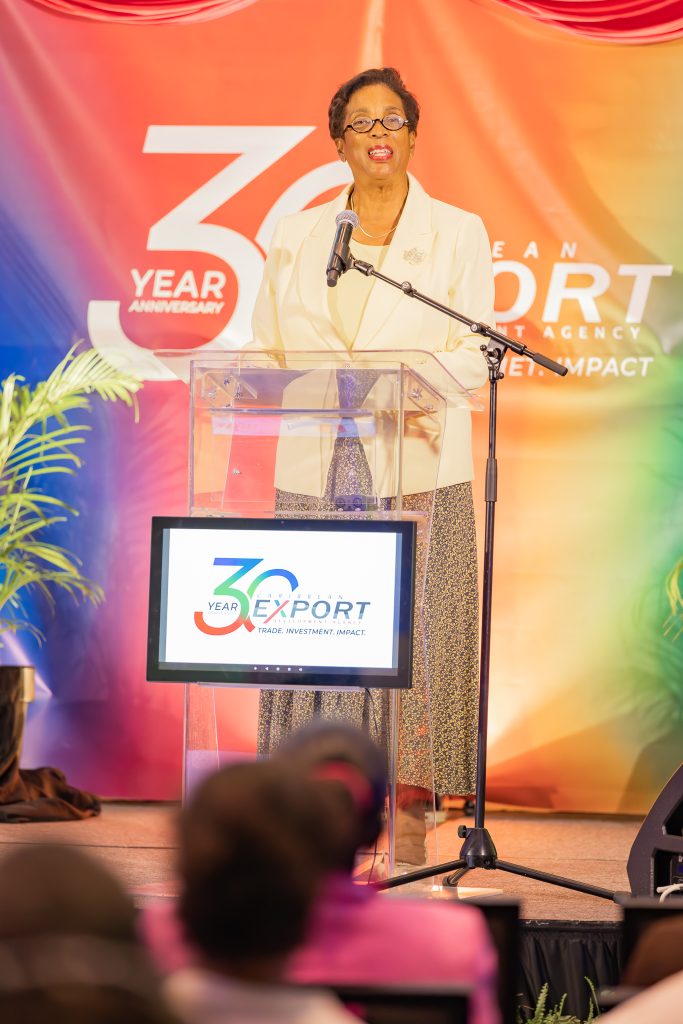
“Three decades is a significant milestone by any measurement,” Dr Holder said. “For Caribbean Export it represents 30 years of evolving with the needs of our region, supporting enterprises, strengthening export readiness, promoting investment, and helping Caribbean businesses position themselves in an increasingly competitive global economy.”
Focusing on the achievements noted in the 2025 report, Dr Holder stated: “This report for the last fiscal period reflects not just activity but purpose. It speaks to an organisation that continues to sharpen its relevance, strengthen its delivery, and remain focused on impact. It reflects the discipline of an institution that understands the importance of stewardship of resources, partnership, and trust.”
Caribbean Export’s Executive Director, Dr Damie Sinanan, recalled the 20,000 beneficiaries the agency has assisted since it opened it’s office in 1996 through projects cumulatively valued $126m (US), and with $60m (US) in grants awarded. He added: “These are not just statistics they represent a commitment that Caribbean Export has given to the region for 30 years. One that was built on relationships directly with business owners, communities and community leaders and to the belief that the private sector is central to our region’s prosperity, resilience, and future.”
Dr Sinanan also emphasised the agency’s new dedication to dealmaking and investment facilitation which is embodied in its annual flagship ‘Caribbean Investment Forum (CIF)’ event which was held over three days in Jamaica last year. CIF 2025 attracted 400 participants from 39 countries and presented 12 investment-ready projects. In 2026, CIF will take place in Barbados.
Looking ahead, Dr Sinanan invited all the organisations present to continue to join with the agency for the benefit of the region and thanked Caribbean Export’s development partners for their unwavering support.
EU representative, Dr Florian Luetticken, suggested “the best is yet to come” as he underscored the trust that the agency enjoys after partnering with the European Union for so many years. He renewed the EU’s commitment to shared trade, prosperity, and economic growth with the Caribbean.
Counsellor (Development) and Head of Cooperation in the Eastern Caribbean from the High Commission of Canada, Abebech Assefa, explained why Canada is happy to partner with Caribbean Export. “We see strong potential in continuing to work together, supporting entrepreneurs, encouraging innovation, and ensuring that economic growth is shared,” she said.
Barbados’ Minister of Training and Tertiary Education, Sandra Husbands, added her congratulations on the agency’s 30-year milestone as well as the launch of the 2025 Annual Results Report. But she urged Caribbean Export to work more closely with government ministries, especially in terms of equipping young people looking to start their own businesses and leverage new technology. “Our region’s progress depends not only on financing and market access,” Ms Husbands stated, “but it is on developing skills, knowledge, and entrepreneurial confidence that will enable our people to innovate, produce and lead. Institutions like Caribbean Export help to bridge that gap.”
A thought-provoking spoken word segment from award winning poet, Akeem Chandler-Presod aka ‘Stoned with Cupid’ preceded an address from the St Vincent and the Grenadines Minister of Education, Vocational Training, Innovation, Digital Transformation and Information, Philip Jackson, delivered via Zoom. He encouraged entrepreneurs, Caribbean Export and its development partners to continue taking “bold steps” together to realise the Caribbean’s full potential through offering “the best of our regional assets”.
The Caribbean Export Development Agency has officially launched the Caribbean Digital Transformation Institute (CDTI), a new regional platform designed to help micro, small and medium-sized enterprises (MSMEs) assess their digital readiness, strengthen their capabilities, and compete more effectively in an increasingly digital global economy.
Supported by the Inter-American Development Bank (IDB) and the Compete Caribbean Partnership Facility, the CDTI, the CDTI has been developed to respond to the growing need for practical, accessible, and data-driven support for Caribbean businesses navigating digital transformation. The platform provides MSMEs with a structured pathway to evaluate their digital maturity, identify gaps, and access targeted learning resources to improve their use of digital technologies across business operations.
At the heart of the platform is the Digital Check-up, an online diagnostic tool that helps firms assess their digital capacity across key business dimensions, including digital technologies, communications and sales channels, organisation and people, data and analytics, strategy and digital transformation, and processes. Based on the results, businesses receive tailored recommendations that can guide their next steps and support more deliberate investment in digitalisation.
The launch also highlighted the CDTI’s e-learning platform, which offers a suite of self-paced courses and learning resources aimed at helping MSMEs strengthen core digital skills, improve online visibility and customer engagement, advance e-commerce readiness, make better use of data, and improve business efficiency through stronger digital processes.
Speaking at the launch, Dr. Lynette Holder, Chairperson of the Caribbean Export Development Agency, underscored the importance of digital transformation for the region’s private sector stressing that “Digital transformation is no longer optional, it’s essential” and that “For the Caribbean this reality carries both urgency and opportunity”.
Dr. Damie Sinanan, Executive Director of Caribbean Export, echoed these sentiments, noting that the “CDTI is a strategic intervention designed to give micro, small and medium-sized enterprises the digital tools, e-commerce capabilities, and operational efficiency they need to thrive.” He also encouraged national business support organisations to play an active role in ensuring that these tools reach entrepreneurs and that they “actively engage with the resources provided.” He added, “We need the collective action of the private sector to truly transform the Caribbean into a globally competitive economic hub.”
Also addressing the event, Sylvia Dohnert, Lead Private Sector Development Specialist at the IDB, reaffirmed the IDB’s commitment to supporting innovation, productivity, and private sector development across the Caribbean – “This Caribbean Digital Transformation Institute was a response to the promise that digital technology offers to Caribbean business, but also the difficulties that businesses in the Caribbean face in digital transformation”.
Kayla Grant, Executive Director of Compete Caribbean, described the initiative as “a powerful regional public good” that “will strengthen the ecosystem supporting MSMEs and help position Caribbean firms to compete, innovate, and grow in the digital global economy.”
Delivering remarks on the significance of digital transformation for the region, Hon. Philip Jackson, Minister of Education, Vocational Training, Innovation, Digital Transformation and Information, St. Vincent and the Grenadines, highlighted the importance of building the digital capacity of Caribbean enterprises to ensure they can thrive in a rapidly evolving economy. He noted that “digital infrastructure and digital public infrastructure are critical to fostering this culture not only among citizens, but also among businesses.” He added that, “as we continue to share data and lessons learned, we are better able to make more informed and strategic decisions that support sustainability.”
The launch of the CDTI marks an important step in Caribbean Export’s continued efforts to build a more resilient, innovative, and competitive private sector. By combining digital diagnostics, practical learning, and regional data insights, the Institute is expected to play an important role in shaping how MSMEs across the Caribbean adapt to technological change and seize new market opportunities.
As Caribbean businesses face increasing pressure to modernise, adopt new tools, and respond to changing customer expectations, initiatives such as the CDTI will be critical in ensuring that MSMEs are not left behind, but are instead equipped to lead in the digital economy.
Landmark accreditation positions the Agency as one of only four regional Direct Access Entities in the Caribbean and opens the door to millions in climate finance for transformative private sector investment across the region
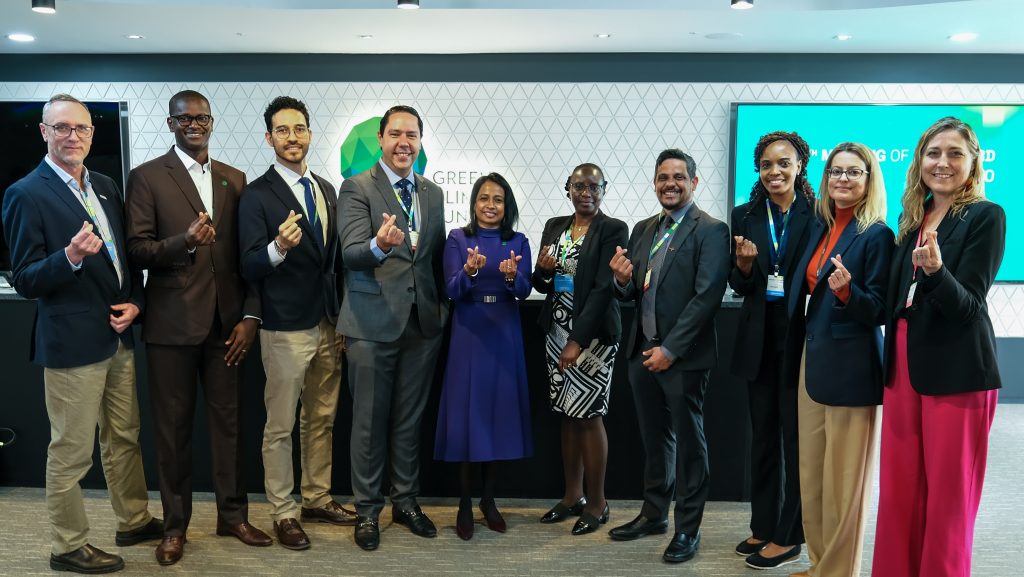
Caribbean Export Development Agency (Caribbean Export) welcomes its accreditation by the Green Climate Fund (GCF), marking a defining moment for the institution, a major achievement for the Caribbean, and a bold new chapter for private sector-led climate action in the region. In securing this milestone, Caribbean Export becomes one of only four regional Direct Access Entities in the Caribbean accredited by the GCF, a major step that significantly elevates the region’s ability to access, shape, and deploy international climate finance through institutions rooted in Caribbean priorities and realities.
For Caribbean Export, this is far more than a credential. It is a game-changing platform for action. In its 30th year of operations, the Agency enters this role not as a passive conduit for funding, but as an active regional force with the mandate, private sector expertise, and trusted partnerships to convert climate ambition into investable programmes and projects that can transform businesses and economies across the Caribbean.
As a regional institution focused on private sector development for the past 30 years, Caribbean Export’s accreditation represents a major breakthrough for the Agency and wider region. It strengthens its ability to help develop and implement climate-related projects and programmes that respond to the needs of Caribbean countries and businesses. It also positions the Agency to play a stronger role in creating pipelines of investment-ready initiatives that help Caribbean businesses build resilience, modernize operations, adopt cleaner technologies, and compete in a rapidly changing global economy.
The Green Climate Fund works through Accredited Entities to develop funding proposals and manage projects and programmes that help countries turn climate priorities into action, with financing instruments that can include concessional loans, equity, guarantees, lines of credit, and grant-based capacity building. As a Direct Access Entity, Caribbean Export is now strategically positioned to help open the door to these resources and to crowd in the scale of capital the region has long needed. The opportunity is transformative: to unlock millions of dollars for Caribbean businesses, mobilise new partnerships, and support a new generation of commercially viable climate investments that the region has not previously been positioned to pursue at this level through a regional private sector-focused institution.
For the Caribbean, where firms and communities face increasing climate-related shocks including stronger hurricanes, drought, coastal erosion, and rising operating costs, accreditation creates a new pathway to structure and scale projects that directly support business resilience and regional transformation. This can include initiatives in renewable energy and energy efficiency, climate-smart agriculture, resilient infrastructure, sustainable tourism, green manufacturing, water security, innovation, and financial instruments that help de-risk private investment.
Dr. Damie Sinanan, Executive Director of Caribbean Export, said:
“This is a transformative moment for Caribbean Export and for the region we serve. Accreditation to the Green Climate Fund significantly strengthens our ability to support the development of climate finance opportunities for the Caribbean’s private sector, the engine of jobs, innovation and economic growth. It gives us the opportunity to help businesses access the resources they need to adapt, invest, innovate and lead the region’s transition to a more resilient and sustainable future.”
He added:
“For too long, many Caribbean businesses, particularly MSMEs, have faced major barriers in accessing the scale and type of support required to respond meaningfully to the climate crisis. This milestone opens the door to a new generation of projects and partnerships that can help enterprises invest in clean energy, climate resilience, sustainable production, and stronger value chains. The potential impact for the region is profound.”
Caribbean Export is the regional trade and investment promotion agency focused on building a resilient Caribbean by delivering high-impact support to the private sector. Its mandate and track record position the Agency to play a catalytic role in identifying and advancing bankable climate-related investments that respond to regional needs while supporting sustainable economic development.
Achala Abeysinghe, Director of the Green Climate Fund’s Department of Investment Services said:
“We are pleased to welcome the Caribbean Export Development Agency as an Accredited Entity of the Green Climate Fund. This new partnership, with a regional direct access entity, will expand access to climate finance and support private sector development across the small island developing states of the Caribbean.”
“Partnering with the Caribbean Export Development Agency reinforces GCF’s commitment to collaborate with more regional institutions to increase direct access to climate finance in support of resilient economies. As we move forward, GCF’s revised Accreditation Framework will enable the Fund’s partnership model to become even more transparent, responsive, and efficient, enhancing fairness and country ownership.”
This development is especially significant because the Green Climate Fund has increasingly emphasized improving access to climate finance and scaling private sector participation, recognizing that private investment is essential to achieving climate-resilient and low-emission development. For the Caribbean, that matters enormously. The region now has an expanded opportunity to move beyond small, fragmented interventions and toward larger, more strategic and more bankable programmes that can channel climate finance to the businesses, sectors, and value chains that need it most. GCF notes that the private sector has an unparalleled role to play in clean energy, sustainable transport, green infrastructure, and climate-resilient agriculture.
The next phase is already in sight. Caribbean Export has concepts being prepared and is getting ready to submit them into the GCF process, with a clear focus on building a strong pipeline of high-impact initiatives that can strengthen resilience, improve investment readiness, and expand access to finance for businesses across the region.
Caribbean Export looks forward to working closely with Caribbean governments, financial institutions, development partners, entrepreneurs, and private sector stakeholders to develop impactful climate projects and programmes that can strengthen resilience, improve investment readiness, and unlock sustainable growth throughout the region.
This is not simply an institutional milestone. It is a regional opportunity of enormous significance, one that gives the Caribbean a stronger hand in shaping its own climate future and gives businesses a more direct pathway to the resources required to invest, adapt, and grow.
De Caribbean Export Development Agency (Caribbean Export) heeft zich formeel aangesloten bij het Enterprise Europe Network (EEN) als een internationale netwerkpartner, waardoor de zakelijke en innovatieve banden tussen het Caribisch gebied en Europa worden versterkt en nieuwe kanalen worden geopend voor zowel Europese als Caribische bedrijven om toegang te krijgen tot partnerschappen, marktintelligentie en investeringsmogelijkheden.
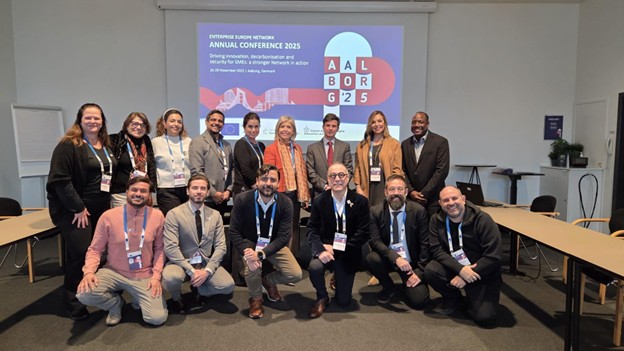
Caribbean Export markeerde deze mijlpaal door deel te nemen aan de Enterprise Europe Network Annual Conference 2025, die 26-28 november 2025 werd gehouden in het Aalborg Kongres & Kultur Center in Aalborg, Denemarken, waar het Agentschap EEN-partners en belanghebbenden van over de hele wereld ontmoette om strategische verbanden te leggen die zullen leiden tot concrete kansen voor bedrijven uit beide geografische regio’s.
Het EEN wordt algemeen erkend als ’s werelds grootste ondersteuningsnetwerk voor kleine en middelgrote ondernemingen (MKB) met internationale ambities, dat bedrijfsondersteunende organisaties en experts met elkaar verbindt om bedrijven te helpen innoveren, op te schalen en grensoverschrijdend te groeien.
Een sterkere brug tussen Caribische bedrijven en Europa
Als regionaal agentschap voor handels- en investeringsbevordering voor de 15 lidstaten van het Cariforum is de deelname van Caribbean Export aan het EEN bedoeld om praktische steun te bieden aan Caribische MKB-bedrijven en startende bedrijven die willen internationaliseren, met name naar Europa, terwijl Europese bedrijven ook worden geholpen bij het vinden van geloofwaardige partners en investeringsmogelijkheden in het Caribisch gebied.
Deze tweerichtingsrelatie betekent dat Europese bedrijven ook zullen profiteren van een meer gestructureerde toegang tot de Caribische markt. Via Caribbean Export en het EEN zullen Europese bedrijven in contact kunnen komen met doorgelichte Caribische partners en leveranciers, mogelijkheden voor nearshoring kunnen verkennen en pijplijnprojecten kunnen identificeren in kansrijke sectoren zoals hernieuwbare energie, duurzaam toerisme, agribusiness en de digitale economie. Ze zullen worden ondersteund met op maat gemaakte partnerzoekopdrachten, sectorbriefings en gefaciliteerde B2B-overeenkomsten die de risico’s verminderen en de tijd verkorten die nodig is om betrouwbare, langdurige zakelijke relaties in de regio op te bouwen.
Dr. Damie Sinanan, uitvoerend directeur van Caribbean Export, die de conferentie bijwoonde samen met Wayne Elliott, manager technische programma’s, merkte op dat lid worden van het netwerk gaat over het omzetten van relaties in resultaten:
“Dit partnerschap brengt Caribische bedrijven dichter bij Europese kopers, investeerders en innovatiepartners. Via het Enterprise Europe Network zullen we business matchmaking versnellen, de exportgereedheid versterken en nieuwe samenwerkingsverbanden stimuleren die Caribische bedrijven helpen te concurreren en te winnen op de wereldmarkt.”
Wat toetreding tot het EEN betekent voor de particuliere sector in het Caribisch gebied
Lidmaatschap van het EEN geeft Caribbean Export en haar belanghebbenden toegang tot een gestructureerd platform dat bedrijven ondersteunt bij elke stap van hun internationaliseringstraject. Voor Caribische bedrijven betekent dit:
Zakelijke matchmaking en het zoeken naar partners om Caribische bedrijven in contact te brengen met Europese kopers, distributeurs, technologieleveranciers en partners.
Marktinformatie en advies om bedrijven te helpen bij het omgaan met normen, voorschriften en vereisten voor markttoegang – met name voor de interne markt van de EU.
Steun om de economische partnerschapsovereenkomst (EPO) tussen de EU en Cariforum als hefboom te gebruiken door bedrijven meer inzicht te geven in praktische handelsbevorderende overwegingen en exportstrategie.
Steun voor innovatie, duurzaamheid en digitalisering, om het mkb te helpen sterkere bedrijfsmodellen, groenere productiemethoden en digitale hulpmiddelen in te voeren die het concurrentievermogen verbeteren.
Koppelingen ter bevordering van investeringen, waardoor het Caribisch gebied een aantrekkelijke bestemming wordt voor Europese investeringen, met name op prioritaire gebieden zoals duurzame landbouw, hernieuwbare energie en de digitale economie.
Hoe Caribbean Export EEN-diensten gaat leveren in de regio
Om ervoor te zorgen dat de hele regio gelijkelijk wordt bereikt, zal Caribbean Export een “hub-and-spoke” leveringsmodel implementeren, waarbij regionaal wordt gecoördineerd en tegelijkertijd wordt samengewerkt met nationale bedrijfsondersteunende organisaties, kamers van koophandel en sectorpartners om de diensten dichter bij de bedrijven in elk Cariforum-land te brengen.
Caribbean Export zal ook lokale bedrijven helpen bij het ontwikkelen en promoten van partnerschapsprofielen via EEN-kanalen en zal missies, evenementen en B2B-overeenkomsten creëren die afgestemd zijn op de prioriteiten van de regio, waaronder agrovoeding, hernieuwbare energie en digitale transformatie.
Aan de Europese kant zal het Agentschap samenwerken met EEN partnerorganisaties om gezamenlijke activiteiten op te zetten, marktintelligentie te delen en bedrijven te ondersteunen die hun aanwezigheid in het Caribisch gebied willen vestigen of verdiepen.
Een katalysator voor handel, investeringen en veerkracht
In een wereldwijde omgeving waar kmo’s worden geconfronteerd met stijgende kosten, nieuwe wettelijke vereisten en snelle technologische veranderingen, hangt het concurrentievermogen van de Caraïben af van hun vermogen om contacten te leggen, te innoveren en te schalen. Deelname aan het Enterprise Europe Network zal naar verwachting:
De exportkansen vergroten door betere kopers te vinden, betere naleving en sterkere strategieën om de markt op te gaan.
Kwalitatief goede investeringen aantrekken door Caribische kansen onder de aandacht te brengen en de betrokkenheid van investeerders te bevorderen.
Innovatiepartnerschappen opzetten die nieuwe producten, verbeterde productiemethoden en de toepassing van technologie ondersteunen die geschikt is voor kleine eilanden en zich ontwikkelende economieën.
De veerkracht en het concurrentievermogen van het mkb verbeteren, met name voor door vrouwen en jongeren geleide bedrijven en bedrijven in kleinere gebieden.
Voor Europese partners biedt de relatie ook een manier om hun inkoop te diversifiëren, uit te breiden naar dynamische opkomende markten en samen te werken aan oplossingen die gedeelde prioriteiten bevorderen, zoals klimaatbestendigheid, digitale transformatie en duurzame groei.
Uiteindelijk gaat het partnerschap om meer dan cijfers. Het gaat erom Caribische bedrijven in te bedden in wereldwijde waardeketens op een manier die banen creëert, vaardigheden ontwikkelt en een veerkrachtigere en duurzamere regionale economie ondersteunt.
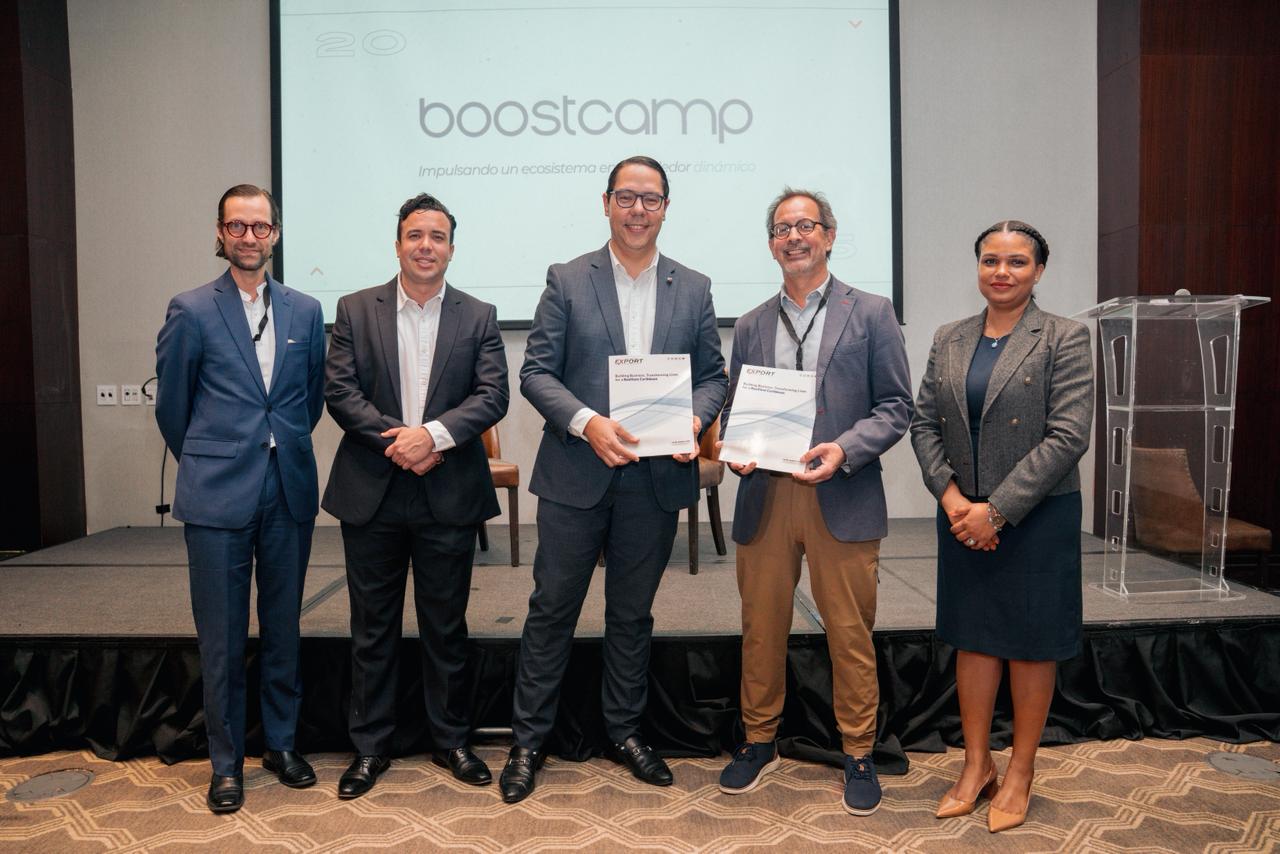
Caribbean Export Development Agency (Caribbean Export), in vertegenwoordiging van de EU-LAC Digital Accelerator, en Boost Acceleration Camp hebben vandaag officieel een Memorandum of Understanding (MOU) ondertekend, een belangrijke stap in de richting van het bevorderen van ondernemerschap, innovatie en de ontwikkeling van de private sector in de Dominicaanse Republiek en het Caribisch gebied. De ondertekening vond plaats in Santo Domingo als onderdeel van het jaarlijkse Boostcamp 2025, een evenement waar oprichters, bedrijven en investeerders uit de Dominicaanse Republiek, Latijns-Amerika en de rest van het Caribisch gebied samenkomen om partnerschappen te smeden en samenwerkingsmogelijkheden te ontwikkelen. Dit jaar werd Boostcamp 2025 georganiseerd als onderdeel van de bredere programmering die plaatsvond in de Dominicaanse Republiek voor de Global Entrepreneurship Week 2025.
In het kader van dit nieuwe partnerschap zullen Caribbean Export en de andere partners van de EU-LAC Digital Accelerator samenwerken met Boost AC om startups en bedrijven in de Dominicaanse Republiek in staat te stellen deel te nemen aan de EU-LAC Digital Accelerator. Daarnaast zullen deze organisaties werken aan het uitbreiden van de toegang tot financiering, mentorschap, marktkansen en technische ondersteuning voor micro-, kleine en middelgrote ondernemingen (MSME’s), waaronder snelgroeiende startups, door jongeren en vrouwen geleide ondernemingen en door innovatie gedreven bedrijven die regionaal en internationaal willen opschalen.
Het MOU stelt een kader vast voor samenwerking op verschillende belangrijke gebieden, waaronder:
Samenwerking in het kader van de EU-LAC Digital Accelerator, een initiatief gefinancierd door de Europese Unie dat biregionale partnerschappen bevordert tussen startups en bedrijven in Europa, Latijns-Amerika en het Caribisch gebied.
Versnelling van ondernemerschap en startups door middel van gezamenlijke evenementen zoals pitchwedstrijden, innovatie-uitdagingen, hackathons en programma’s voor bedrijfsontwikkeling.
Ontwikkeling van een pijplijn en versterking van het ecosysteem, door de identificatie en voorbereiding van veelbelovende mkb-bedrijven en start-ups te ondersteunen.
Capaciteitsopbouw, met training gericht op exportgereedheid, digitale transformatie, groene innovatie, schaalvergroting en voorbereiding op investeerders.
Toegang tot financiering en contacten met investeerders, door gebruik te maken van de netwerken van beide organisaties van investeerders, bedrijfspartners, ontwikkelingsinstellingen en startkapitaalfondsen.
Steun voor samenwerking tussen bedrijven en startups, die innovatie katalyseren door bedrijven in contact te brengen met zakelijke uitdagingen en technologiegedreven oplossingen.
Tijdens de ondertekeningsceremonie merkte Leo Naut, plaatsvervangend uitvoerend directeur van Caribbean Export en vertegenwoordiger van de EU-LAC Digital Accelerator op:
“Dit partnerschap versterkt onze voortdurende inzet om een veerkrachtige en wereldwijd concurrerende Caribische private sector op te bouwen. Door samen te werken met Boost AC, met name in initiatieven zoals de EU-LAC Digital Accelerator, kunnen we de pijplijn van innovatiegedreven ondernemingen versterken, meer Dominicaanse en Caribische startups ondersteunen om over de grenzen heen op te schalen en meer kansen creëren voor toegang tot financiering, technologie en nieuwe markten.”
Het Boost Acceleration Camp benadrukte de strategische waarde van de alliantie, met name voor startende ondernemingen die hun groei willen versnellen en regionaal willen uitbreiden.
“Deze samenwerking met Caribbean Export stelt ons in staat om de ondersteuning die we bieden aan oprichters en vernieuwers te versterken, terwijl we de Dominicaanse Republiek positioneren als een toegangspoort voor startup-expansie in het Caribisch gebied,” benadrukte Santiago Camarena, voorzitter van de Raad van Bestuur van Boost AC.
Beide instellingen bevestigden dat het partnerschap een bredere visie weerspiegelt om het concurrentievermogen te verbeteren, digitale en groene transformatie te stimuleren en inclusieve economische groei in de hele regio te bevorderen.
Het MOU treedt in werking op de dag van ondertekening en zal de komende twee jaar als leidraad dienen voor gezamenlijke initiatieven.
De Caribbean Export Development Agency (Caribbean Export) heeft zich aangesloten bij regionale en internationale partners op de Afrikaans Caribische Duurzaamheid & Investering Top (ACSIS 2025)die van 21-22 november 2025 werd gehouden in Queen’s Gate House in Londen, Verenigd Koninkrijk. De tweedaagse top had als thema “Empowering Futures: Uniting Africa and the Caribbean through Sustainable Innovation and Inclusive Growth” bracht beleidsmakers, bedrijfsleiders, investeerders en vernieuwers uit beide regio’s samen om de samenwerking op het gebied van handel, technologie en investeringen te bevorderen.
Als vertegenwoordiger van Caribbean Export hield Dr. Damie Sinanan, uitvoerend directeur, een keynote toespraak getiteld “Tech-Driven Transformation: Bridging Africa and the Caribbean Through Innovation and Investment” op de openingsdag van de top. In zijn opmerkingen onderstreepte Dr. Sinanan de gezamenlijke economische uitdagingen en kansen voor ontwikkelingsregio’s en benadrukte digitale transformatie als een cruciaal instrument om veerkracht, concurrentievermogen en duurzame groei in Afrika en het Caribisch gebied te stimuleren.
“Afrika en het Caribisch gebied hebben alle ingrediënten om het mondiale verhaal over ontwikkelingsregio’s te herdefiniëren – niet als passieve deelnemers, maar als dynamische medescheppers van een nieuwe digitale grens”, aldus Dr. Sinanan. “Onze gedeelde geschiedenis geeft ons verbondenheid, maar het is onze gedeelde innovatie die ons momentum moet geven.”
Tijdens zijn toespraak liet Dr. Sinanan het Strategisch Plan 2025-2028 van Caribbean Export zien, dat zich richt op het verbeteren van het concurrentievermogen van het MKB, het uitbreiden van markttoegang en het bevorderen van regionale integratie en investeringen.
Hij benadrukte de zes actieve economische ontwikkelingsprogramma’s van het agentschap ter waarde van USD 20 miljoen, die alleen al in 2024 bijna 1.000 zakelijke professionals hebben ondersteund.
Dr. Sinanan presenteerde ook het Caribbean Investment Forum (CIF) als een belangrijk middel om de handels- en investeringsbanden tussen Afrika en het Caribisch gebied te versterken. Hij benadrukte de ontwikkeling van het CIF tot het belangrijkste investeringsplatform van de Caraïben – met meer dan 2.000 afgevaardigden uit 50 landen en USD 350 miljoen aan tentoongestelde projecten – en nodigde partners uit om deel te nemen aan de editie van 2026 die op Barbados zal plaatsvinden.
Tot de transformatieve samenwerkingsgebieden behoorden FinTech, digitaal ondernemerschap, logistieke innovatie, groene energie en slimme landbouw. Dr. Sinanan noemde succesverhalen zoals de uitbreiding van ZeePay naar Barbados in Ghana en de WiPay-activiteiten van WiPay in Ghana in het Caribisch gebied als voorbeelden van wederzijds voordelige digitale samenwerking.
ACSIS 2025, gesponsord door Afreximbank en gehouden in samenwerking met de Afrikaanse Unie, de Organisatie van Oost-Caribische Staten (OECS) en Caribbean Export, diende als een dynamisch platform om investeerders in contact te brengen met kansrijke projecten in beide regio’s.
De top versterkte het groeiende momentum voor partnerschappen tussen Afrika en het Caribisch gebied die inclusieve economische ontwikkeling door duurzame innovatie bevorderen.
De Caribbean Export Development Agency, als vertegenwoordiger van de EU-LAC Digital Accelerator, nam deel aan Boostcamp 2025 oprichtersdag, een initiatief georganiseerd door Boost Acceleration Campeen van de meest prominente startup-accelerators van de Dominicaanse Republiek. Op de eerste dag zette het evenement de startupgemeenschap in de schijnwerpers en verzamelde meer dan 100 oprichters, ondernemers en innovatieleiders uit de Dominicaanse Republiek, Centraal-Amerika en het Caribisch gebied. Onder de noemer “Growth Edition” richtte Boostcamp 2025 zich op het bieden van een volledige dag van training, netwerken en activiteiten om klaar te zijn voor investeringen voor de bruisende startupgemeenschap in de DR en de bredere Latijns-Amerikaanse en Caribische regio.
Damie Sinanan, Executive Director, gaf het startschot voor de interventie van Caribbean Export op de agenda. Hij benadrukte het belang van ondernemerschap, digitale transformatie en uitgebreide toegang tot financiering – belangrijke thema’s die aansluiten bij zijn bredere Boostcamp-boodschap. “De ondernemers van de Caraïben geven vorm aan de volgende fase van economische groei in de regio,” zei Dr. Sinanan. “Door het versterken van digitale capaciteiten, het verbeteren van de toegang tot financiering en het smeden van nieuwe regio-overschrijdende partnerschappen, helpen we onze startups te schalen, te innoveren en te concurreren op het wereldtoneel.”
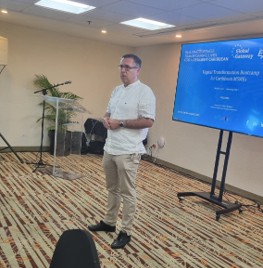
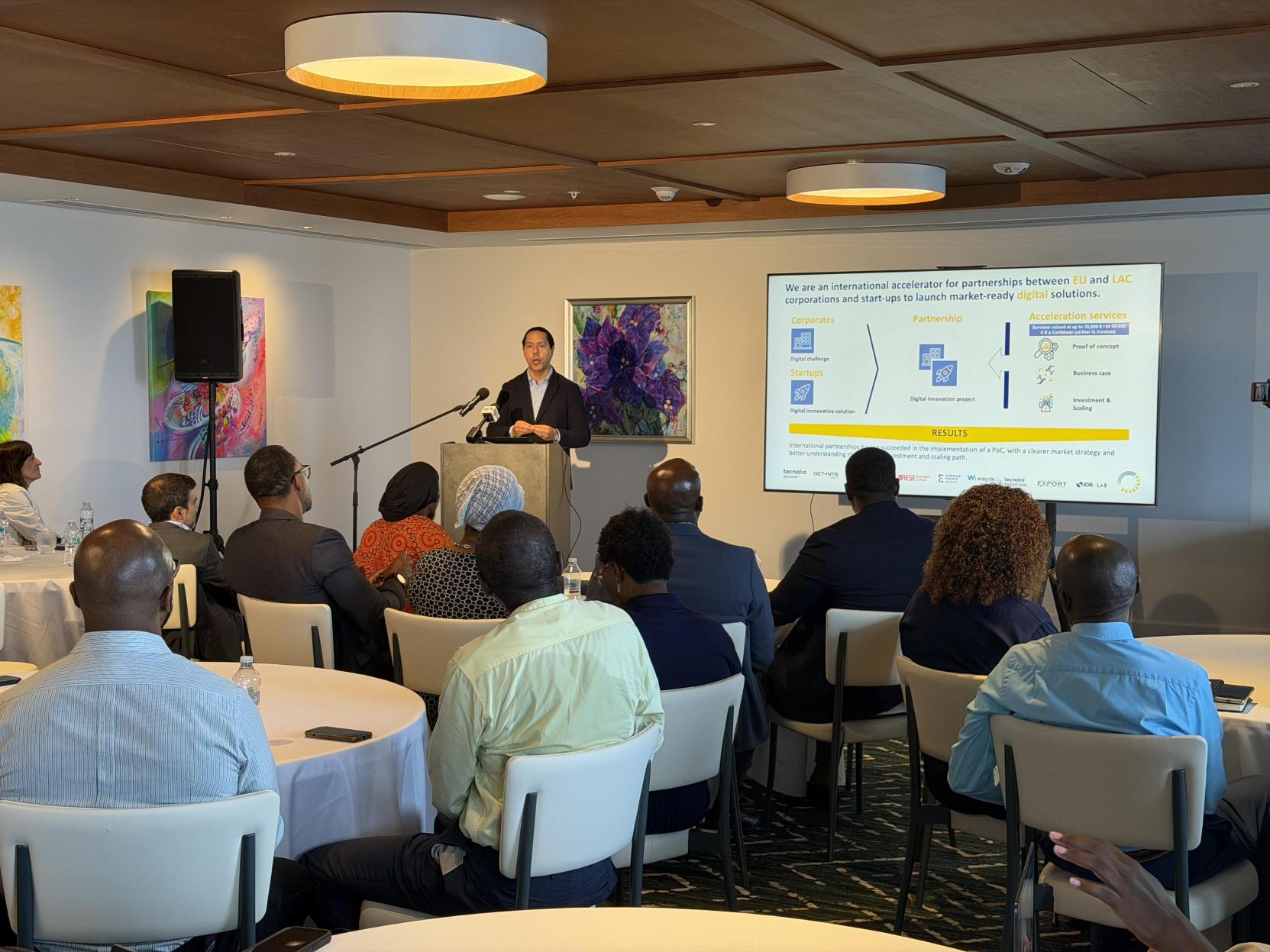
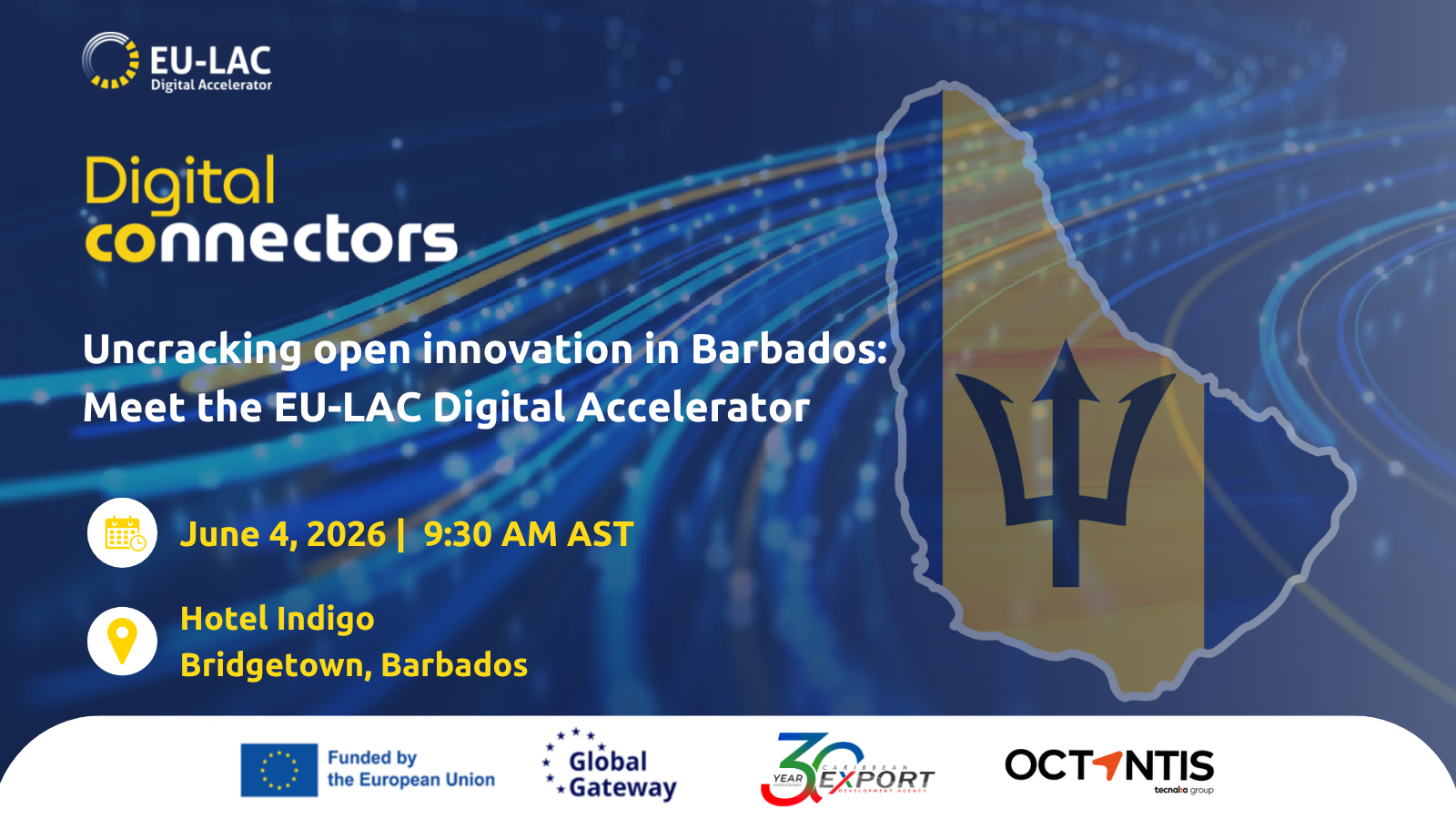
De hoeksteen van deze activering was de presentatie van de EU-LAC Digital Accelerator, een programma gefinancierd door de Europese Unie in het kader van de Global Gateway Investment Agenda en uitgevoerd door een internationaal consortium onder leiding van Tecnalia en regionaal ondersteund door Caribbean Export. Leo Naut, plaatsvervangend uitvoerend directeur, legde uit hoe de EU-LAC Digitale Versneller wegen creëert voor startups om rechtstreeks samen te werken met bedrijven in Europa en Latijns-Amerika, samen digitale oplossingen te ontwikkelen en toegang te krijgen tot nieuwe internationale markten via gestructureerde open innovatieprocessen.
Deze Founders’ Day is onderdeel van een breder tweedaags Boostcamp 2025 programma, dat ook de Investors & Corporates Day op 27 november omvat. Caribbean Export zal de EU-LAC Digital Accelerator vertegenwoordigen in deze Investors & Corporates Day door een panel te modereren met Dominicaanse topbedrijven over corporate venturing, open innovatie en mogelijkheden voor samenwerking tussen startups en bedrijven.
Caribbean Export organiseert live startup-clinic tijdens Founders Day
Als onderdeel van haar deelname organiseerde Caribbean Export ook een live Startup Clinic, waar het team van het EU-LAC Digital Accelerator-programma één-op-één gesprekken voerde met lokale startups, onder leiding van Michelle Aybar, technisch medewerker voor EU-LAC-programma’s en Leo Naut, plaatsvervangend uitvoerend directeur, die ook werkzaam is als programmamanager voor de Accelerator bij Caribbean Export. Deze sessies stelden startups in staat om een dieper inzicht te geven in hun capaciteiten aan het Digital Accelerator-team, met als doel om aan te sluiten bij de huidige uitdagingen op het gebied van bedrijfsinnovatie die binnen het programma leven. Met deze diepere betrokkenheid wil het Digital Accelerator-team van Caribbean Export startups helpen en de juiste ondersteuning bieden om de werkelijke zakelijke kansen te identificeren met bedrijven in het EU-LAC-netwerk.
Het Caribbean Export Development Agency nam deel aan het 2025 Social Entrepreneurship Symposium, met een delegatie bestaande uit Dr. Damie Sinanan, Executive Director; Wayne Elliott, Manager of Technical Programmes; Michelle Aybar, Technical Officer of EU-LAC Programmes; en Leo Naut, Deputy Executive Director, die het Agentschap vertegenwoordigde tijdens de opening van dit belangrijke regionale evenement.
Het Symposium wordt georganiseerd door El Hueco Caribe, in samenwerking met het Ministerie van Industrie, Handel en MSME’s (MICM) en de Universidad Iberoamericana (UNIBE). Het evenement maakt deel uit van de Global Entrepreneurship Week en brengt sociale ondernemers, vertegenwoordigers uit de publieke en private sector, de academische wereld en internationale samenwerkingsorganisaties bijeen om het ecosysteem van sociale innovatie in de Dominicaanse Republiek en het Caribisch gebied te versterken.
Onder het thema “Linking the Impact Ecosystem” biedt het symposium een regionaal platform om inclusieve innovatie te bevorderen, samenwerking te stimuleren en initiatieven te belichten die sociale en economische transformatie stimuleren.
EU-LAC presentatie sociale versneller
Als onderdeel van de lancering van het Nationale Register van Sociale Ondernemers (RNES), gaf de heer Leo Naut een institutionele presentatie over het mandaat van Caribbean Export, waarin hij het lopende werk van het agentschap schetste om innovatie, concurrentievermogen en de ontwikkeling van de particuliere sector in het Caribisch gebied te ondersteunen.
Tijdens zijn opmerkingen introduceerde de heer Naut de EU-LAC sociale versnellereen vlaggenschipprogramma dat wordt uitgevoerd door Caribbean Export en gefinancierd door de Europese Unie in het kader van de Global Gateway Investment Agenda.
De EU-LAC Social Accelerator wil sociale innovatie in Europa, Latijns-Amerika en het Caribisch gebied bevorderen door de capaciteiten van ecosystemen te versterken, impactvolle projecten te stimuleren en een eerlijke, inclusieve en verantwoordelijke groene en digitale overgang te ondersteunen.
Het programma wordt geleid door CAINCO (Bolivia) en uitgevoerd door een consortium van internationale partners, waaronder:
Samen werken deze partners aan het opbouwen en versterken van ecosystemen voor sociale innovatie door technische ondersteuning en capaciteitsopbouw te bieden die de ontwikkeling van regionale sociale labs ondersteunen. Deze labs zullen ruimtes creëren voor cocreatie en prototyping van oplossingen. Als aanvulling op deze inspanningen zullen er stappenplannen worden opgesteld om in te spelen op de behoeften en uitdagingen van sociale vernieuwers in de hele regio bij het oplossen van sociale en milieuproblemen waar onze burgers mee te maken hebben.
Het initiatief legt sterk de nadruk op het versterken van de positie van vrouwen, jongeren en kwetsbare groepen en biedt financiële en technische ondersteuning aan organisaties die werken aan transformatieve, gemeenschapsgerichte innovaties.
“Innovatie wordt krachtig als het inclusief is. Wat we opbouwen met de EU LAC Social Accelerator, met de Europese Unie en onze uitvoerende partners, is een platform waar vrouwen, jongeren en kwetsbare gemeenschappen oplossingen kunnen bedenken, toegang hebben tot kansen en het Caribisch gebied van de toekomst kunnen creëren. “aldus Leo Naut, plaatsvervangend uitvoerend directeur van Caribbean Export.
Caraïbische export
De deelname van Caribbean Export onderstreept de voortdurende toewijding aan het opbouwen van een meer innovatieve, inclusieve en duurzame Caribische private sector. Via de strategische koers die is uitgezet in het plan 2025-2028 richt het agentschap zich op het positioneren van het Caribisch gebied als leider in slimme groei, het verdiepen van partnerschappen die middelen mobiliseren en het ontwikkelen van investeringsrijpe projecten die echte kansen creëren voor onze bedrijven. Gesteund door samenwerkingsinitiatieven en door de EU gefinancierde programma’s blijft Caribbean Export zich inzetten voor het versterken van het regionale concurrentievermogen en de veerkracht, en zorgt het er tegelijkertijd voor dat de ontwikkelingsinspanningen zich vertalen in een zinvolle sociale impact voor de mensen en gemeenschappen in het Caribisch gebied.
De Caribbean Export Development Agency (Caribbean Export), in samenwerking met Global Affairs Canada (GAC) en BELTRAIDE, lanceerde officieel het initiatief Caribbean Women Entrepreneurs Generating Resilient and Inclusive Trade (GRIT) in Belize op 12 november 2025 – een nieuwe mijlpaal in de regionale beweging om vrouwelijke ondernemers mondiger te maken en de Caribische handel te transformeren.
De lancering vond plaats in het Grand Residences & Resort in Belize City en bracht vertegenwoordigers van de overheid, het bedrijfsleven en het maatschappelijk middenveld samen om een gedeelde visie te vieren – een visie waarbij door vrouwen geleide ondernemingen niet alleen producten creëren, maar ook vorm geven aan doelgerichte groei in het Caribisch gebied.
Vrouwen mondig maken, handel transformeren
Het GRIT-project is een vierjarig initiatief van CAD $ 3,16 miljoen, gefinancierd door de Canadese overheid en uitgevoerd door Caribbean Export. Het is gericht op het versterken van de exportcapaciteit van door vrouwen geleide bedrijven in zes Caribische landen – Belize, Dominica, Grenada, Jamaica, Saint Lucia en Saint Vincent en de Grenadines – door de toegang tot handelsinformatie, hulpmiddelen en internationale marktkansen te verbeteren.
Via GRIT kunnen vrouwelijke ondernemers profiteren van technische ondersteuning, training, ondersteuning bij digitale transformatie, matching grants en begeleiding bij exportbereidheid, zodat ze effectiever kunnen concurreren op regionale en wereldwijde markten, waaronder Canada.
Wayne Elliott, manager technische programma’s bij Caribbean Export, benadrukte het transformerende bereik van het initiatief: “GRIT gaat over het ontmoeten van vrouwen waar ze zijn. Het zal direct 800 ondernemers ondersteunen en indirect een impact hebben op meer dan 10.000 vrouwen in het Caribisch gebied. We hebben de activiteiten in Saint Lucia en Dominica al afgerond en nu Belize aan de beurt is, bereiden we ons voor op de uitbreiding naar de overige landen begin volgend jaar. Het is cruciaal dat we vrouwen betrekken bij hun eigen gemeenschappen, zodat de geboden ondersteuning echt aansluit bij hun behoeften en ambities.”
Ishmael Quiroz, uitvoerend directeur van BELTRAIDE, benadrukte de jarenlange inzet van het bureau voor de bevordering van vrouwen in de handel door te zeggen: “Je wacht niet op kansen. Jullie creëren ze. Wij zijn hier om ervoor te zorgen dat het systeem aan uw ambitie voldoet. BELTRAIDE staat achter u. EXPORTBelize staat achter u. En via GRIT staat de regio achter u.”
Partnerschap voor Inclusieve Groei
Vertegenwoordigers van de belangrijkste ministeries bevestigden opnieuw de inzet van Belize voor een inclusieve, gendergerichte economische transformatie – een hoeksteen van de ontwikkelingsstrategie van het land.
Narda Garcia, Chief Executive Officer in het kantoor van de eerste minister en de ministeries van Investeringen en Burgerluchtvaart, benadrukte dat de economische emancipatie van vrouwen centraal staat op de ontwikkelingsagenda van Belize en geen randverschijnsel is. Ze verklaarde: “Gendergelijkheid is geen sociaal welzijnsproject; het is een macro-economische noodzaak. De volledige en gelijkwaardige deelname van vrouwen aan onze economie is de belangrijkste onaangeboorde hulpbron die we hebben voor het stimuleren van duurzame groei, het opbouwen van veerkracht en het creëren van een meer welvarende toekomst voor iedereen.”
Carlos Pol, Chief Executive Officer bij het Ministerie van Economische Transformatie, benadrukte de economische urgentie van het versterken van de participatie van vrouwen in handel en ondernemerschap. Hij benadrukte dat het versterken van de positie van vrouwen niet alleen een sociale noodzaak is, maar ook een nationale economische noodzaak, door te stellen: “Volgens het IMF kan het verhogen van de arbeidsparticipatie van vrouwen het BBP-niveau mogelijk verhogen met 23 procent. Dat is geen geringe bijdrage. We moeten begrijpen dat als we vrouwen de diensten onthouden die ze nodig hebben om hun bedrijf en zichzelf te laten groeien, we het land ook een aanzienlijke economische groei onthouden.”
Adele Catzim-Sanchez, Chief Executive Officer van het Ministerie van Menselijke Ontwikkeling, Gezinsondersteuning en Genderzaken, benadrukte het nationale belang van de missie van GRIT en de transformerende kracht van de deelname van vrouwen aan de handel. Ze merkte op: “Dit project erkent dat wanneer vrouwen floreren, families floreren, gemeenschappen floreren en naties vooruitgaan.”
Ze benadrukte verder hoe GRIT naadloos aansluit bij de langetermijnontwikkelingskaders van Belize, en voegde daaraan toe: “Economische empowerment van vrouwen is geen bijzaak. Het staat centraal in de nationale ontwikkeling, in het bereiken van de doelen van Plan Belize en in het realiseren van de visie van ons nationale genderbeleid.”
Hun opmerkingen onderstreepten de rol van vrouwen als economische motor en innovator in de toekomst van Belize – en het belang van samenwerkingsverbanden zoals GRIT in het overbruggen van kloven en het creëren van duurzame paden voor vrouwen in de handel.
Van visie tot onderneming
Het evenement bestond uit een fireside chat met twee van de meest dynamische vrouwelijke ondernemers van Belize – Wilana Oldman, CEO van Hot Mama’s Belize, en Nefretery Marin, CEO van Ostrich Organic Farm en Barzakh Falah Farms & Craft – die hun ervaringen deelden over het navigeren door exportmarkten, het opschalen van bedrijven en het leiden met creativiteit en veerkracht. Hun verhalen belichaamden de geest van GRIT – moed, doorzettingsvermogen en doelgerichtheid – en inspireerden de aanwezigen om ondernemerschap niet alleen als een zakelijke activiteit te zien, maar ook als een vorm van natievorming.
Canada’s streven naar inclusieve handel
Via GRIT blijven Global Affairs Canada en Caribbean Export genderbewuste handelspraktijken bevorderen die ervoor zorgen dat vrouwelijke ondernemers in de Cariforum-staten volledig kunnen deelnemen aan en profiteren van handelsmogelijkheden. Het initiatief maakt deel uit van Canada’s bredere inzet voor inclusieve economische groei, klimaatbestendigheid en empowerment van vrouwen in het Caribisch gebied.