Your True Shade Cosmetics – Fusing Science And Nature

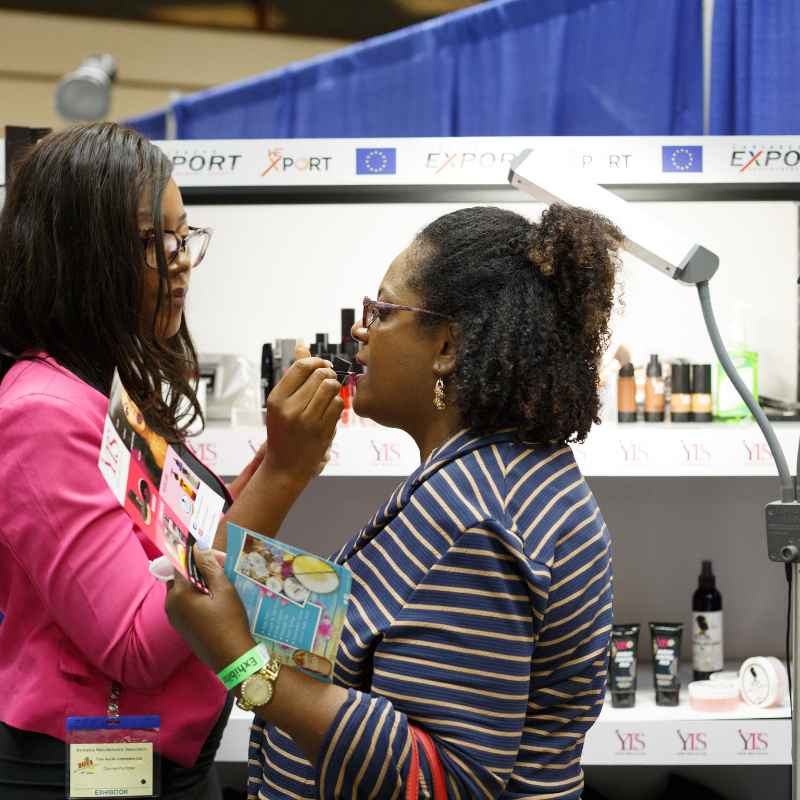
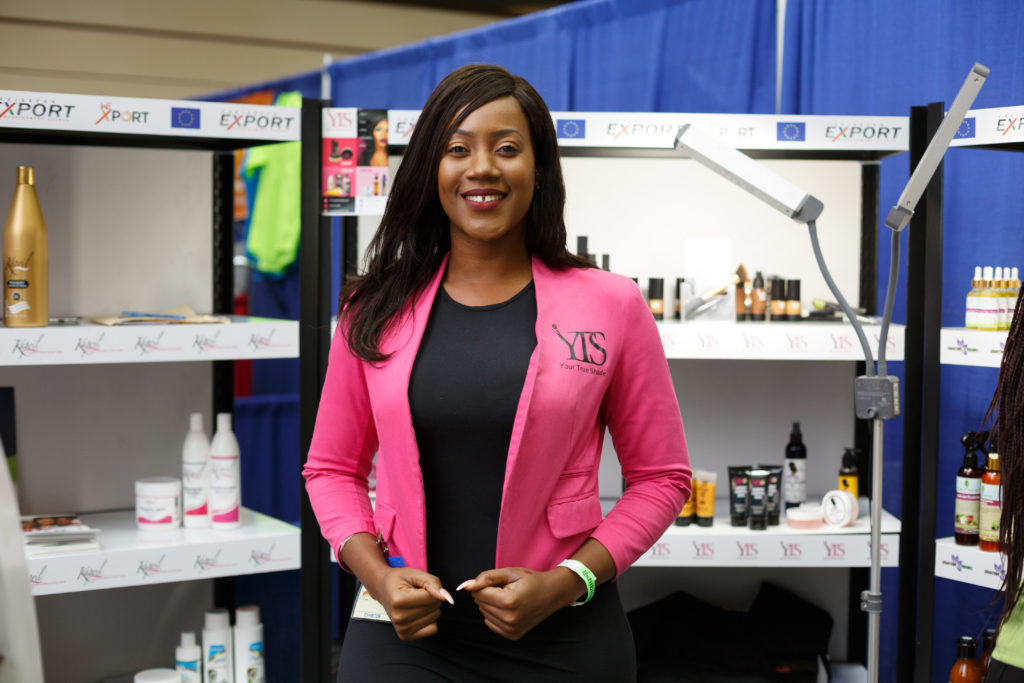
The global cosmetics industry generates billions of dollars each year and Jamaican Dianne Plummer, owner of Your True Shade, a healthy cosmetic line manufactured in her homeland, is hoping to get a slice of that market.

The first Caribbean cosmetics beauty line to be certified by Cruelty Free International in the United Kingdom; Your True Shade is recognised as a green skin care and clean cosmetics brand. Your True Shade was created out of necessity by Dianne while studying sustainable energy and chemical engineering in Sweden and Finland. During that period, she found it difficult to find makeup that offered ideal coverage without irritating her sensitive skin and causing eczema flare ups.

Using her engineering background, Dianne hand-picked natural ingredients to formulate her own skincare and make-up line. As a result, Your True Shade Cosmetics Limited was born. The line has the distinction of being free from harmful chemicals commonly used in some skin care products. And remarkably, it celebrates the diversity of skin tones found in the Caribbean and beyond.

Though her company is only four years old, Dianne is determined to be a trailblazer in natural skin care in the Caribbean and focuses heavily on innovation, research and development. I’m always trying to make everything better, change formulations and tweak things as we go forward, because innovation has to be at the core of the business, she said.

She added that the old way of doing things was not a sustainable business model, but that a revolution was needed. In her opinion, what separates the outstanding entrepreneur from the average Jane or Joe is the ability to bring something new, never before seen or done, to the market. “In an already saturated market, like skincare, one must figure out how to do it differently and be innovative, Dianne stressed.

She does this by fusing technology, science and nature to deliver a safe, efficacious product, thereby successfully changing the narrative surrounding beauty by making it synonymous with health.

Your True Shade cosmetics is known for its ability to conceal and minimise imperfections, as well as promote healing and repair through the locally-sourced, natural, anti-inflammatory and hydrating herbs, spices and plant extracts used to formulate the line. In essence, it’s makeup with skincare benefits.

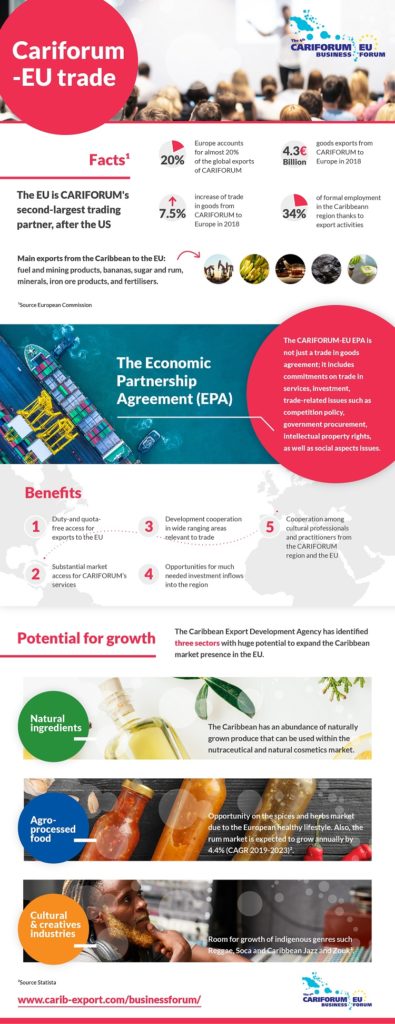
Your True Shade will be at the 4th CARIFORUM-EU Business Forum being organized by the Caribbean Export Development Agency at the Union Halle in Frankfurt, Germany from September 26 to 28. Together the over 60 Caribbean suppliers, the event organized in collaboration with the European Union and Deutsche Gesellschaft Internationale Zusammenarbeit GmbH (GIZ) aims to improve trade between the Caribbean and Europe.

Find out more about True Shade Cosmetics: www.yourtrueshade.com and join their community on Facebook @trueshadecosmetics and Instagram @yourtrueshade.

Full Circle Animation Studio – Animateurs des Caraïbes au monde

Well executed animations can enhance the viewing experience of both children and adults. Full Circle Animation Studio, from Trinidad and Tobago is just one company in the Caribbean that is excelling in its production of animations and whose body of work is being noticed internationally.

Full Circle has the distinction of being the first animation studio in the Caribbean to work with an international production company for a full season of a television show with a major network. They were contracted by Big Jump Entertainment in Ottawa, Canada to produce the animation for season three of “Animals”, an HBO TV series featuring performances from celebrities like Wanda Sykes, Raven-Symoné, RuPaul, Aziz Ansari and Usher among others.

As a result, creators in the company worked tirelessly between December 2017 and May 2018 to perfect the animation for the show.

“This show had a very unique and distinctive style of design and animation. It looks simple and minimalist but it required us to transmit a lot of emotion through the characters using very limited animation movement. Going in, we had underestimated how challenging that could be, while keeping the provocative edge that really defines the style of the show. In that regard, it was a new technical experience for us” said Managing Director Jason Lindsay.

Mr. Lindsay also noted that the experience benefitted his team tremendously. “For a young animation industry like ours here in Trinidad, the main long-term benefit of an opportunity like this is the investment in our human resource. The experience and technical/creative insight gained from our animators working with an experienced production studio like Big Jump Entertainment is invaluable. The entire team benefited from it tremendously,” he stated.

Full Circle has also worked on smaller productions which were broadcast on The Disney Channel, Nickelodeon, Universal Studios, DreamWorks TV and RAI as well as on projects in the Caribbean.

The company has also collaborated with other companies in the Caribbean on regional and international projects. “On our very first outsourcing job, we collaborated with animation studios in Barbados and Jamaica. Since then, it’s not uncommon for us to work with animation studios in St. Lucia, Barbados and Jamaica for international outsourcing clients. We’ve collaborated on projects with Malfinis Productions in St. Lucia, Alycone Animation and Skyres in Jamaica and Westoonz and BIMAP in Barbados.

“We’ve also developed working relationships with a network of recording studios, casting directors and voice actors in Grenada, Belize, Suriname, Dominica, and Guyana for projects based on Caribbean content like the CARICOM mini-series Pepperpot Valley,” the Managing Director explained.

Now focused on expansion and growth, Full Circle is looking to offer its services on the European market. To that end they will participate in the 4th CARIFORUM-EU Business Forum being held in Frankfurt, Germany by the Caribbean Export Development Agency (Caribbean Export) in collaboration with the European Commission and Deutsche Gesellschaft fur Internationale Zusammenarbeit GmbH (GIZ).

This will be an opportunity for them to explore business options available on the European market and to give Europeans some highlights of their vast repertoire.

The Business Forum is a high-profile event which seeks to develop and build international partnerships through business to business meetings, networking and business consultations.

Ce que vous devez savoir sur le rhum

Le rhum a été découvert, produit et perfectionné dans les plantations de sucre dans les Caraïbes depuis le17ème siècle. Au cours de la Depuis plusieurs années, la demande pour ce sous-produit de la canne à sucre a augmenté dans le monde entier.

Les exportations mondiales de rhum du CARIFORUM (un regroupement de quinze pays des Caraïbes) vers l’Europe ont augmenté de 26,86 % au cours des trois dernières années pour atteindre une valeur de 1,45 million d’euros. Les principaux importateurs sont l’Espagne et l’Allemagne, la consommation de l’Espagne représentant 14 % du marché des spiritueux.

Afin d’améliorer et de renforcer les exportations en Europe, les représentants des industries productrices de rhum du CARIFORUM convergeront vers Francfort, en Allemagne, du 26 au 28 septembre 2019, à l’occasion du 4e Forum des entreprises de l’UE du CARIFORUM, pour nouer des relations et accroître la sensibilisation en Europe.

Le forum d’affaires est organisé par l’Agence caribéenne pour le développement des exportations, qui a identifié les industries agroalimentaires et des ingrédients naturels ainsi que les industries culturelles et créatives comme étant les secteurs présentant le plus fort potentiel de croissance en Europe.

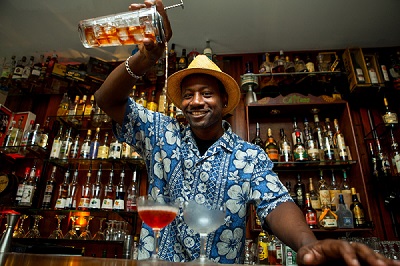
Ian Burrell, le SEUL ambassadeur mondial reconnu pour le rhum, dirigera la Master Class sur le rhum le deuxième jour du forum des affaires.

S’exprimant sur le développement de cette industrie au fil des ans, le directeur de la compétitivité et de la promotion des exportations de Caribbean Export, Damie Sinanan, a noté qu’au cours de la dernière décennie, la production de rhum s’est diversifiée pour inclure une large gamme d’arômes, notamment pomme, ananas, mangue et fruit de la passion. Avec ces nouvelles tendances et l’augmentation de la demande, nous espérons voir une gamme plus diversifiée de rhum des Caraïbes disponible sur le marché européen.

Saviez-vous que…

1. Tous les rhums ne sont pas sont doux

La plupart des rhums sont fabriqués à partir de mélasse, un sous-produit de la canne à sucre, par un processus de fermentation et de distillation, et après ce processus, il ne reste que de l’alcool. Par conséquent, le rhum à l’état naturel ne contient pas de sucre et la douceur naturelle du rhum provient du vieillissement dans des fûts en bois de chêne américain pour la plupart. Certains producteurs de rhum ajoutent du sucre au rhum distillé afin d’adoucir et d’adoucir le produit, le faisant paraître plus épais et luxueux. Toutefois, vous ne trouverez pas cela dans les pays producteurs de rhum authentique comme la Barbade, la Jamaïque et la Martinique, dont la réglementation interdit l’ajout de sucre et d’autres conservateurs.

2. Les pirates ne buvaient pas seulement du rhum

Si le rhum était considéré comme la boisson de prédilection des pirates entre les années 1660 et 1730, lorsque la piraterie était florissante dans les Caraïbes, les pirates ne buvaient pas que du rhum. Les pirates célèbres comme le véritable capitaine Morgan (né en 1635 au Pays de Galles et mort en 1688 en Jamaïque), Edward Teach alias Barbe Noire et d’autres buvaient tous les types d’alcool et de spiritueux comme le brandy, le porto et le vin espagnol. La plupart du rhum consommé au XVIIe siècle était bu par des personnes vivant dans les Caraïbes, et non par des pirates.

3. Le rhum est français pour le rhum

Le rhum avec un H est Il ne s’agit pas d’une faute d’orthographe, mais d’un rhum de style français fabriqué à partir de produits frais. du jus de canne à sucre pressé plutôt que de la mélasse. Le nom officiel est Rhum Agricole et ce style de rhum est traditionnellement fabriqué dans les anciennes Caraïbes françaises. des colonies telles que la Martinique, qui appose l’étiquette AOC Martinique Rhum sur son rhum. Agricole.

4. Ron est espagnol pour le rhum

Tout comme les Français ont une façon différente d’épeler le rhum, les Espagnols aussi. En fait, si vous êtes dans un pays hispanophone, le rhum s’écrit Ron. Outre les variantes française et espagnole, il existe d’autres noms pour le rhum. En fait, le rhum porte de nombreux noms non officiels, notamment Aguadiente, Brebaje, Barbados Water, Clarin, Demon Water, Guildive, Killdevil, Nelson’s Blood, Red Eye, Pirates Drink, Navy Neaters, Guildive et Tafia. Quant à l’origine du mot « rhum », on pense qu’il provient d’un vieux mot anglais appelé Rumbullion, utilisé pour décrire l’alcool de canne à sucre à la Barbade au milieu des années 1600 et signifiant « tumulte ». Un autre lien est établi avec le mot Rumbustious en raison des effets de la consommation de rhum.

5. Pas tous âgés les rhums sont sombres

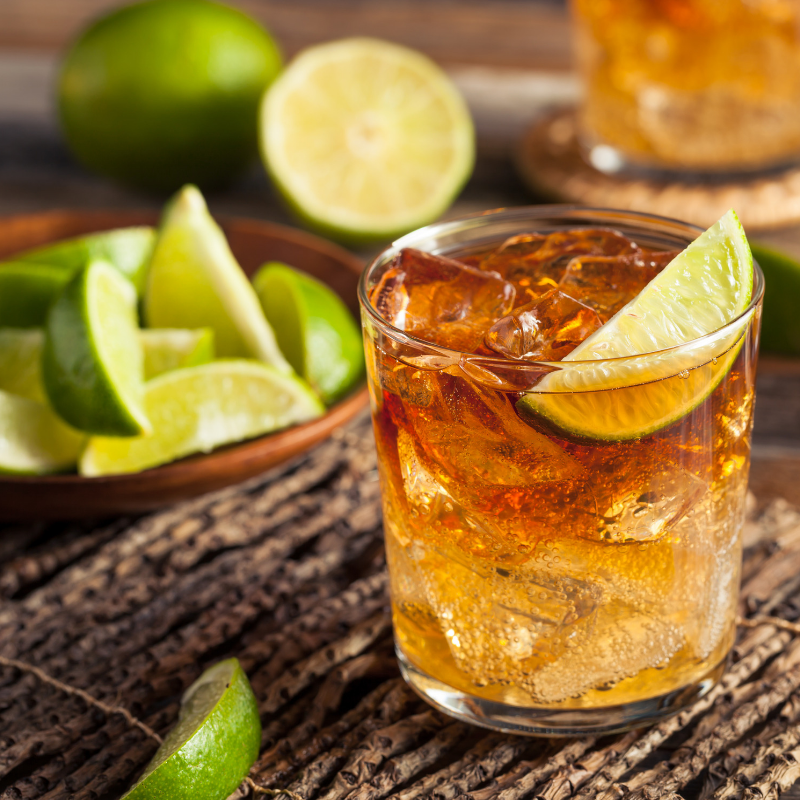
Il y a Il existe différents types de rhum : or, brun, blanc, épicé, aromatisée et trop forte. Le rhum vieilli tend pour être sombre, mais il y a aussi des rhums blancs vieillis. Le rhum blanc vieilli est obtenu en mettant le rhum distillé dans un tonneau de chêne qui est filtré au charbon de bois, et ce… enlève la couleur foncée mais laisse au rhum la riche saveur des rhums plus foncés. rhums. La clarté et la fraîcheur des rhums blancs en font un choix parfait pour… à boire pur (seul), ou avec de la glace et du citron vert ou dans un cocktail au rhum complet. Beyond Cane Spirit Rothschild (CSR) et Brinley Gold Shipwreck, deux rhums blancs de Saint-Kitts, un rhum blanc vieilli extrêmement populaire est le Barcardi, dont les origines remontent à l’époque de l’Union européenne. Cuba mais maintenant produit à Porto Rico.

6. Il y a différentes façons de vivre et de savourer le rhum

Le rhum est souvent associé à du coca (light) ou à des jus de fruits, mais il existe d’autres façons de boire ce spiritueux mondial. Pour les rhums de qualité supérieure aux saveurs et aux arômes complexes, il est préférable de les boire purs ou avec un verre d’eau ou un glaçon. Les rhums de qualité supérieure conviennent également parfaitement aux cocktails classiques tels que les Old fashions et les Manhattans. Une tendance croissante consiste à associer le rhum à différents types d’aliments, dont le chocolat et les guimauves. Savourer un verre de rhum de qualité supérieure pur en fumant un cigare est également un autre passe-temps favori. Notez que lorsque vous vous rendez dans un bar ou une rhumerie des Caraïbes, vous pouvez entendre straight ou straight up au lieu de neat pour un shot de rhum.

7. Le rhum arrive toutes les gammes de prix

Comme pour tous les autres spiritueux, les prix du rhum varient de bas en haut. Les bouteilles de rhum d’entrée de gamme se situent entre 20 et 60 dollars, mais les prix peuvent être beaucoup plus élevés. Par exemple, un rhum Appleton Estate Independence 50 ans d’âge, distillé en 1962 mais mis en bouteille en 2012, se vend environ 5 000 dollars. Ce n’est pas surprenant puisque seulement 800 bouteilles du rhum jamaïcain Appleton Estate 50 ans d’âge Independence Rum ont été mises en circulation. Un rhum jamaïcain Wray & Nephew de 17 ans d’âge, utilisé dans le premier Mai Tai en 1944, est encore plus coûteux et est estimé à environ 52 000 dollars. Un autre rhum très prisé et très cher était le rhum Harewood Estate découvert vers 2011, qui a la particularité d’être le plus vieux rhum du monde. Embouteillées initialement à la Barbade vers 1780, 24 bouteilles ont été vendues aux enchères par Christie’s à Londres en 2013 et 2014 pour 250 000 £ (environ 332 000 $ US).

8. Pas tous les rhums commercialisés comme du rhum sont du rhum

Avec la popularité croissante et la demande mondiale de rhums, il n’est peut-être pas surprenant qu’il existe désormais de fausses marques de rhum. Les rhums de contrefaçon sont courants en Europe où la canne à sucre n’est pas cultivée. Par exemple, Tuzem, une boisson distillée de la République tchèque, a été commercialisée comme du rhum, mais elle n’est pas fabriquée à partir de canne à sucre ou de sous-produits, mais de pommes de terre ou de betteraves sucrières. Les autres faux rhums à surveiller sont le rhum Verschnitt d’Allemagne et le rhum Inlander d’Autriche. Il faut donc s’en tenir aux marques de rhum connues et, pour les Caraïbes, choisir celles qui portent le label Authentic Caribbean Rum Marque.

Jetez un coup d’œil aux producteurs de rhum des Caraïbes qui seront présents à Francfort, en Allemagne, du 26 au 28 septembre 2019, à l’occasion du 4e Forum des affaires CARIFORUM UE.

Bélo emmène le reggae aux influences françaises en Europe

BélO is easily one of Haiti’s ambassadors to the world.  He has been described by Huffington Post as a socially-minded, Haitian-born singer-songwriter who powerfully delivers jazz and world beat inflected reggae in French and Creole.

The socially conscious singer-songwriter’s real name is Jean Bélony Murat. He uses his sophisticated sound and music to expose social and environmental issues faced by Haiti.

He has received numerous awards including “Best Male Artist 2007” by the Haitian Music Awards and the prestigious “Prix Radio France International Discoveries of 2006.” BélO’s sound is a beautiful mixture of jazz, worldbeat, rock, reggae and Afro-Haitian traditional rhythms known as Ragganga.

BélO is in the line-up of musical performances at the Discover the Caribbean Day on the 28th of September 2019 at the Union Halle, Frankfurt, Germany.  The event is organized by the Caribbean Export Development Agency (Caribbean Export) as the final day of the 4th CARIFORUM-EU Business Forum starting on the 26th September at the same location. 

Caribbean Export has identified the cultural and creative industries as high potential growth areas in Europe and in collaboration with the European Union and Deutsche Gesellschaft fur Internationale Zusammenarbeit GmbH (GIZ) the event will see over 60 Caribbean companies showcase their products and services to the attending audiences.

With the realization that there is an increase in the demand for Caribbean music at a number of cultural events in Europe, including Summerjam Reggae Festival in Germany, Ibiza Soca Festival in Spain and Reggae Sun Ska Festival in France, Caribbean Export is hoping to promote more Caribbean music to Europeans.  This is part of their larger efforts to encourage the export of work done by cultural industries in CARIFORUM countries to Europe.

Other activities on the Discover the Caribbean Day include a film festival where patrons can watch a range films and animations produced in the Caribbean.  There will be over 60 different food and beverage producers sampling products enabling consumers curious about what the Caribbean has to offer, to come out and Discover the Caribbean. 

Peau, corps et santé naturels

The demand for natural medicine in Europe has grown at a tremendous rate as Europeans becoming more and more conscious about their health and the quality of the goods they consume.

In 2017, the global nutraceuticals product market reached US$204 billion. With an abundance of medicinal plants, the Caribbean is ripe with natural remedies to supply the increase in demand for natural ingredients.

A common experience for many people living in the Caribbean and visitors is the irritating mosquito bite. It’s an unwanted experience of millions all over the world and with this desire to use natural remedies drove medical doctors Gayle Devaux-Segovia and Carlos Segovia to develop natural repellent prior to the birth of their first child. They wanted to make a natural insect repellent safe enough to use on a baby.

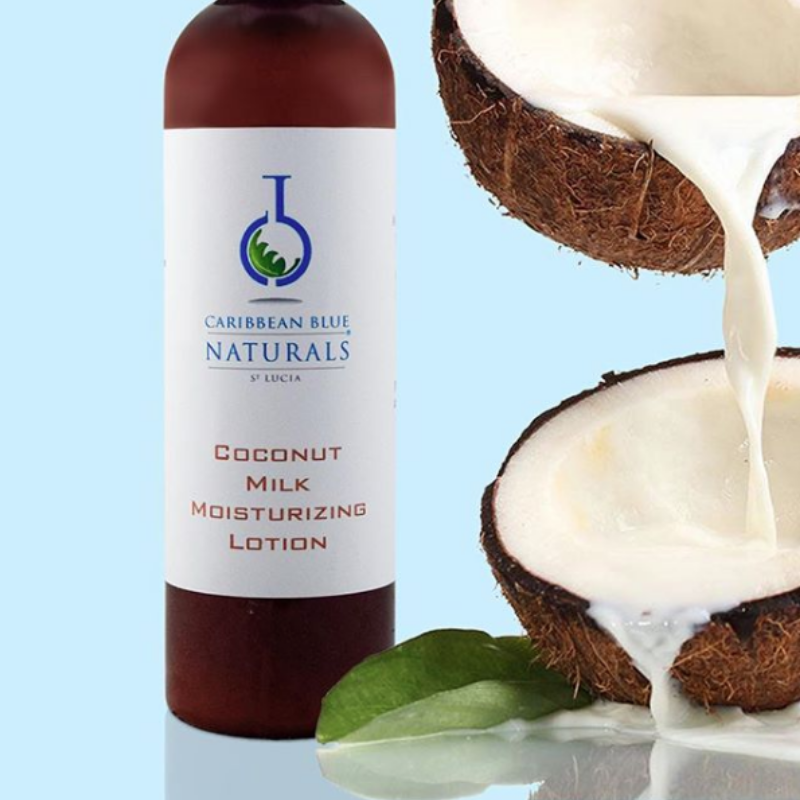
“When our son was born, we used the insect repellent on him and it worked very well. We got a lot of encouragement from people so in 1997 we formed a company called Natmed Ltd. We branded the product under Caribbean Blue Naturals and twenty years later, it is still one of our best sellers,” Dr. Gayle Devaux-Segovia explained.

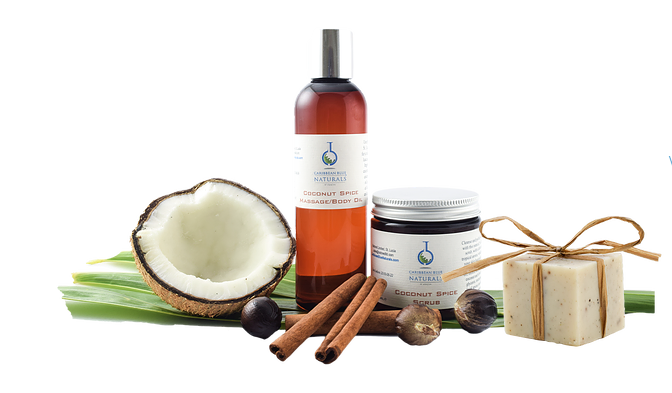
Over the years, Dr. Gayle and her husband added more products to Caribbean Blue Naturals: deodorant, body spray, hand sanitizers and sun screen to list a few. They are all natural, cruelty-free, reef-safe, non-GMO, 100% biodegradable and mostly vegan as they use beeswax in their lip balm and candles.

Dr. Carlos Segovia said they source the majority of their ingredients locally. According to him, these ingredients included Saint Lucia cocoa, aloe vera, seaweed extract, nutmeg and other Caribbean spices. Our mission is to produce all natural products of the highest quality and make them affordable to the general public, he noted.

The Saint Lucian company will showcase its wide range of natural products at the 4th CARIFORUM-EU Business Forum organized by the Caribbean Export Development Agency in collaboration with the European Union and Deutsche Gesellschaft fur Internationale Zusammenarbeit GmbH (GIZ).
Along with over 60 other Caribbean companies, the Business Forum enables buyers and consumers to meet suppliers and source products from the Caribbean over 3 days from 26th to the 28th September 2019 at the Union Halle, Frankfurt, Germany.

Le centre de fertilité de la Barbade évite la concurrence mondiale sur le marché en plein essor du traitement de l’infertilité

The global fertility industry has seen robust year-on year growth as new advances in in-vitro fertilisation (IVF), and a steady increase in infertility rates, have shored up demand for assisted pregnancies. And while the United States and Europe still command the largest share of the industry, a small clinic in Barbados is heading off global competition to eke out a niche for itself with world-leading IVF success rates, and the unique value-added of Barbados’ tourism brand.
Formed in 2002, the Barbados Fertility Centre is a partnership between Barbadian doctor Juliet Skinner and Irish IVF nurse, Anna Hosford. The Centre became their joint vision following Skinner’s return to Barbados in 1998, where local infertility rates showed up an untapped market for IVF solutions.
Inevitably, the Centre’s ambitions were global. In an industry where one IVF unit typically serves a population of 750,000, the Barbados Fertility Centre has been outward looking from the outset. Today, it is a major lynchpin in Barbados’ medical tourism offering. By 2017, the Centre had facilitated thousands of pregnancies for clients in the Caribbean, the far East, Australia, the United States and Europe. “On any given day, our waiting room is like the United Nations,” BFC Chief Operations Officer, Rachel de Gale, told Caribbean Export’s Outlook.
Patients are drawn to the Centre’s high success rates — now at 67 per cent for women under-35 — and treatment costs that average around 40 per cent below that of fertility treatments in the United States. An aggressive marketing campaign in North America has paid dividends for the Centre, with 25% of its patients coming from the US, second only to the burgeoning Caribbean home market.

Read The Full Story

Cultiver une spécialité caribéenne

The production of cacao is globally concentrated in the regions between 10 degrees north and 10 degrees south of the equator, namely Central and South America, West Africa and the Caribbean.
The Caribbean is held in high regard as a cacao-producing region because it yields a fine, aromatic bean. In fact, fine flavoured cacao accounts for only 5% of the world production and is concentrated in a few countries, one of which is Suriname.

It is the soil that determines the quality of the cacao bean and Suriname is perfectly positioned to generate nutrient rich soil for the native cacao tree to thrive from. The method of making Surinamese cacao, called skrati in Surinamese Creole language, has been used for centuries to produce cacao based products.

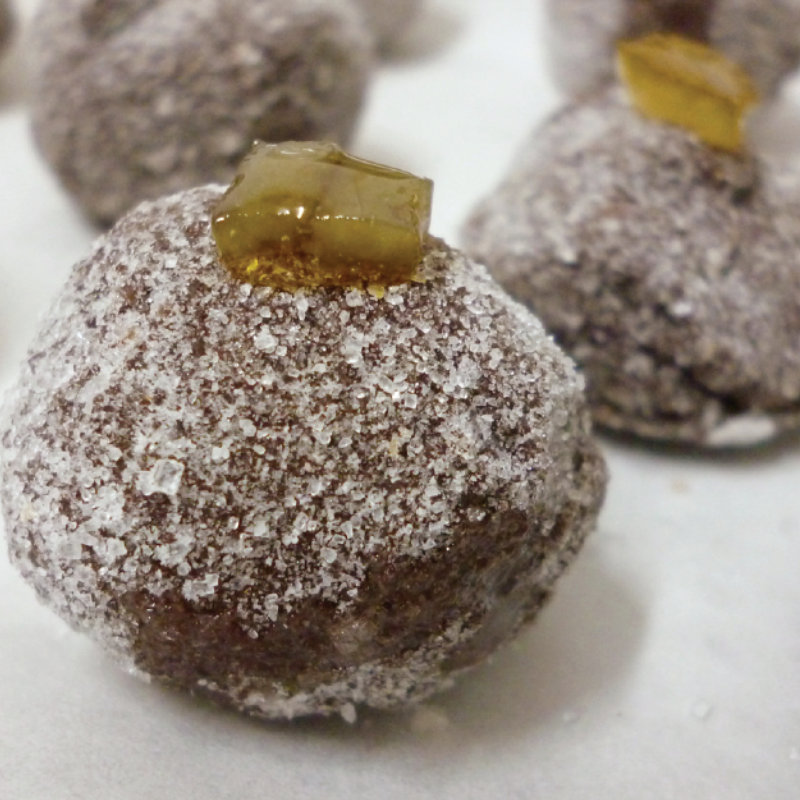
However, the skrati was losing interest among many of the natives when a young artist traveled to Suriname to complete a project and fell in love with the exotic plant and its qualities in 2005. Five years later, she set out to revive the tradition and with that Tan Bun Skrati was established. As a smallscale cacao enterprise, Tan Bun Skrati is a grower and processor of artisan cacao products such as tea, butter, chocolate bars, cupcakes, truffles and bonbons filled with the finest Surinamese fruit.

“The company really started as an art project, but I was so intrigued by the Surinamese cacao that I decided to explore the properties of the bean some more,” recalled Ellen Lem Ligteringen , Managing Director. “This is what motivated me to actually start to produce chocolate from the cacao.”
In the beginning there were a few challenges for the company as there were not many cacao trees available and the machines to process the bean were also inadequate. But as a sculptor, Ellen was able to make her own machines and with that the business started to develop.

Read The Full Story Here

DJ Puffy : le son du succès

In the Caribbean, there is no shortage of talented DJs. Names like DJ Crown Prince from Antigua and Barbuda, Trinidad’s DJ Private Ryan and Black Chiney from Jamaica, are known for their creative remixes and ability to push the conventional boundaries. Beyond this, Caribbean DJs are the ideal cultural ambassadors to serve on the front lines of the region’s mission of transporting its music to the world.

When thinking about ambassadors, one DJ that comes to mind is DJ Puffy, the 2016 Red Bull Thre3style World DJ Champion. Born Andre Curtis Parris, the Barbadian turntablist started DJ-ing as a hobby during his teens, but it is evident that music is a part of his DNA.

What started as a passionate adolescent pastime, eventually turned into a rewarding world-class career; one that has led to Puffy performing at parties attended by A-listers such as Rihanna and Amber Rose, and sharing the stage with Hed Kandi and Rick Ross among others. Puffy’s raw talent has propelled him into the global spotlight, but his success has not overshadowed his Caribbean influence. In fact, many will argue that staying true to his culture and background as an artist is what makes his sound so unique. Other influences include the likes of Ryan Leslie, Swizz Beatz, Machel Montano, Funkmaster Flex, Scratch Master, Private Ryan, DJ Crown Prince, Hypasounds, Peter Coppin, and DJ Jazzy Jeff.

“I’m influenced by everything around me. What defines a living organism is the fact that it’s extremely sensitive to changes or elements in its environment and I’m no different.”

This adaptability also fuels Puffy’s creativity. His music, much like his personal style, is somewhat of an evolution, and this creativity is instrumental to his craft. Puffy’s ability to connect with the crowd and the performer, and his knack for bringing the element of surprise to the set came to the fore during his run to the finals of the Red Bull Thre3style World DJ Championship in 2016. He entered the competition as a Wild Card, following encouragement from a fellow competitor and colleague, United Statesbased
DJ Trayze.

Read the Full Story here:

Ecofarms™ – Une entreprise sociale qui améliore la vie des malentendants jamaïcains

How did you get started in business?
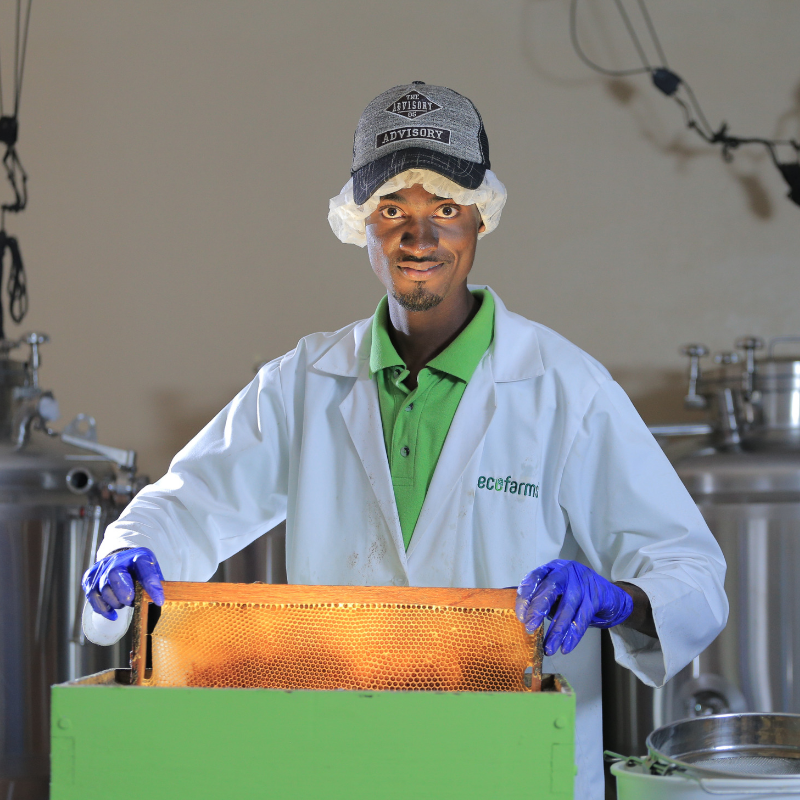
When Grace Foster Reid found herself unemployed after the closure of the two bauxite factories in the central Jamaican town of Mandeville she looked to her father’s farm for inspiration.

As an engineer and graduate from MIT, innovation comes as second nature, and so when she saw the bee hives on her father’s farm and learned about their versatility, she knew there was something she could do.

Hives provide five salable products – honey, pollen, propolis, royal jelly and wax. Grace decided bees would provide employment for herself, and at least 100 community members made redundant by the factory closures, including those at risk.

What helped to make the Ecofarmsâ„¢ dream a reality?
Like most entrepreneurs, Grace experienced numerous obstacles. Staffing issues, lack of capital and funding, and low profit margins all threatened to derail her social enterprise.

But innovation is in the engineer’s blood, and she produced a product with a difference. Grace unveiled Buzz™ HoneyStix™ in 2011, straw-shaped sachets, each with a teaspoon of honey. They include island infusions of cinnamon, ginger, lemongrass, mango, tamarind and watermelon. The sachets now retail in over 50 stores across Jamaica, including the global coffee giant Starbucks, which placed an initial order of 3,000 when they opened doors in Jamaica in the fall of 2018.

Ecofarms’ product offerings expanded in 2013 with the inclusion of “Buzzâ„¢ Honey Wine”, a product birthed after Foster accidentally left a bottled honey/passionfruit infusion in a cupboard. Six months later, it had turned to the oldest alcoholic beverage known to man – mead honey wine. Grace employed science to commence production of an award-winning product with infusions of Malay (Otaheite) apple, sorrel and carambola.

What’s next for Ecofarms™?
Two new products are on the cards Ecofarmsâ„¢, one in the drinks category, the other in confectionary. They are both slated for release in winter 2019.

In keeping with Grace’s goal to assist vulnerable members of her community, Ecofarms™ will expand operations to the Jamaica Deaf Village, where they will mostly employ the hearing impaired. Two deaf youths are currently training as beekeepers.

“We plan on moving to the Jamaica Deaf Village next, because the hearing impaired are…underemployed, and often paid below minimum wage,” Foster-Reid said.

The social enterprise company is also scaling up, having recently purchased production lines for their HoneyStixâ„¢, Honey Wine and honey packaging. Ecofarmsâ„¢ is also looking into select export markets in the Caribbean, North America and Europe, and is pursuing food safety certification.

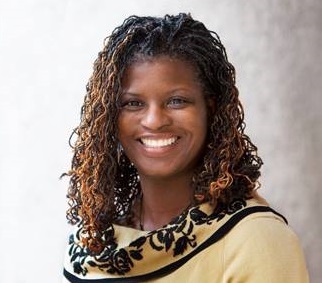
Grace Foster Reid

A few takeaways for budding & aspiring entrepreneurs
“Reassess those things you currently consider obstacles or setbacks,” Grace advises, “because in them, you just may find the fuel you need to keep going.”

Ecofarms’ greatest periods of growth emerged from their most emotionally and financially trying times. That’s because, Grace said, these periods forced her to innovate, increase productivity, improve efficiency and research the training and funding opportunities available.
She also warns against being overly optimistic.
“Our natural optimism as entrepreneurs can lead us to over project, failing to account for possible mishaps. So, halve your projected revenue and double your expenses, and then ask yourself if the business is still viable.”

FIND OUT MORE ABOUT Ecofarmsâ„¢: Facebook and Instagram – @ecofarms, Twitter – @ecofarmsja, and by visiting their website: www.ecofarmsjamaica.com.

COMMENT « NOUS » L’AVONS FAIT – LES FEMMES D’AFFAIRES DES CARAÏBES PARTAGENT LEURS SECRETS POUR PASSER À L’ÉCHELLE ET ÊTRE DES LEADERS MONDIAUX

The best business advice often comes from those whose success was built from the ground up!

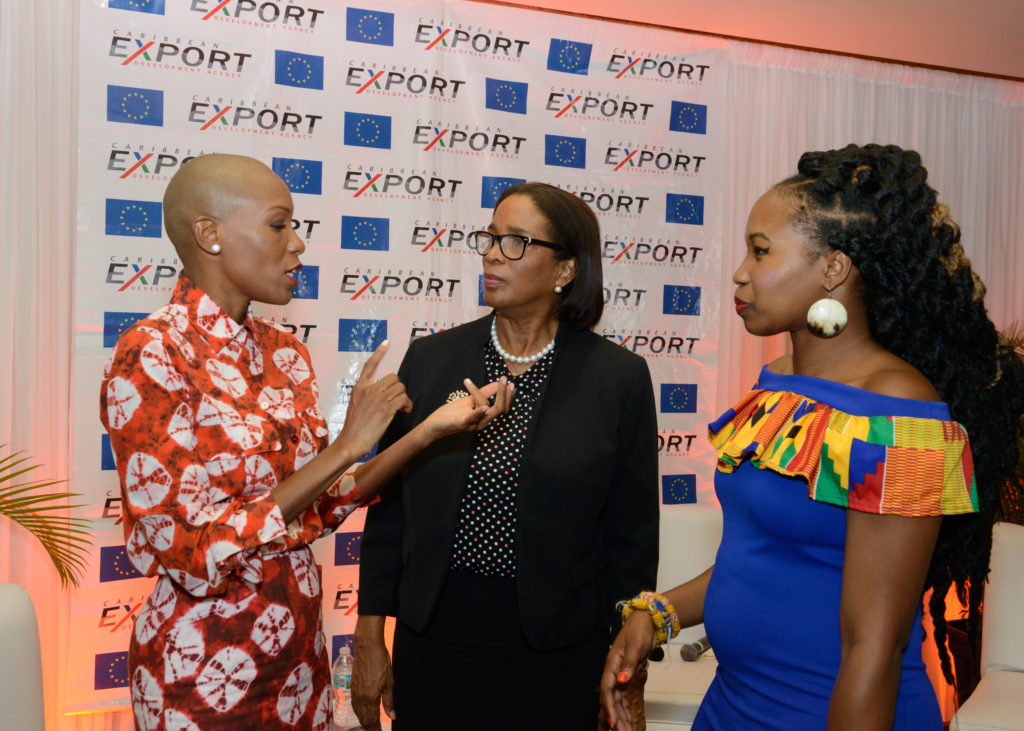
With this in mind, the Caribbean Development Export Agency (Caribbean Export) as part of their WE-Xport programme arranged for two successful Caribbean women who built their businesses from the ground up, to share their journey with the nineteen female entrepreneurs that are participating in the WE-Xport programme and invited guests during a Fireside Chat held recently at the Hilton Barbados Resort.  

These female business owners all completed the WE-Xport programme, a one-year initiative geared at helping them to start exporting their products or to increase their exports and is just one of the programmes implemented by Caribbean Export in cooperation with the European Union.

The guest speakers were Keisha Smith-Jeremie, CEO of Taste Sanaia, an apple sauce brand which started in her kitchen but is now available via Amazon, Whole Foods Market and Walmart, and Christine Souffrant Ntim, award winning Forbes 30 Under 30 serial entrepreneur and the Co-Founder of the Global Start-Up Ecosystem.  They both spoke candidly about their business experience and addressed issues like scaling for growth, capitalizing on digital exports, and the importance of learning the basics.

Keisha, a Bahamian now living in the United States, recalled that when she began her apple sauce business she would wake up at 3 o’ clock in the morning to start preparation. She packaged the finished product, then waited for the UPS truck to collect the day’s produce before heading to her fulltime job as the global head of Human Resources of a huge corporation.

She did this for a number of months before realizing that it was impossible to grow her business this way.  Keisha was forced to scale up and acquire capital!

“I knew that was not sustainable. Having a day job really pushed me into scaling and delegation. It just wasn’t an option to continue in that way…. It forced me to think about delegation very early in the process,” she said.

The CEO of Taste Sanaia told the entrepreneurs that if their aspirations were to scale, they had to get comfortable relinquishing control of some aspects of their businesses.

“You have to essentially figure out for yourself as an entrepreneur what is your best and highest purpose in your company. Often, we think it is in the creation of the product, but usually those things are commodities. Someone else can create the product, they can create it faster and cheaper,” she explained.

She suggested that it was a good idea to work with a co-packing partner, that is, an entity or person, who could produce volumes at scale and had already worked out all the kinks.

Admitting that it was difficult initially to relinquish control, she however pointed out that finding a co-packer enabled her to go to Amazon and Whole Foods Market.  “You can’t do that if you are still the person producing it,” advised the entrepreneur whose apple sauce will be in 800 Walmart stores this summer.

“Certainly, with food production, whatever the unique aspect of your product is, you want to stay close to that. It is a limiting factor unless you are able to trust that other people can replicate your product and eventually it can be done by machinery, if you really want to grow at scale,” she said.

During the course of her expansion, Keisha pitched her business on the reality investment show, Shark Tank. She landed an offer of $150,000 for a 20 per cent stake in her company by investor Mark Cuban.  However, after fleshing out the details of the proposed deal, she opted not to sign off on that deal but to retain Mr. Cuban as a consultant.  She then went on to raise half million dollars on her own to fund the Taste Sanaia enterprise.

“I later decided not to accept the money… in the beginning it is so hard to say no, but what I really had to get clear with myself on was did I really believe the business was going to be as big as I projected it to be?  If it was, I wouldn’t want to give up 20 per cent of the company for $150,000.  You have to believe in yourself and your ability to create something even bigger …,” she said of her decision to retain full ownership of her company.

Keisha also cautioned the entrepreneurs that it was impossible for a business to grow without finance.

“Growing up in the Caribbean, there is a mindset to avoid debt…, but as an entrepreneur you have to get comfortable with the fact that your business can’t accelerate unless you have the capital.  My business was self-funded most of the time but when I started getting yes from Whole Foods, Walmart and other places, I realized that I would be holding my business back if I only allowed it to grow at the rate that my savings would allow and that would not have been the right thing for the business,” she affirmed.

And on the note of not holding back, the WE-Xport ladies were also introduced to another goal-getting female entrepreneur during the Fireside Chat. Young, dynamic and disrupting the American and global tech industry is Christine Souffrant-Ntim, Co-Founder of the Global Start-Up Ecosystem and founder of the Haiti Tech Summit.   

Hailing from a long line of Haitian female street vendors, she was the first of her family to be born in the United States. She created an online platform called Vendedy to help street vendors sell their products to global consumers via SMS.

Earning 20 per cent commission on each sale, her concept to digitalize street vending accelerated so quickly that she made the Forbes 30 Under 30 List.

According to Christine, “At that time, when it came to Caribbean, African and emerging markets, our problems were not relatable to the US market.  We try so hard to fit the mold of western markets that we sometimes lose focus of what really matters. I realized that if I had to succeed with the business, I had to think creatively with funding and repositioning this product and the value of the people it represents.”

Since its launch, Vendedy has evolved to become an online directory for street markets worldwide. “Don’t be married to your business model, sometimes your business hits the fan when you reach your first customer, so trust what the market friction is telling you,” she said of her company’s evolution.

The technology whiz stressed that the story behind the brand was also critical. “There are thousands of businesses selling the same thing you are selling. The most powerful thing you have as an entrepreneur is not your product, but your stories, your journeys.” 

In addition to the story, she pointed out one’s ability to learn was also essential, particularly as it related to the technological aspects of the business.  A self-taught coder, Christine realized she could share her knowledge and monetize this “service” through a website she coded called CaribbeanStartUp.

There she offered to teach persons how to leverage technology and develop their brand. Within 24 hours of the launch, 500 individuals and companies from around the world had signed up!

“You need to be able to export your talents digitally to the world.  We live in a digital age; export is not just physical it is also digital.  Some people forget that you can teach your knowledge, share your background and your story and monetize that.  So for example, if you have the fashion expertise to build bags, you can actually start a tuition series to teach people these skills from a St. Lucian perspective,” Christine recommended.

Insisting that the entrepreneurs must leverage technology to advance their businesses, she stressed, “It’s not about being a tech company, it’s about being tech enabled.”  According to the serial entrepreneur, being “tech enabled” meant having a website, an accessible email and being visible on all social media platforms.

“Culturally speaking, we just give our phone numbers but phone numbers are not accessible twenty-four seven.  With email, you can have two way engagements anytime,” she pointed out.

Urging the regional entrepreneurs to learn the basics of all aspects of their business, especially when it came to technology, she said: “Learn online, learn on YouTube, learn on Google Academy and the final thing I will say is leverage or learn first from people that understand your problems.”

Christine recalled that initially she didn’t understand the premise of export but insisted that the small population size of the individual islands meant that Caribbean female entrepreneurs “needed to automatically think from an international mindset.”

She also recommended they export regionally and supported Minister in the Ministry of Foreign Trade, Sandra Husbands who urged the ladies to explore the Guyanese, Panamanian and Surinamese markets.

“I just want the paradigm shift to adjust; I just want people to understand that the next wave of products, the next wave of stores, and that the next wave of innovation is going to happen in emerging markets,” she advised. (S.P./Caribbean Export)
Guérir les Caraïbes une tasse de thé à la fois

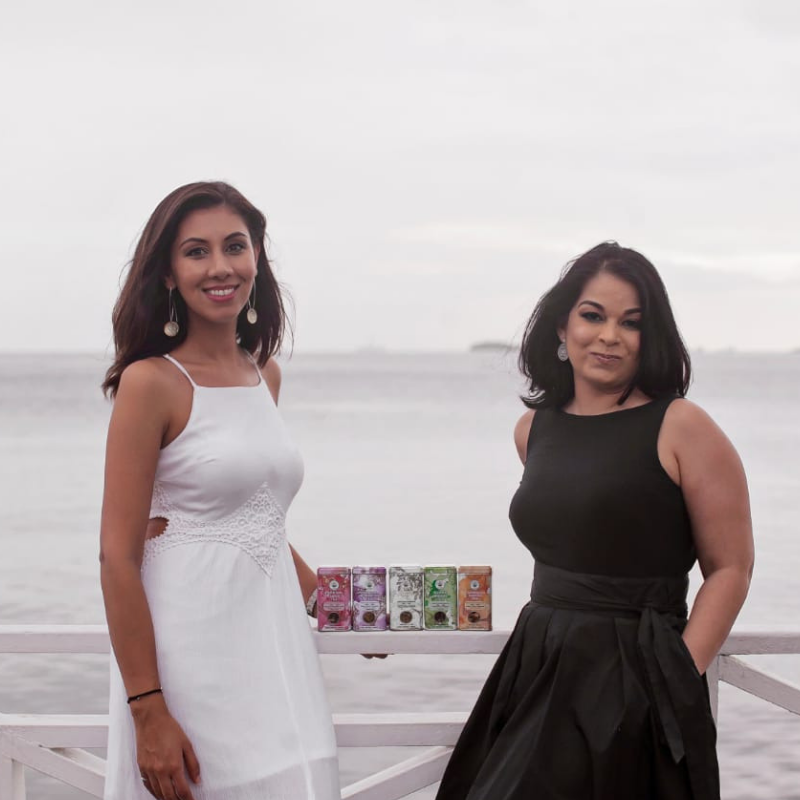
Sophia Stone founded Caribbean Cure in 2015. The Trinidad-based tea company was borne out of her passion for using nature to promote health and wellness.

“I wanted to honour the long standing tradition in the Caribbean of using herbs and bush teas,” she said. “And backed by science, my goal was to make these healing remedies more efficacious, convenient and attractive to today’s consumer. »

Bombarded with ideas and wondering how she could turn some of them into a profitable entrepreneurial venture, Sophia quit her full-time job, to focus on the full-time pursuit of her dream.

But her initial line of eight herbal supplements failed to garner the success she’d hoped, and after depleting her savings, Stone was faced with two very clear choices, pack it all in and quit “dreaming”; or, find another way to make the dream work. Like any true entrepreneur, she chose the latter.

Sophia’s new plan was to curate tea blends using the ingredients from her supplement line, but virtually all of her family and friends rubbished the idea, advising her to go back to her 9 to 5 – all but one.

Stacy Seeterram, a friend, and confidant, believed in Sophia’s idea, so she asked Stacy to partner with her in creating this new venture.

What helped to make the Caribbean Cure dream a reality, and what kept you motivated?

With five tea blends currently on the market, and the approval of family and friends who indulge in their curative, feel-good concoctions, Seeterram says their approach to business is one of their greatest motivators.

« We try not to worry about being successful,” she shared. “What we do is work toward being significant.”

In addition to keeping them excited about turning up for work each day, this approach won them international recognition as producers of world-class teas.

An opportunity to honour family traditions also keeps the duo laser-focused. There’s a little bit of history brewed in each cup of Caribbean Cure tea. Island Breeze, a delicate blend that includes cardamom pods and white tea, is a tribute to Stone’s Afghan/Canadian heritage, and borrows from one of her family recipes; while Carnival Oasis with its inclusion of cinnamon, clove and mauby bark, transports Stacy – a Trinidadian, with roots woven throughout the West Indies – back to her childhood, as it conjures memories of her grandmother’s « magical » blends.

What’s next for Caribbean Cure?

Caribbean Cure’s short-term intention is to increase production capacity and efficiencies to enable greater access to Caribbean markets. Through the Women Empowered through Export (WE-Xport) programme, they have forged key partnerships with a strong CARIFORUM trade agenda.

In July 2018, Caribbean Cure, unveiled new packaging, beautiful tea tins, adorned with designs created by a local artist.

The team is now set to enter into the next phase of tea export negotiations with their partners in the EU, Canada and Japan, and feels poised for an upward swing in the company’s development. They’ll be participating in the 4th CARIFORUM-EU Business Forum and Authentic Caribbean Expo hosted by Caribbean Export on September 26-28, 2019 in Frankfurt, Germany.

A few takeaways for budding & aspiring entrepreneurs.

Sophia and Stacy share that one of the most valuable lessons they’ve learned on their entrepreneurial journey is the importance of releasing emotional attachment in order to facilitate growth.
“Do not fear mistakes,” Stone advised. “Regrets are far more difficult to deal with than mistakes. You walk away from a mistake having learned something, but a regret is a missed opportunity,” she said. “Even if it seems beyond your reach, try. You will amaze yourself with what you are capable of.”

Find out more about Caribbean Cure: Facebook, Instagram, Twitter and LinkedIn – @caribbeancure and by visiting their website www.caribbean-cure.com.